Folk Dress of Estonia
14 December 2020

I’ve been organising my postcard collection and have been enjoying looking closely at some things that I haven’t paid much attention to for years. I have a number of sets of postcards showing folk dress of the countries that particularly interest me, and thought I’d share some of them here, starting with Estonia. In 2013 I wrote a few chapters for an Encyclopedia of National Dress, published in the US – including one on the Baltic States. I’m including some extracts here by way of context for the images – but I think they are so attractive, they can really speak for themselves.
‘Dress in Estonia began to develop along class and ethnic lines when the country (together with Latvia) became a German province in the 13th century. From that time the ruling elite and wealthy merchants were predominantly Germans, whereas peasants and common townspeople were Estonians. The higher classes wore fashionable dress made of expensive imported materials in styles that spread throughout Europe from the west, while the rural-dwelling lower classes retained their traditional dress based on linen and wool. These types of cloth were woven in the home. The finest linen was used for their most prized garments, reserved for festive wear, whereas work clothes were made from the heavier, coarser type of linen, or from tow. (Tow came from the short waste fibres left over from the flax plant after longer fibres had been extracted for linen weaving.) Outer garments were made of wool. Topcoats for the coldest weather were of sheepskin, often trimmed with fur, which was also used for headwear. Early linen clothes were bleached white, while woollen overcoats were usually brown, black or grey – the colour of undyed sheep fleece.
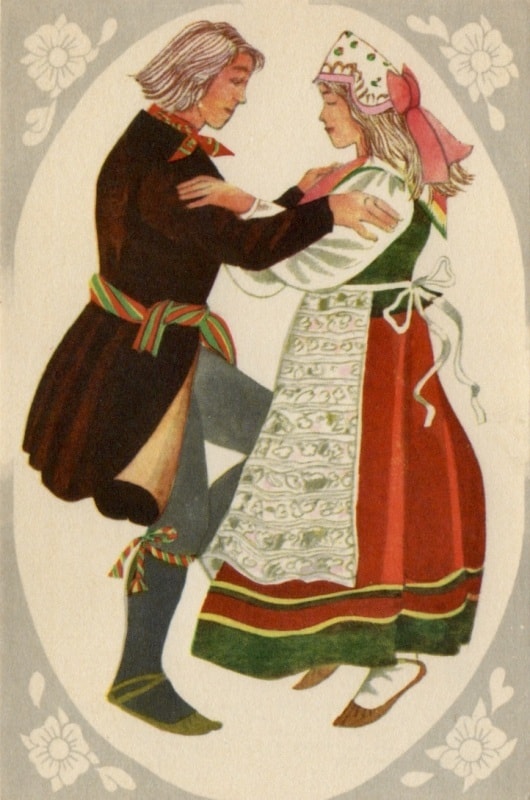
Set of postcards from 1961, illustrated by Asta Vender:


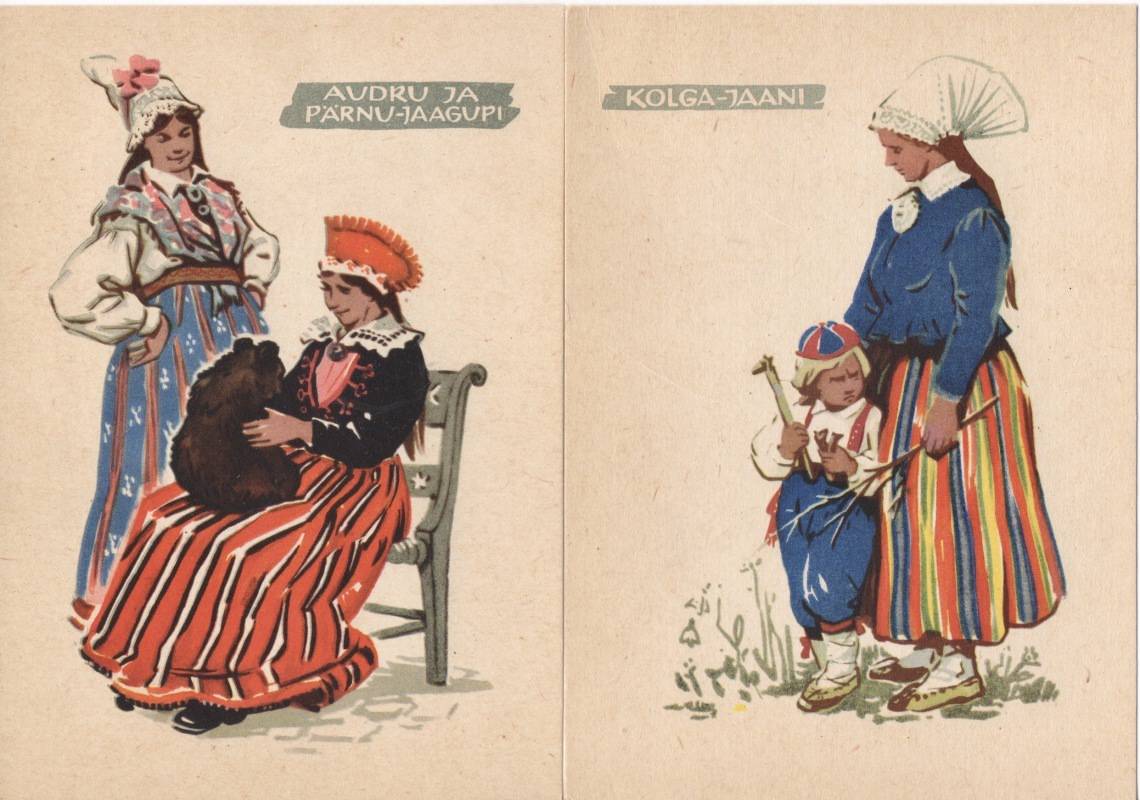
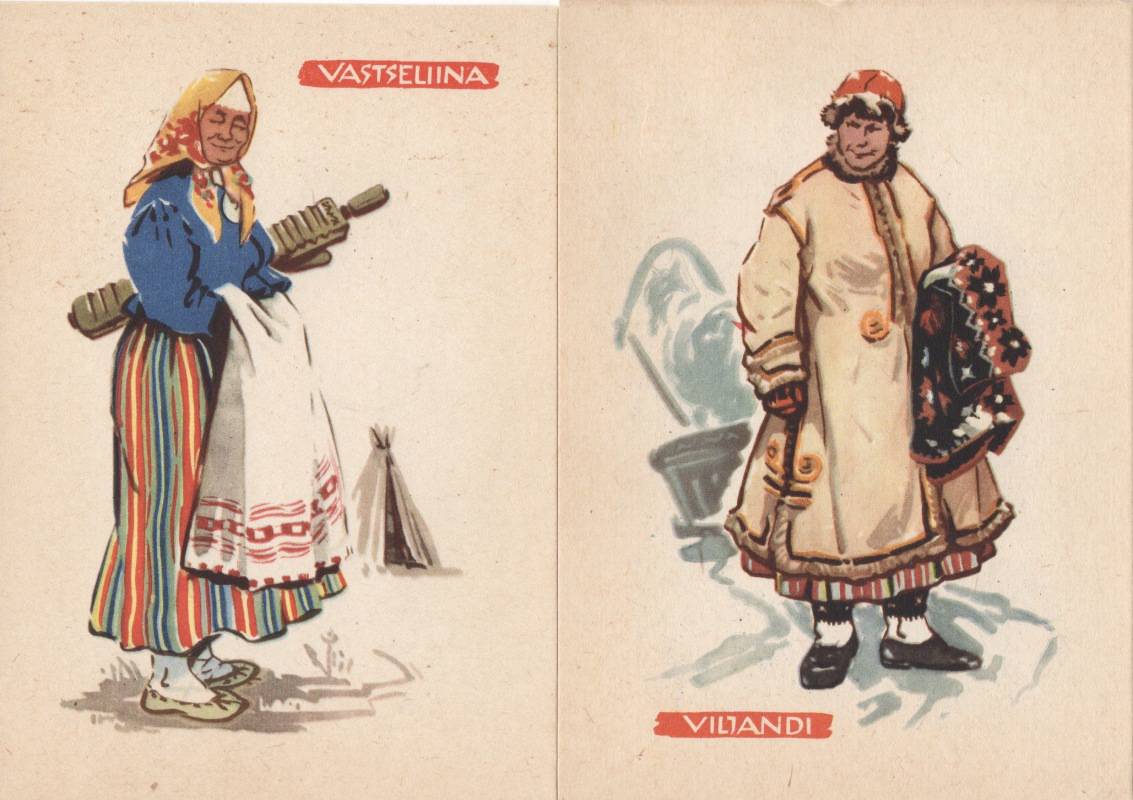
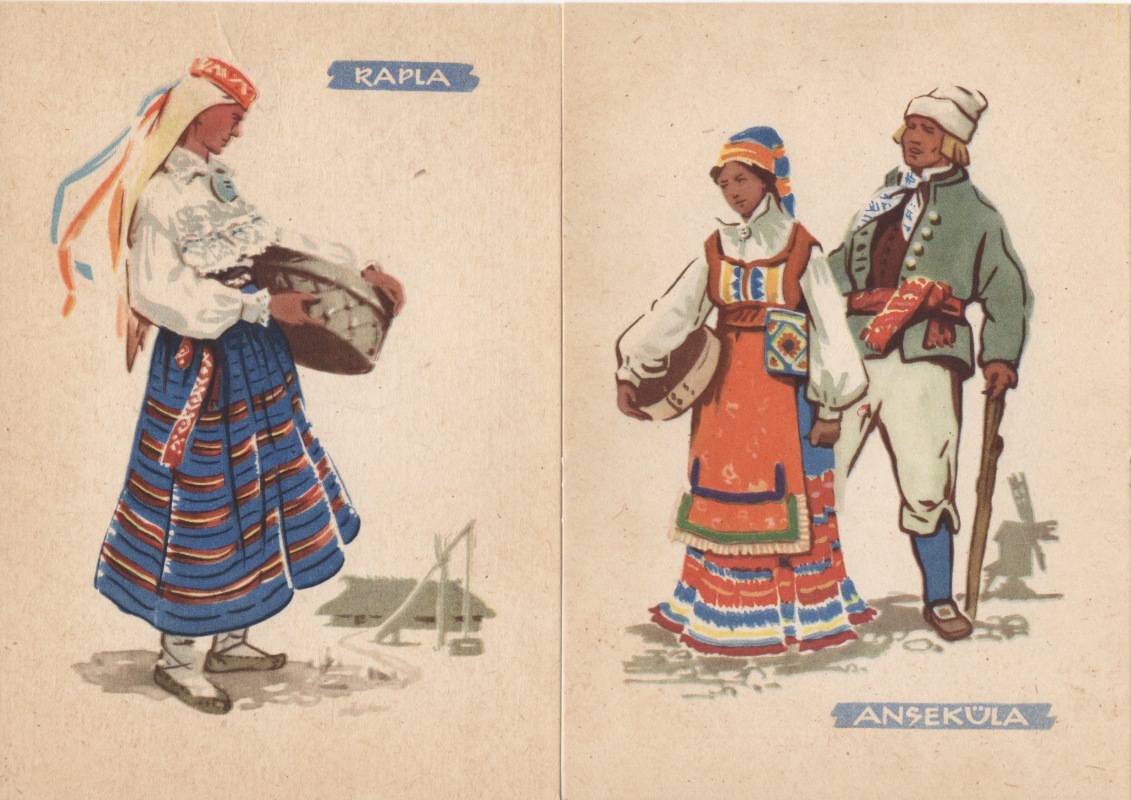
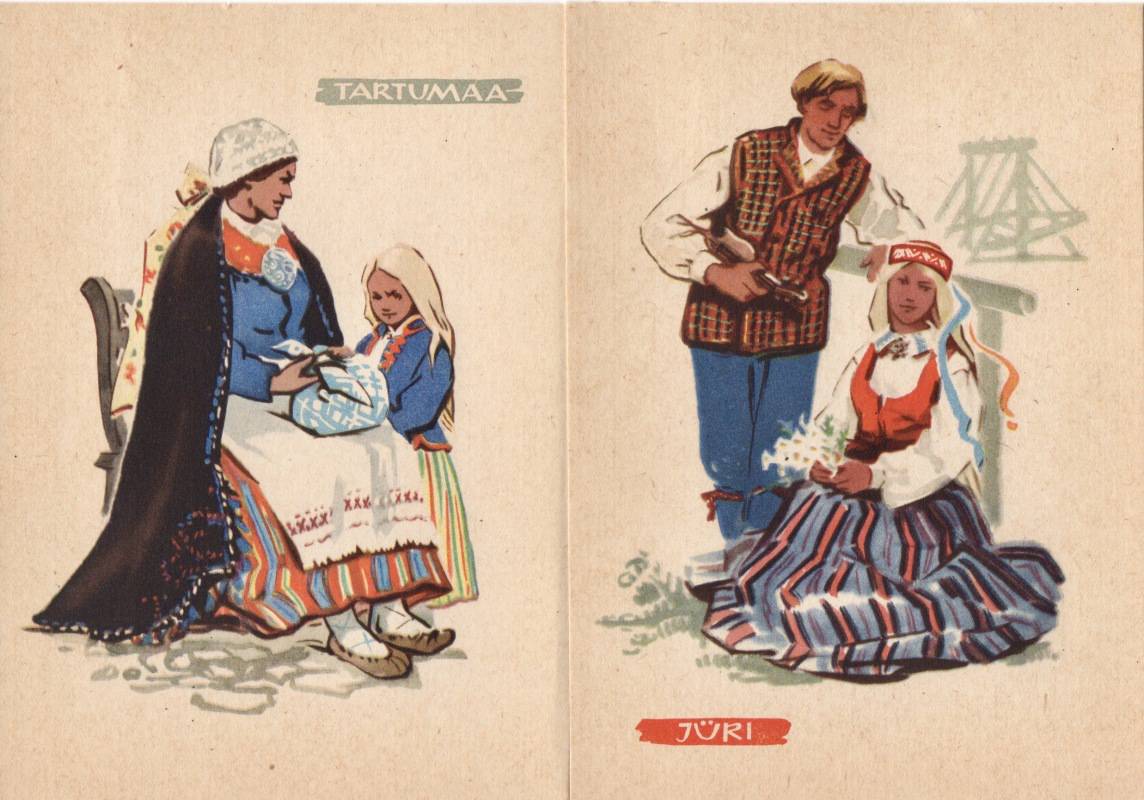
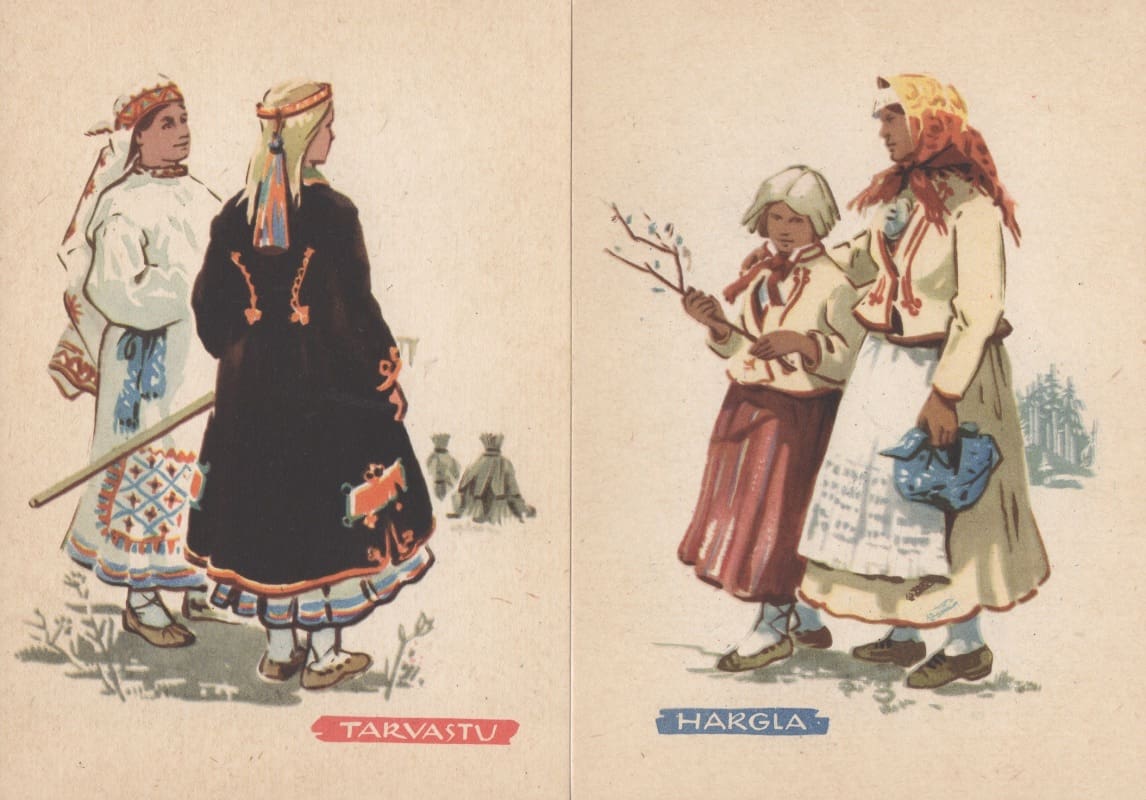
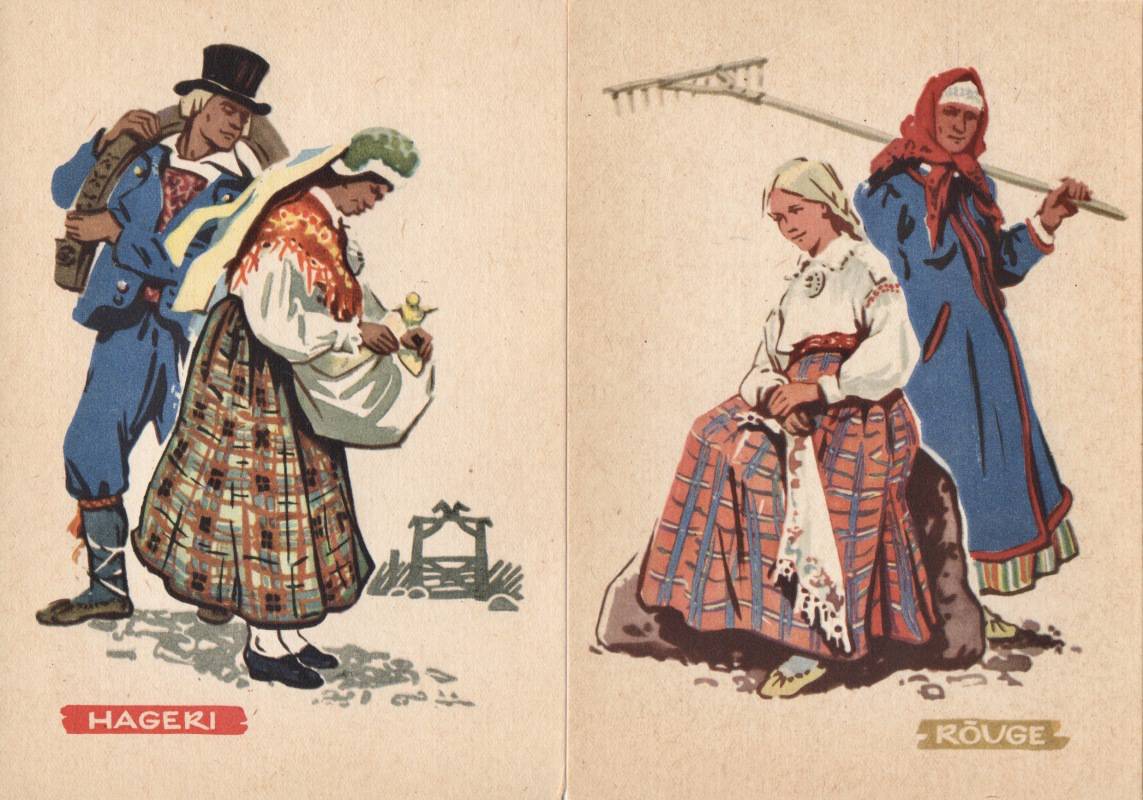
In traditional Estonian life, a married woman’s head had to be covered. At the wedding ceremony occurred the ‘coifing’, when the married woman’s headdress was put on the bride. This head-covering practice persisted until the beginning of the 20th century. The apron was another such sign of changed status, considered to be connected with pre-Christian fertility beliefs, providing magical protection for the child-bearing area. Pagan beliefs also governed the wearing of belts, believed to strengthen the body, and the finest white linen shirts put on at crucial times of the farming year, such as the sowing and harvesting of grain.
According to ancient beliefs, women’s transition from one stage of life to another could easily be damaged by various evil or impure forces. The bride’s dress was required to provide magical protection. In some parts of Estonia, such as Mulgimaa, it retained its archaic form of a wrap skirt decorated with bronze spirals and an embroidered kerchief (‘hip-apron’) hanging from the belt on the side. To protect the bride from evil forces, her face and head were covered with a wrap on her way to the bridegroom’s home.
Festive clothing was made from the best materials and abundantly decorated. Its quality indicated the wearer’s wealth and social standing. When it wore out, decorations were removed and it was used for everyday wear.
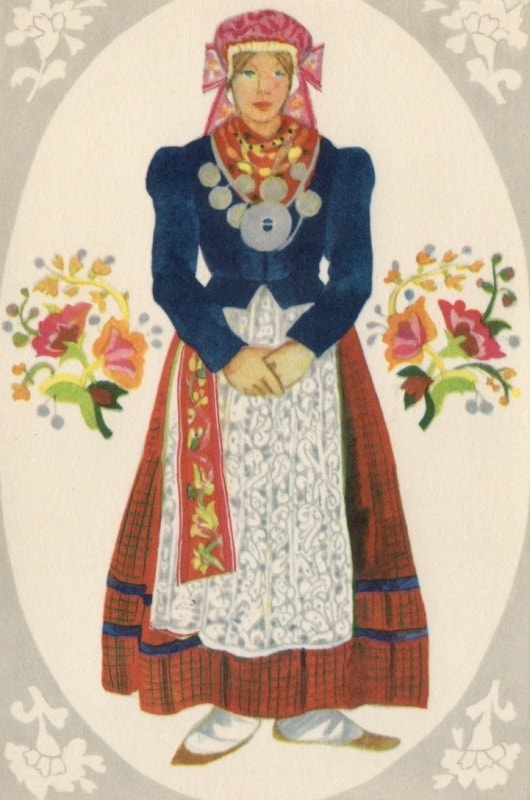
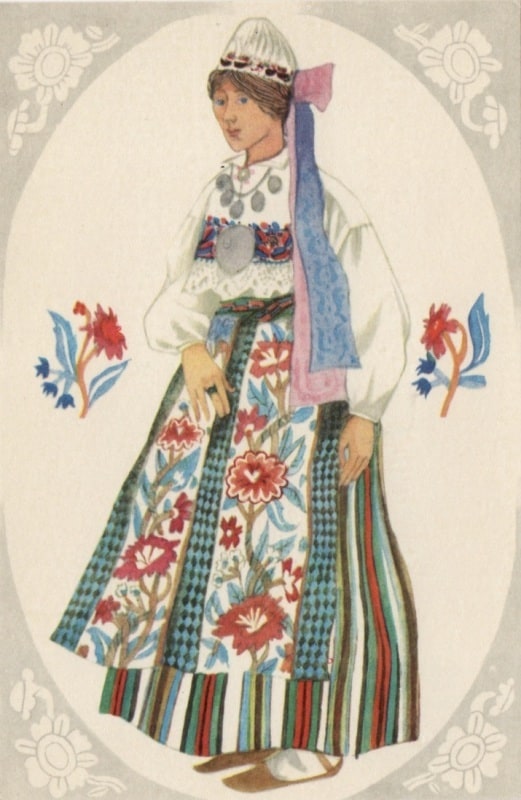
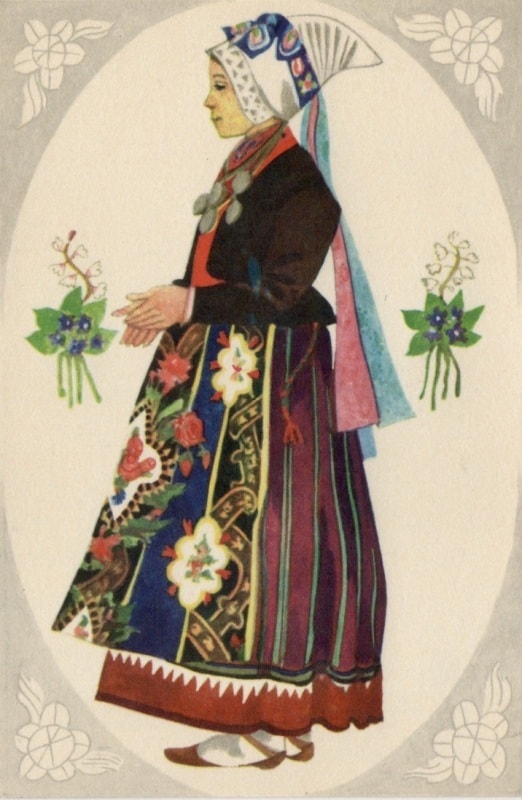
A postcard set printed in 1973, showing dress from the islands of western Estonia – Saaremaa, Hiiumaa, Muhu and Kihnu. Illustrations by Vive Tolli:
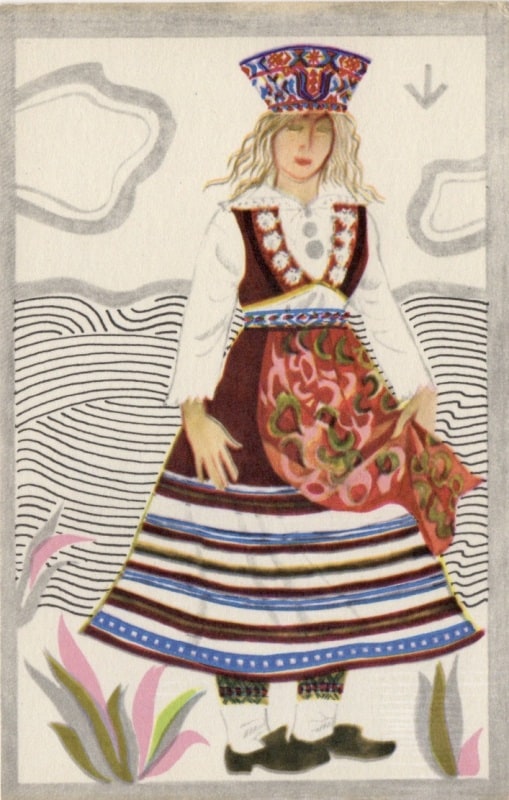
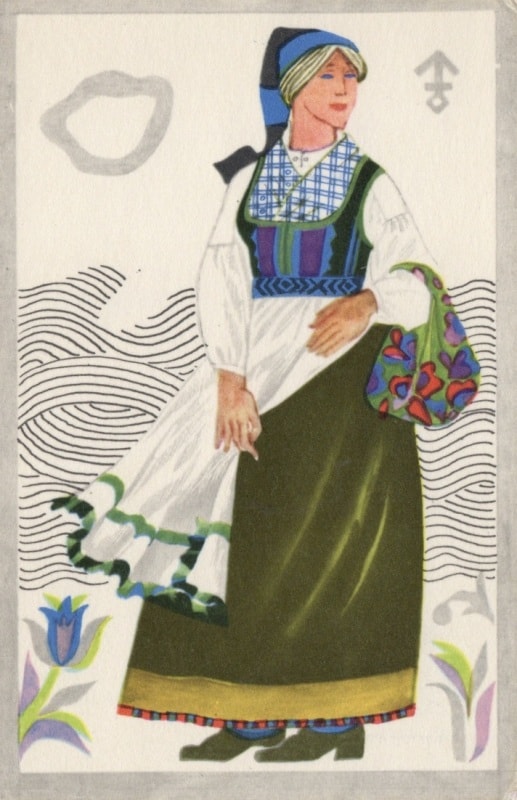
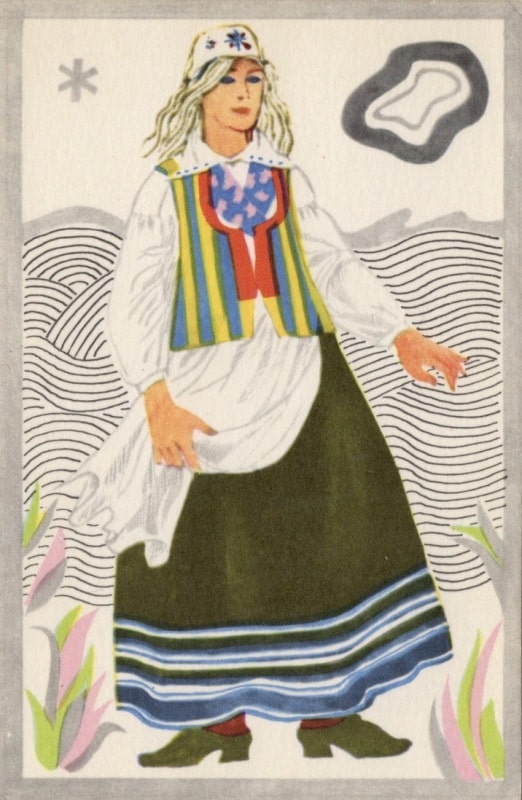
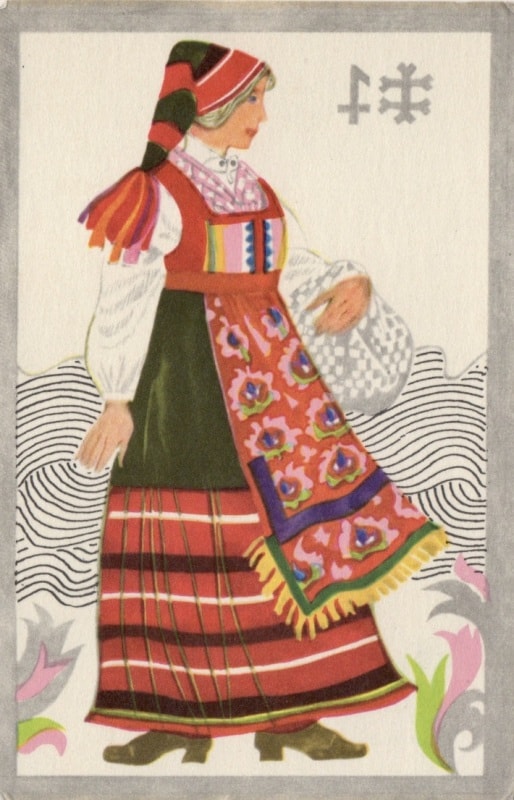
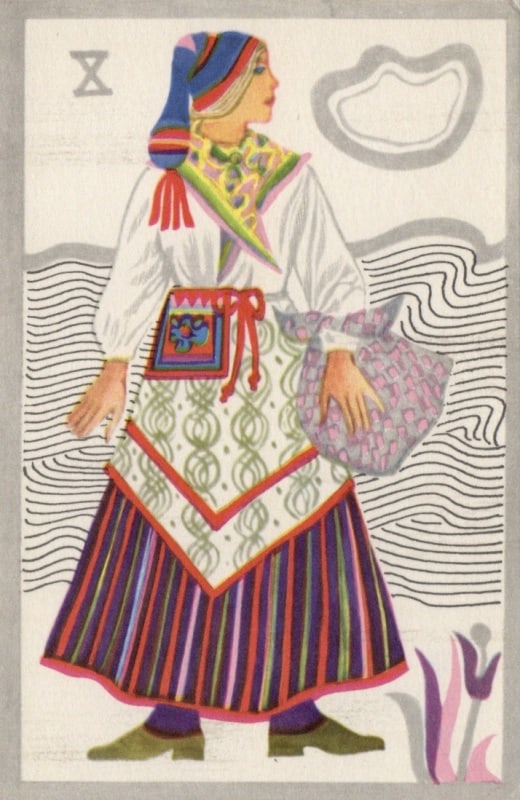
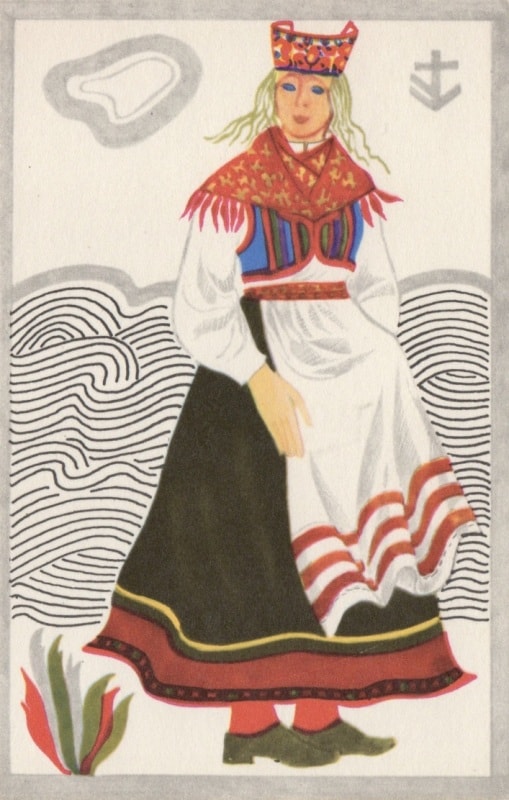
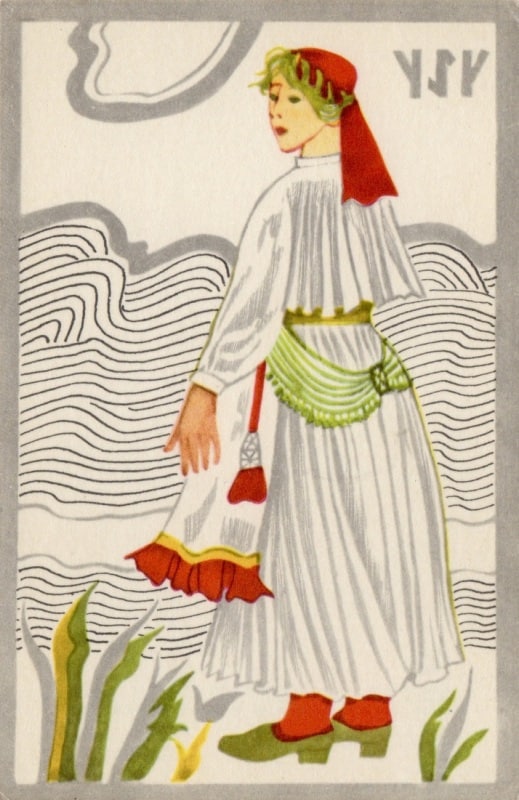
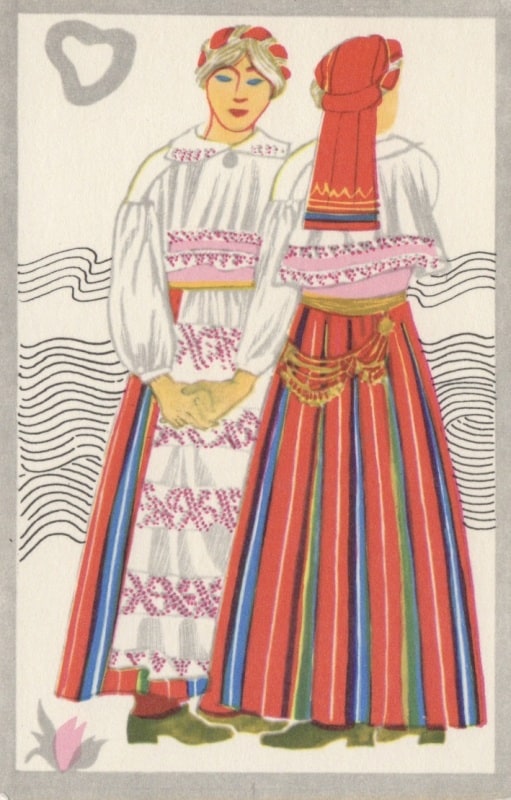
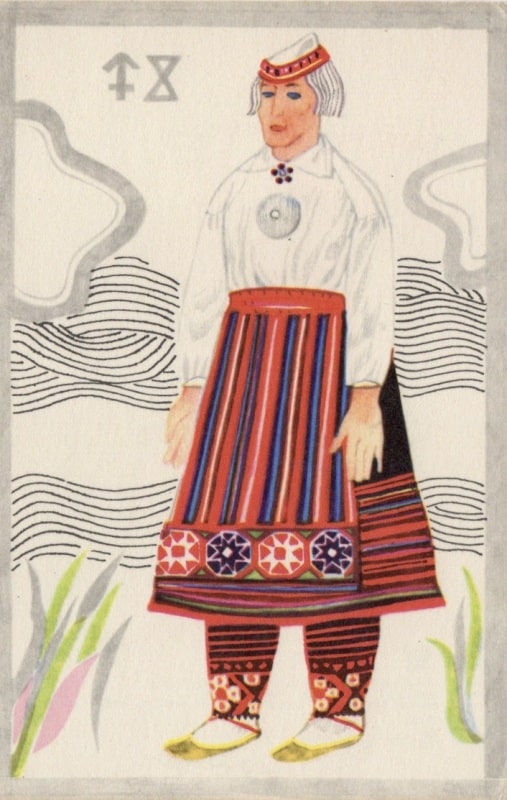
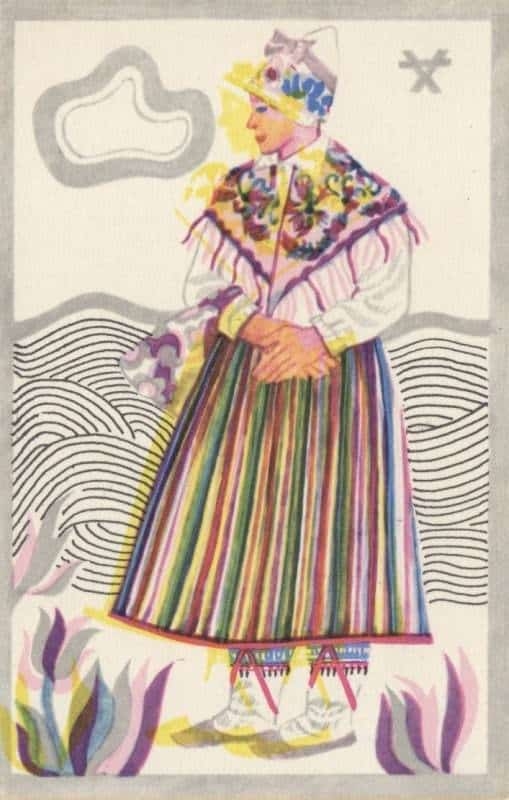
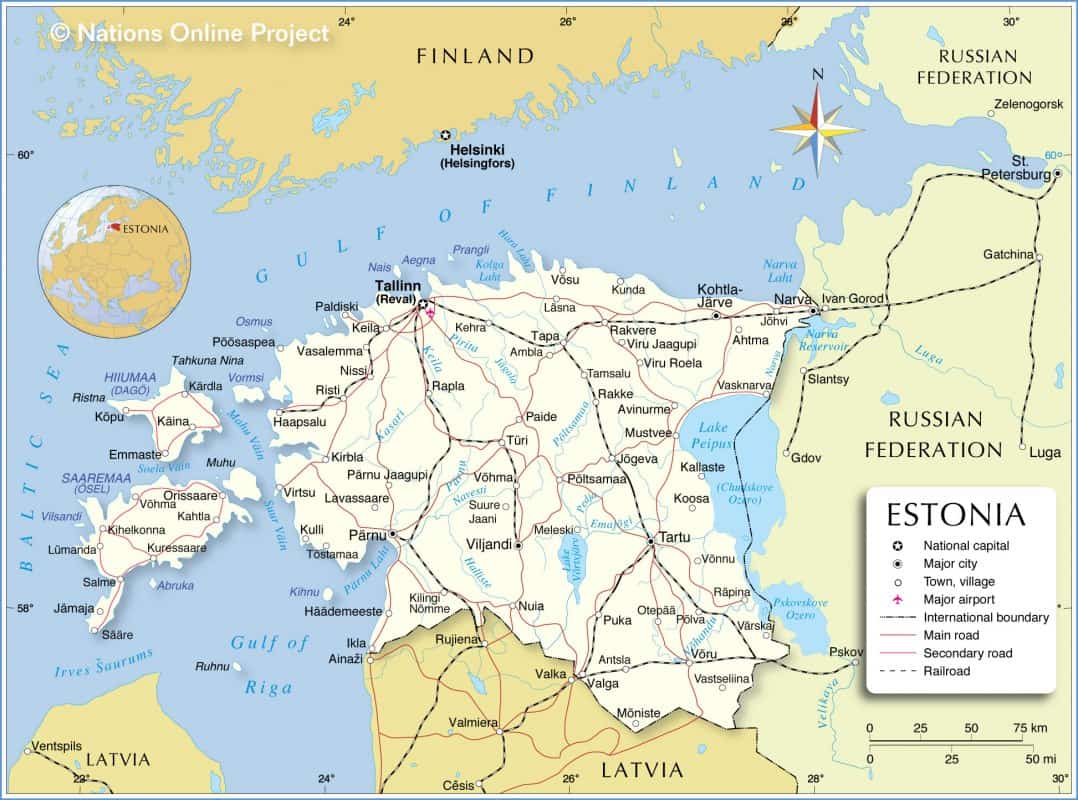
Regional differences in clothing can be seen by roughly dividing the country into northern, southern and western Estonia and the four islands, which lie offshore to the west (Hiiumaa, Saaremaa, Muhu and Kihnu). In the north the most characteristic feature of women’s clothing was the käised – a short embroidered blouse with puffed sleeves, believed to have been influenced by Swedish dress. (The Estonian islands and northwestern coast were settled by Swedes from the early 13th century.) This was worn on top of a sleeveless shirt, with a colourful striped skirt. Men wore breeches and a short woollen or linen coat (vatt), influenced by the general European fashion.
West Estonian dress had common features with both the north and south. In the northern part men wore the same kind of outfit as in north Estonia, with the more modern dark blue woollen breeches and vatt, whereas in the south a few more ancient elements persisted, such as old-style trousers.
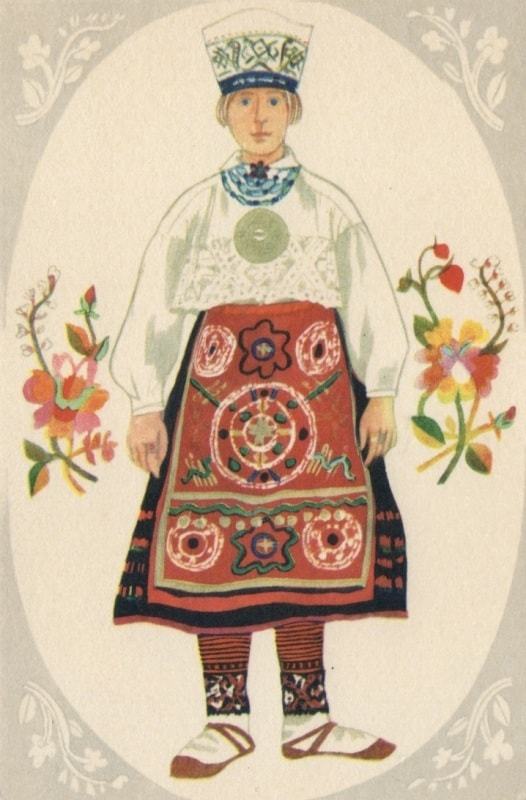
Another set by Vive Tolli from 1975:
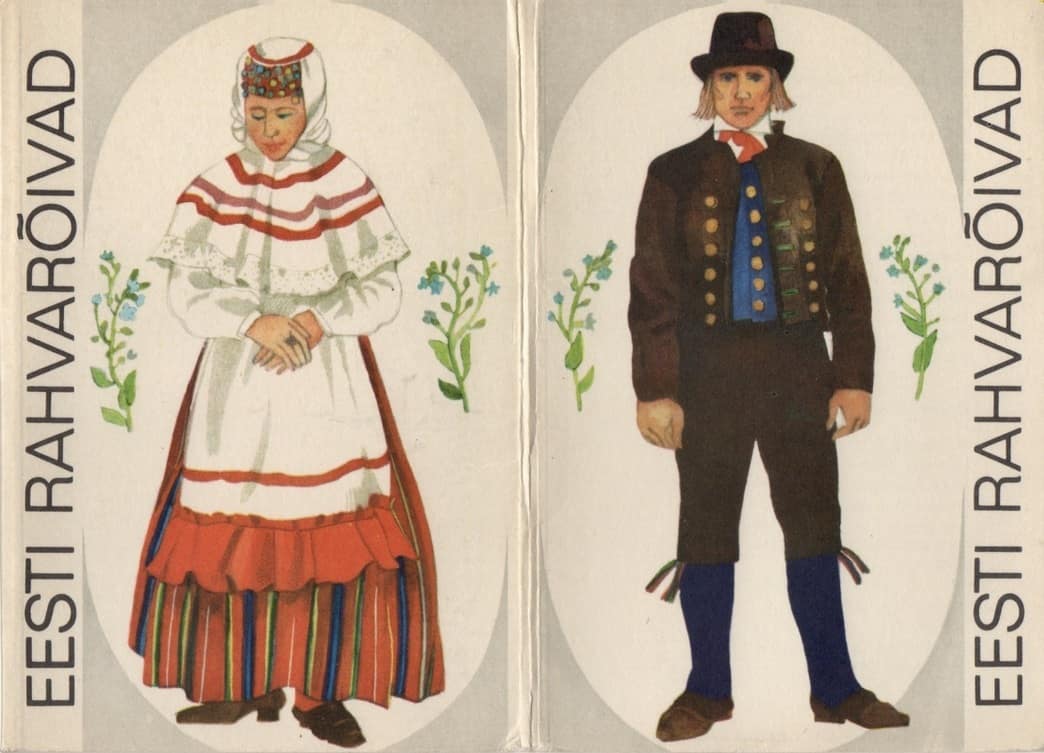
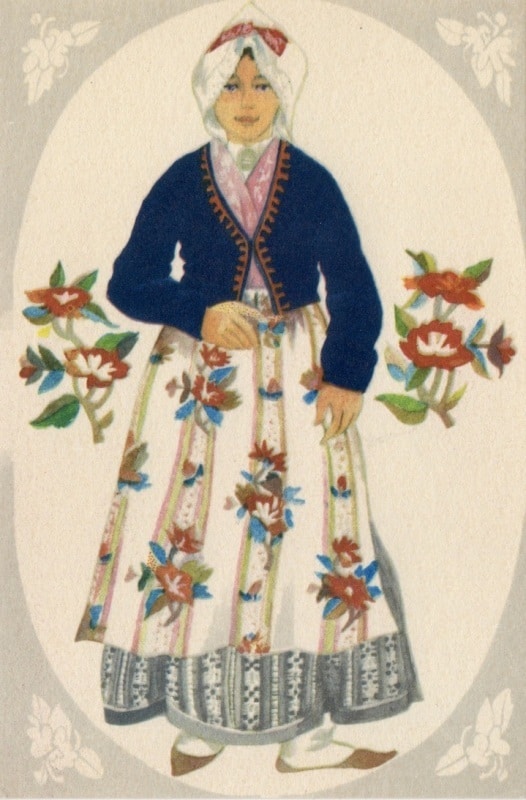

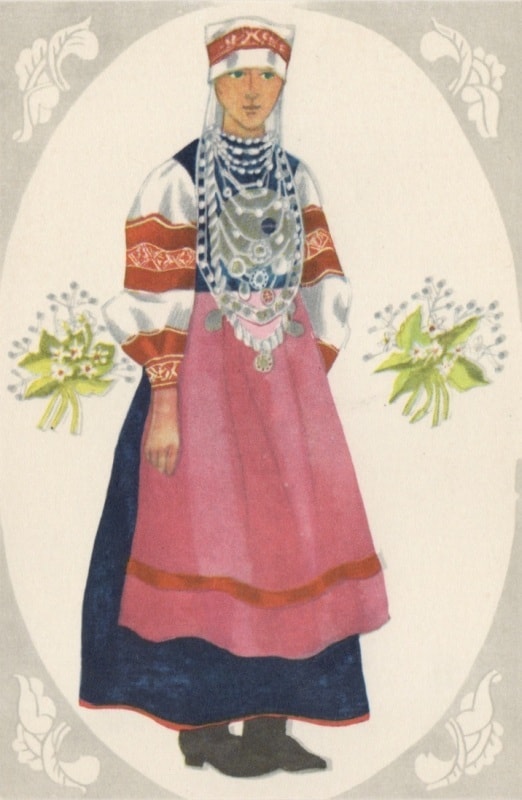
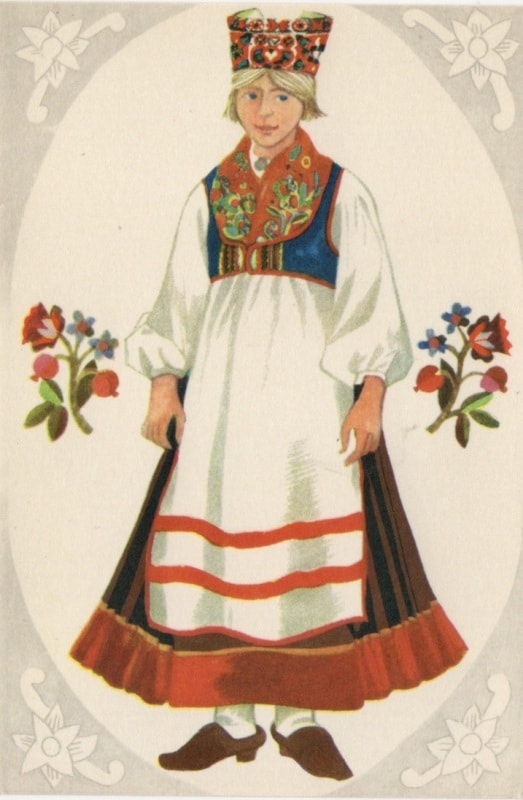
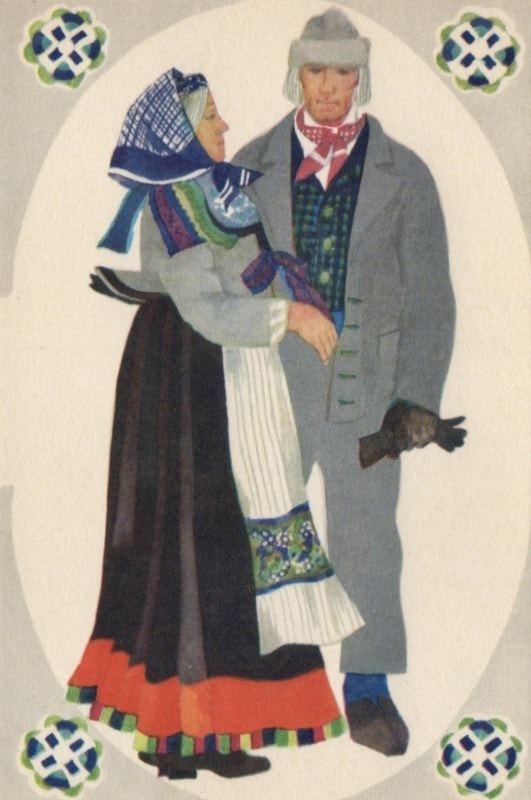
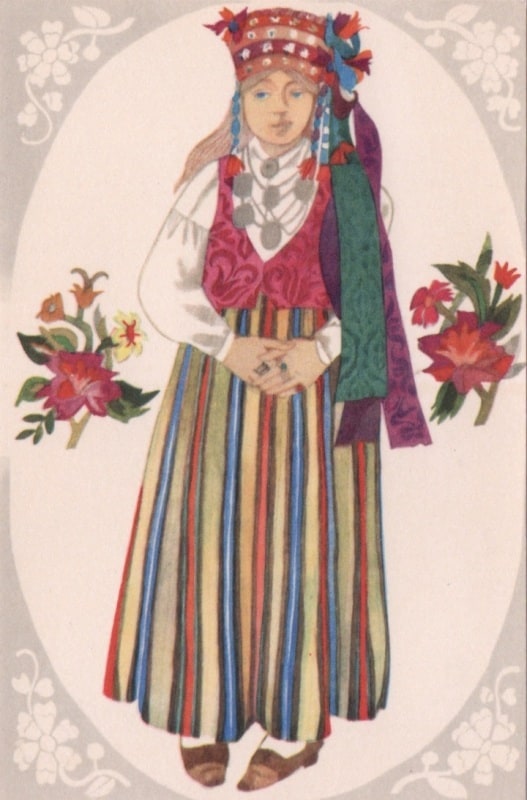
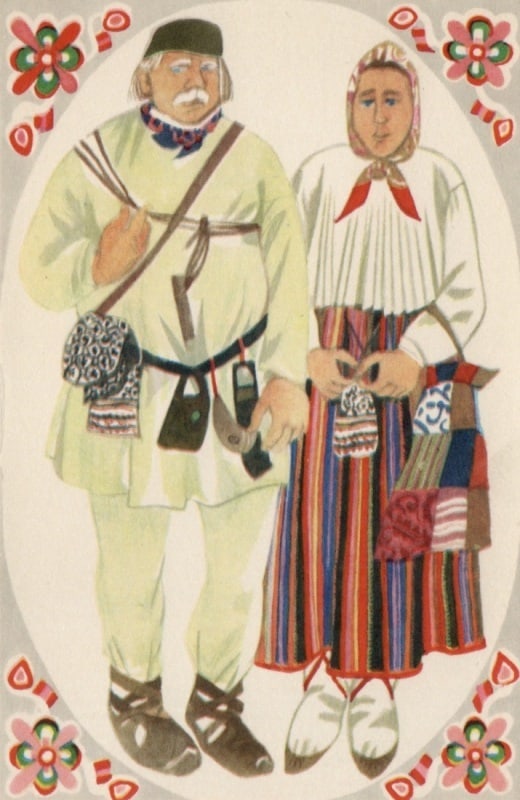
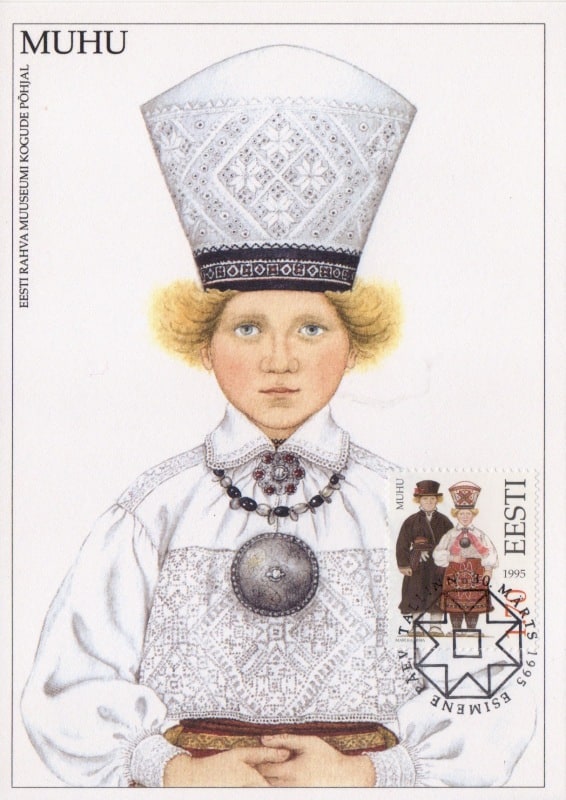
From 1994 to 2005 Estonia issued stamps showing the folk dress of its various regions, designed by Mari Kaarma. Here’s a set of first-day cover postcards:

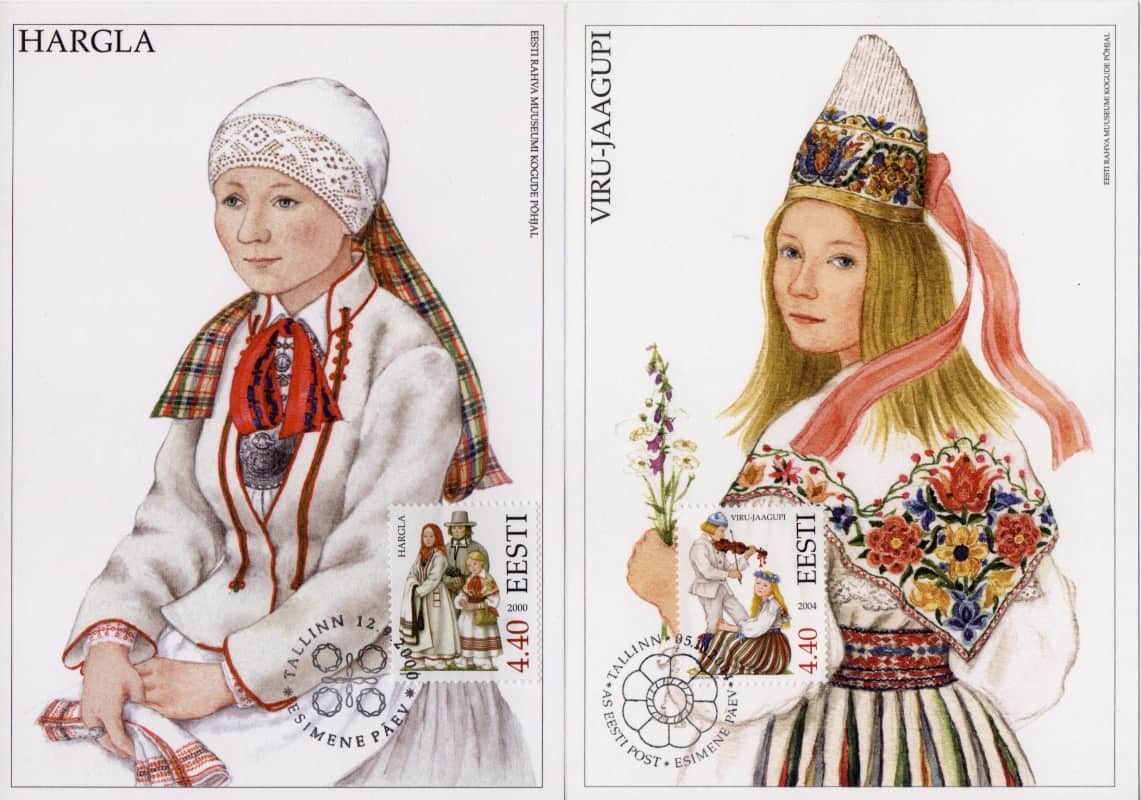
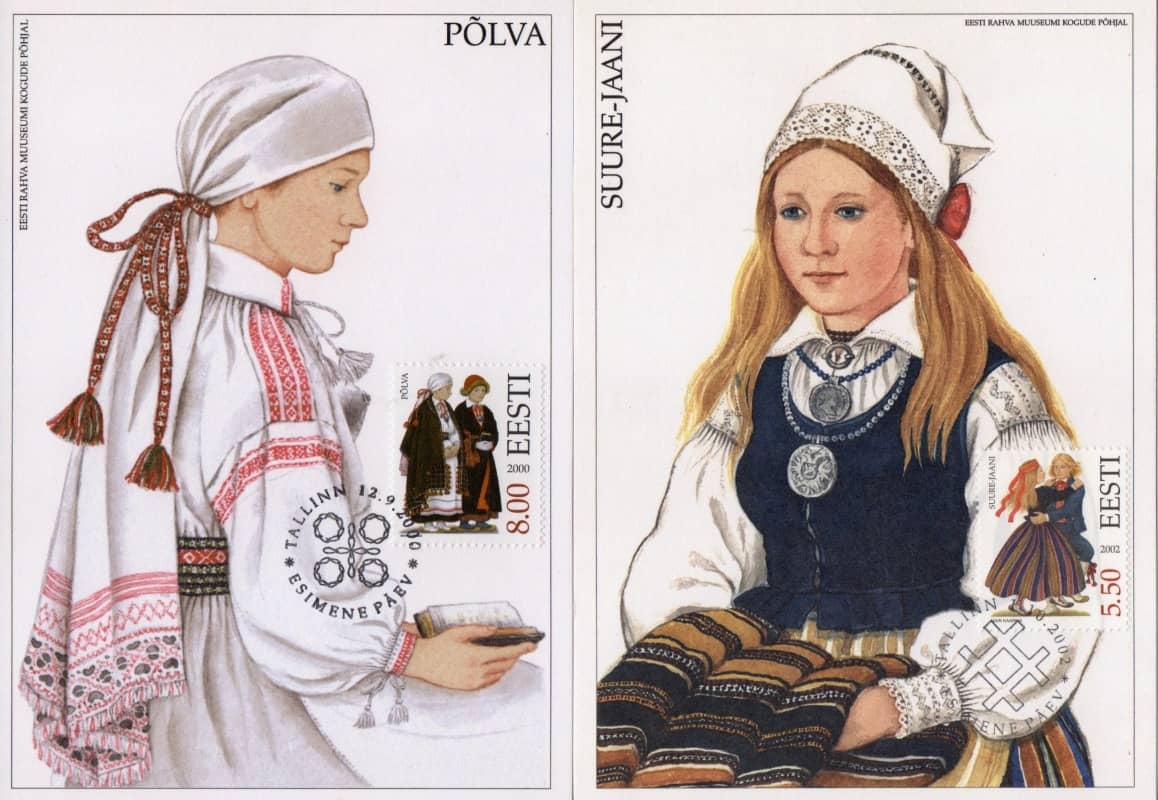
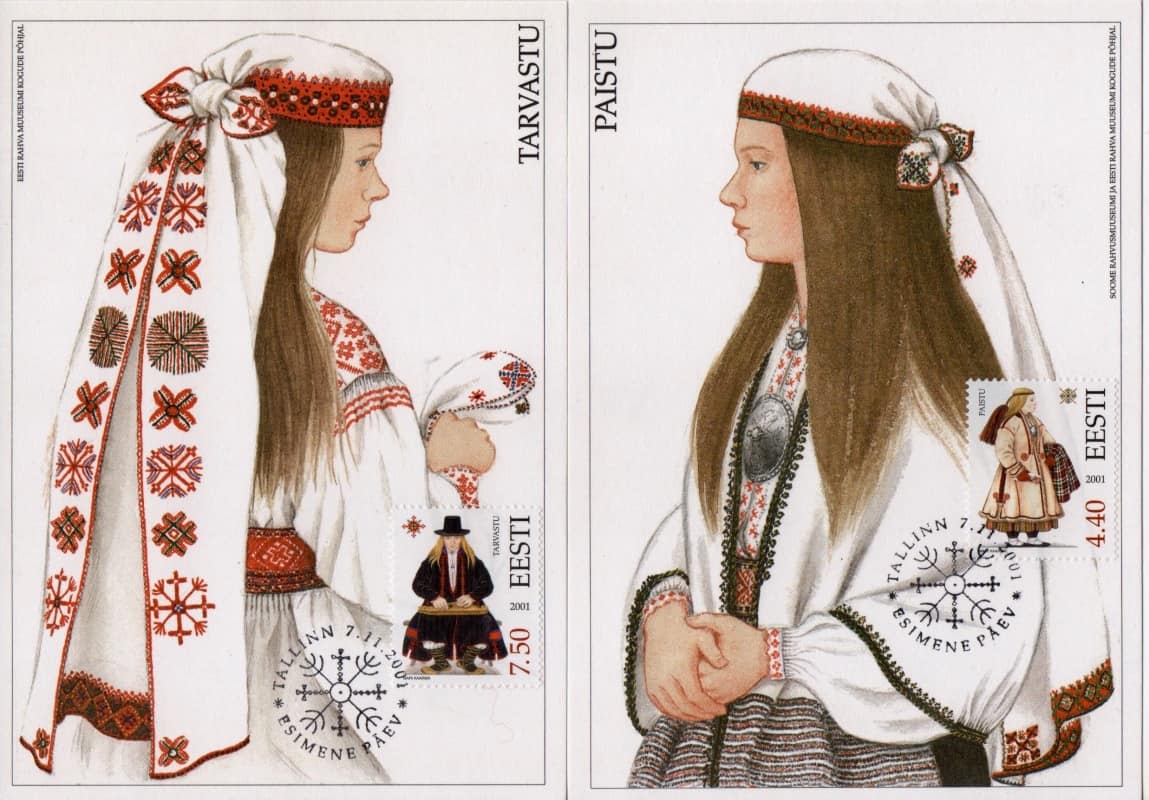
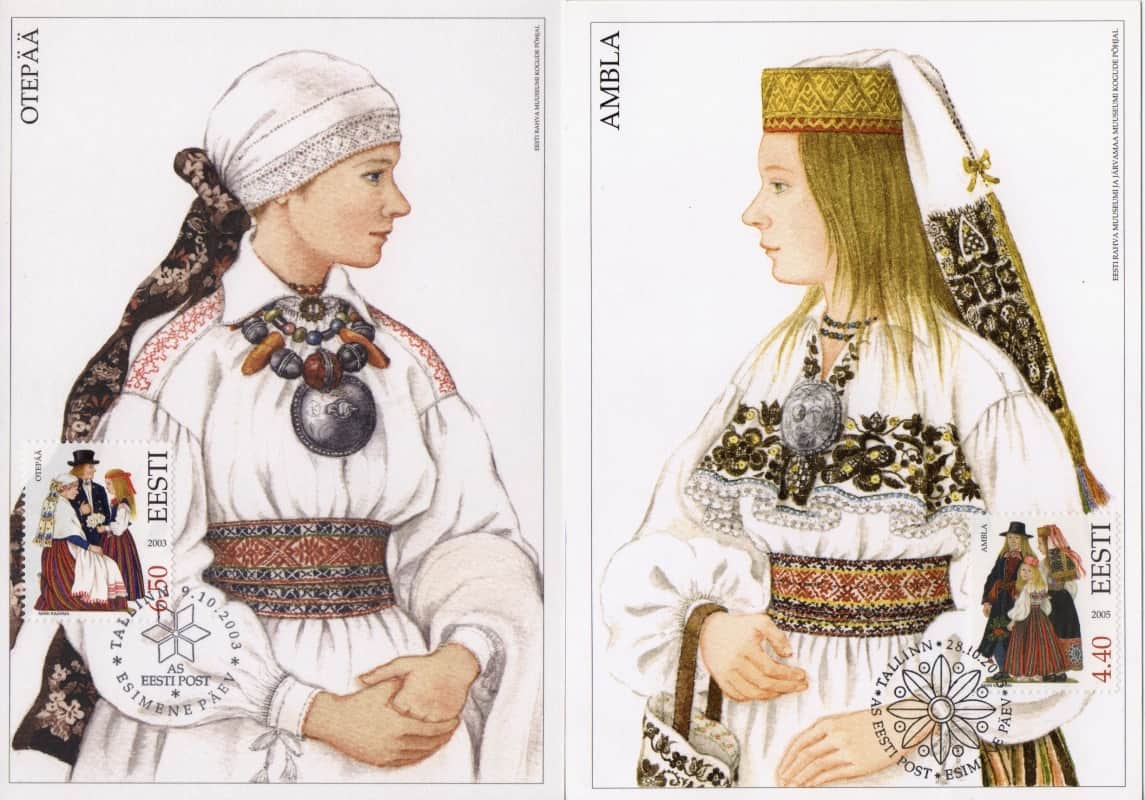
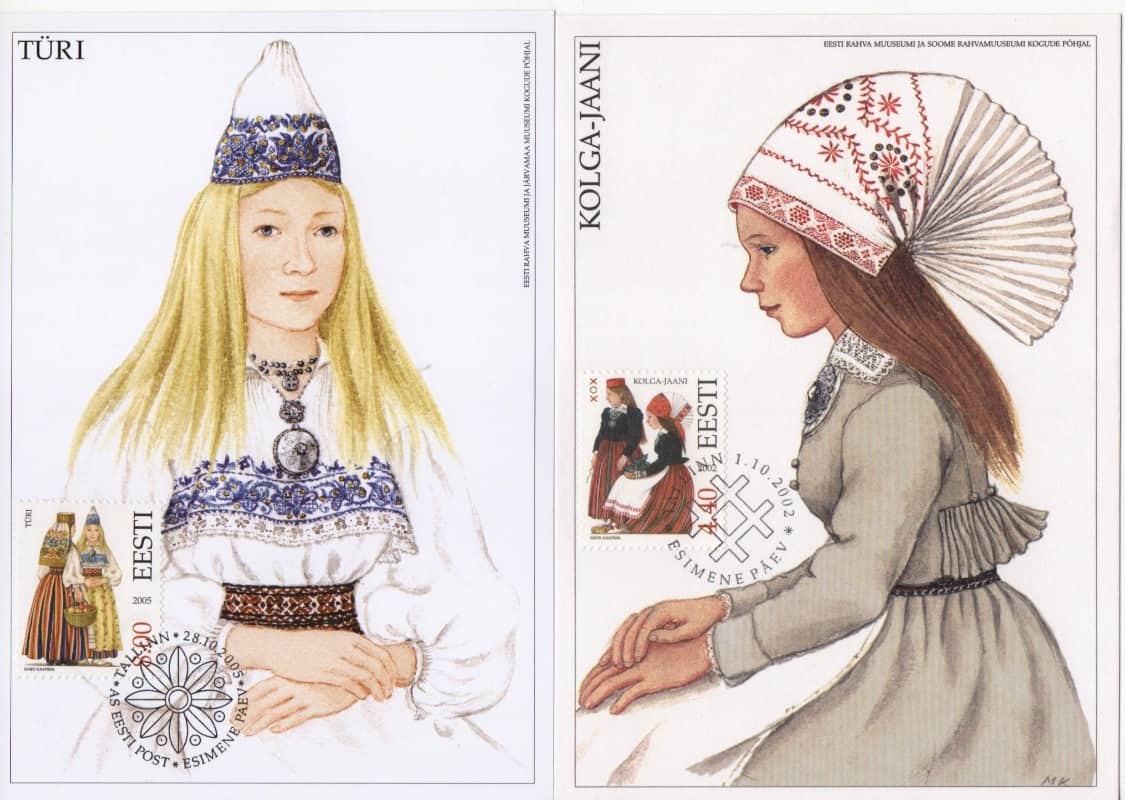
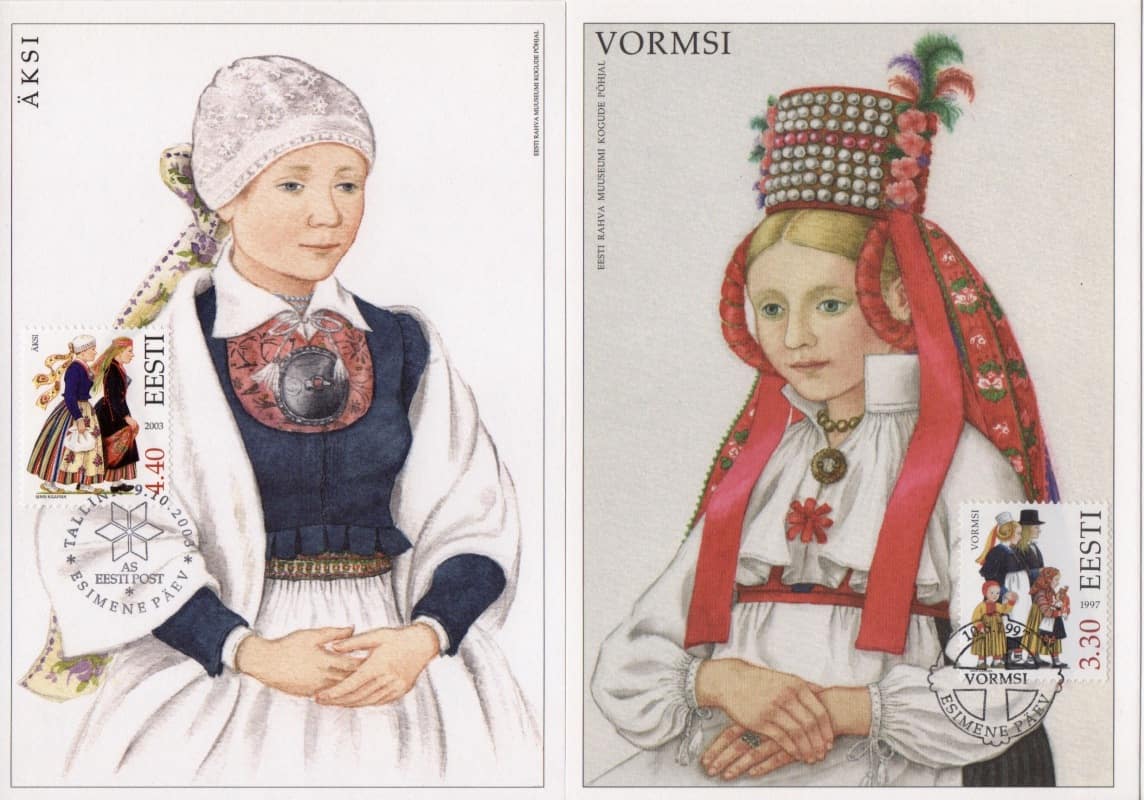
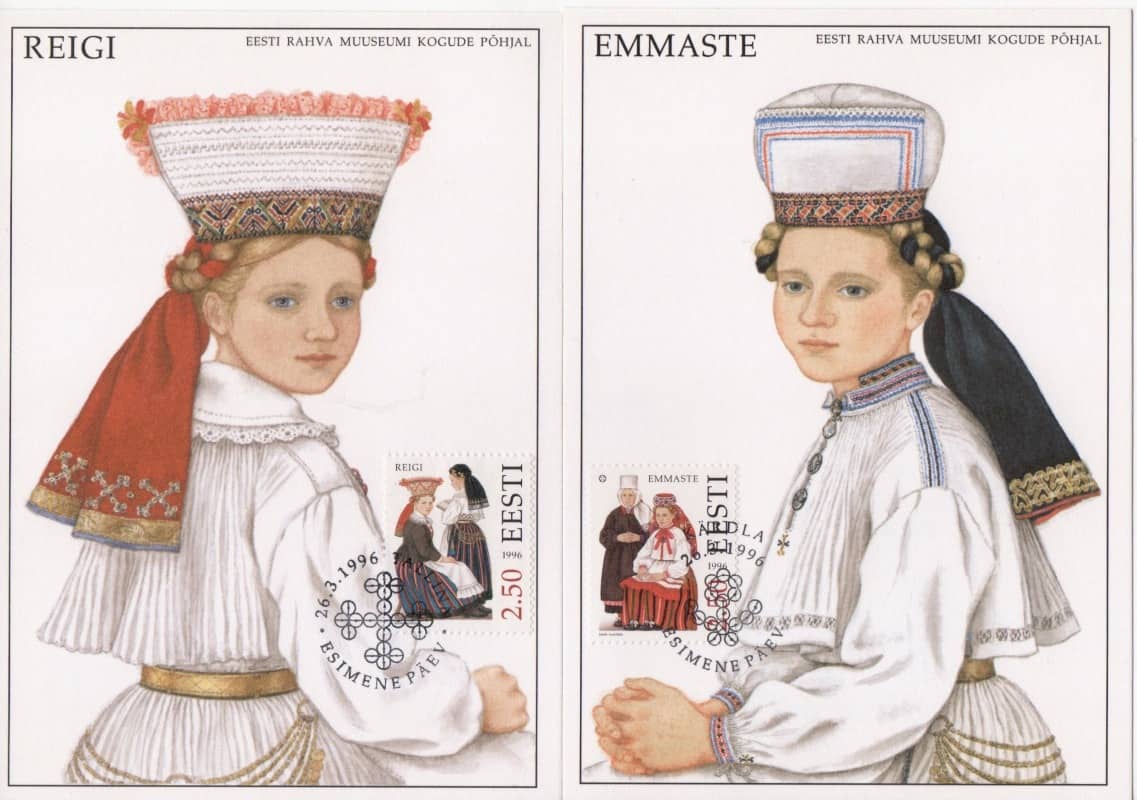

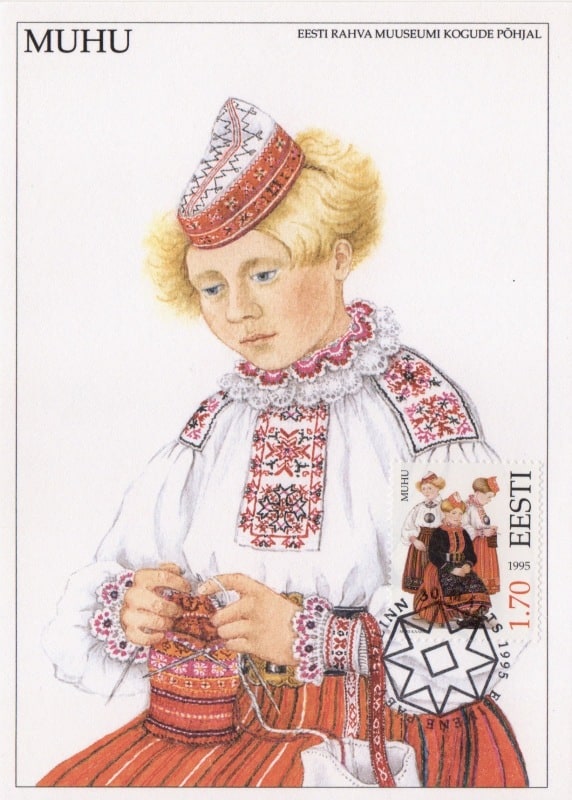
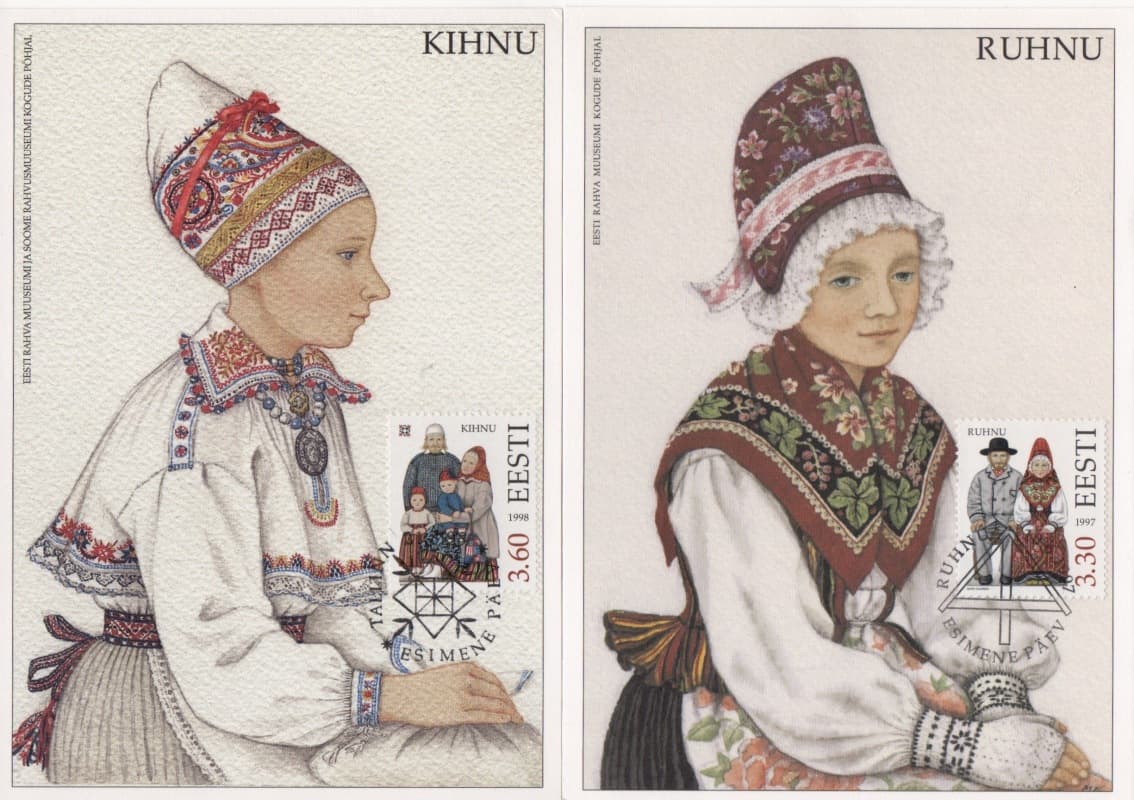
On Kihnu women wore the käised midriff blouse typical of north Estonia. Their headdresses varied according to locality, with close-fitting embroidered coifs being worn in the south, and the pottmüts or kabimüts in the north.
In Saaremaa, Hiiumaa and Muhu Scandinavian influences can be seen most strongly. On Muhu women wore accordian-pleated skirts. Hot loaves of bread were used to press down the pleats. The Muhu bride’s headdress was a distinctive high white trapezium-shaped cardboard cap covered with linen and decorated with white-thread embroidery. She also wore a sash wound several times around the waist, holding in place a red embroidered apron with little bells attached.’