Morris & Co. designs in Romanov interiors
21 December 2021
An article by Nicholas Onegin of the State Hermitage Museum, St Petersburg explores in detail one example of a William Morris wallpaper being chosen for the last Tsar’s private apartments.
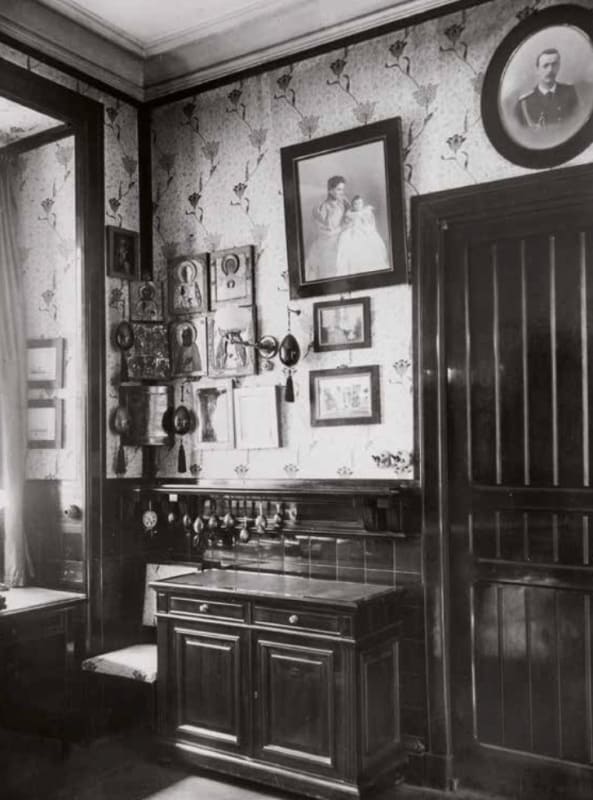
Passage room in the apartments of Nicholas II in the Winter Palace, St Petersburg, decorated with ‘Garden Tulip’ wallpaper. Photograph of 1917. (Archive of the State Hermitage Museum)
Here’s the full article from the Decorative Arts Society Journal, 2018: Morris Wallpapers in the Winter Palace.
I am sure I have also read about Morris wallpaper – and possibly also fabrics – decorating a part of the Alexander Palace, Tsarskoye Selo – which was the preferred residence of Nicholas II and his family. My recollection is that this article was in the art journal, Pinakotheke, published in Russia, but annoyingly I can’t trace it at the moment.
In 1880 the ceramicist William De Morgan, a key figure of the Arts and Crafts Movement, was commissioned to provide decorative tiles for the saloon on Livadia – Tsar Alexander II’s imperial yacht, named after the royal palace in Livadia, Crimea.
Livadia was launched in Glasgow on 7 July 1880 in front of ten thousand spectators and visitors which included Grand Duke Alexei, the future General Admiral of the Imperial Navy. The visitors were impressed by the size and luxury of the ship’s interiors which had been designed by the Scottish artist William Leiper and William De Morgan. Louis XIV style was used for the reception rooms, ‘Crimean-Tartar style’ for the drawing rooms and ‘the simple kind of modern English style’ for the private rooms.
The yacht proved a failure in terms of its ability to withstand severe weather conditions and was decomissioned after only one official voyage. I don’t think Alexander II ever saw it. He was assassinated in St Petersburg in 1881.
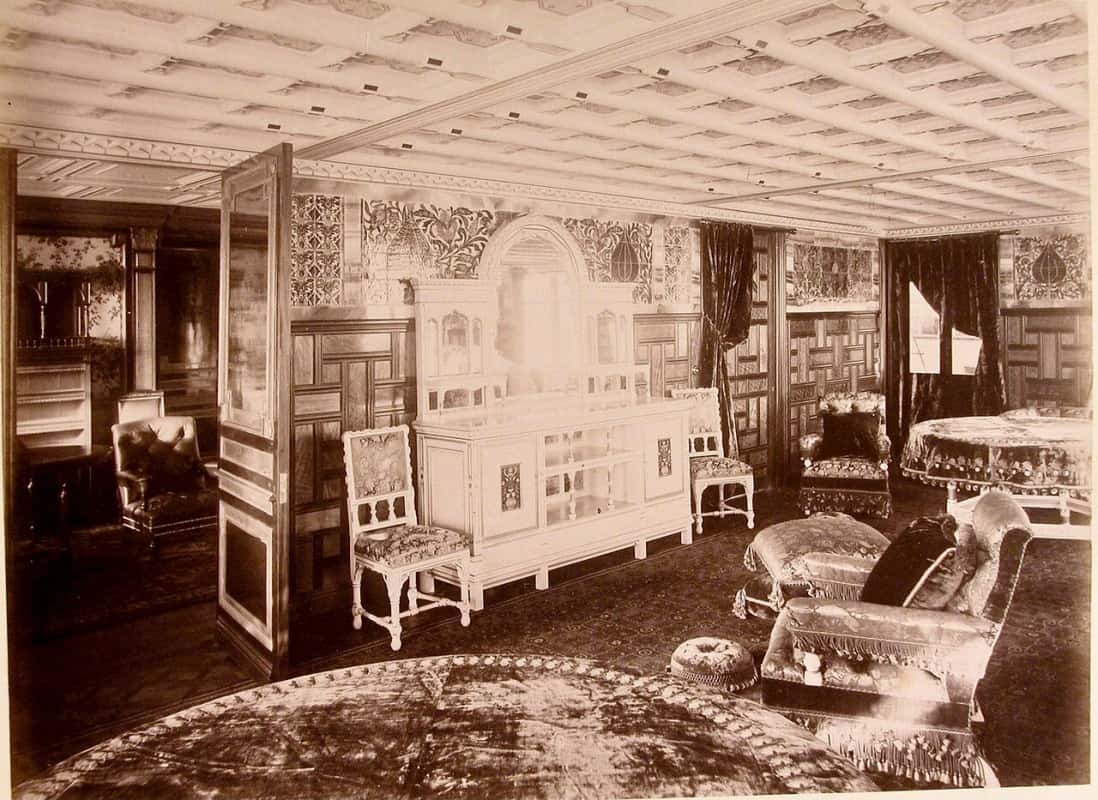 The Smoking Room – part of the Saloon on Livadia. This appears to be where the De Morgan tiles featured in the decorative scheme.
Two years ago I bought this book at the History Museum, Moscow –
 The Interior in Russian Graphics, 19th – early 20th century (from the collection of the State History Museum). Published in Moscow in 2017
I’ve scoured the pictures, looking for more evidence of William Morris, but, even though I haven’t found any, I think the images are so attractive that I decided to share some of them here. This just confirms my love of paintings and drawings of interiors. And makes me feel better about my inclination to keep buying pictures, even though the walls in my house are already crowded.
Till I looked at it more closely, I thought I might have found a Morris and Co. scheme here:

Boudoir of Grand Duchess Elizaveta Feodorovna. By Ignaty Nivinsky, 1905
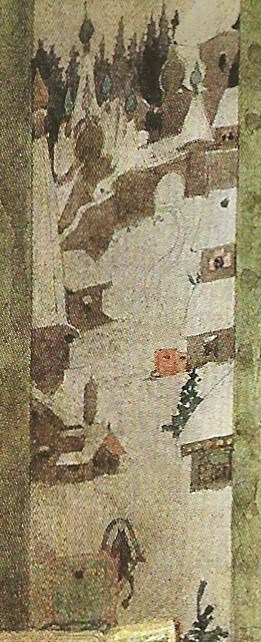
What really intrigues me about this room is the panel to the left of the doorway. It provides a striking contrast with the cosy floral furnishings and more formal arrangement of framed pictures. It seems to be a hanging in the ‘Russian Style’ of the period – of a snowy landscape, with ancient wooden buildings and a horse-drawn carriage:
Here are some other images from the book:

Cabinet of Grand Duchess Elizaveta Feodorovna. By Vikenty Trofimov, early 1900s
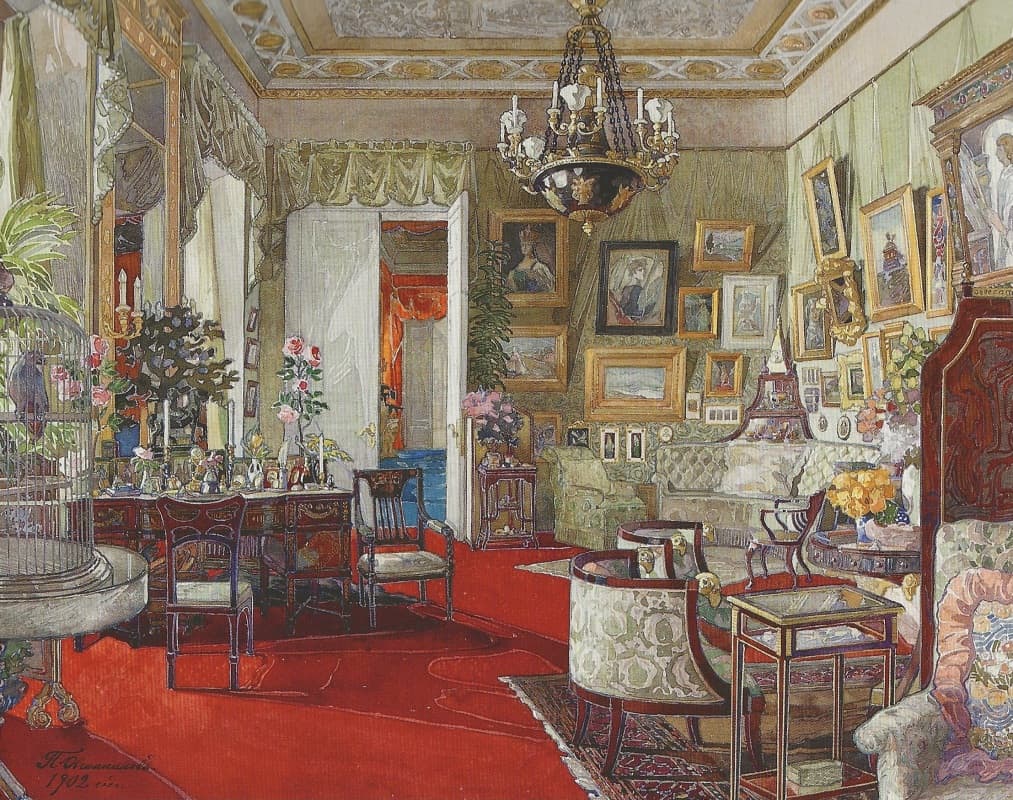
Private sitting room of Grand Duchess Elizaveta Feodorovna. By Pyotr Ovchinnikov, 1902
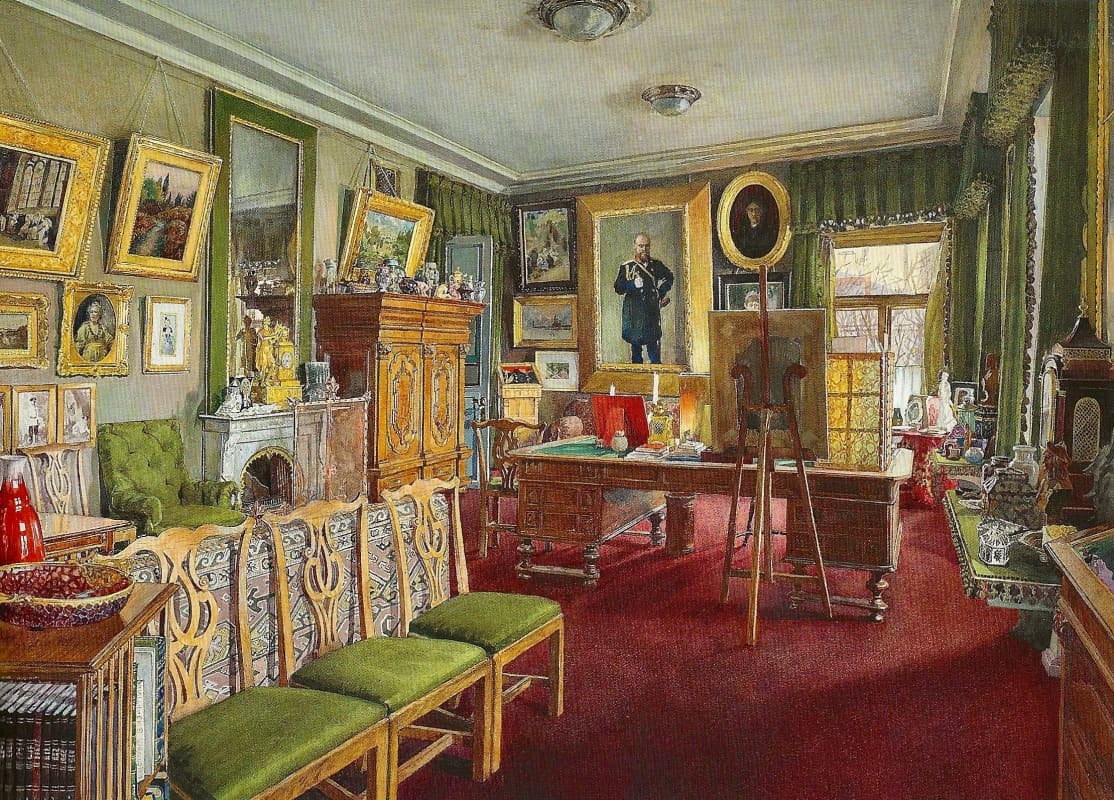


Ceremonial cabinet of Grand Duke Sergei Alexandrovich. By Alexander Barishnikov, 1902
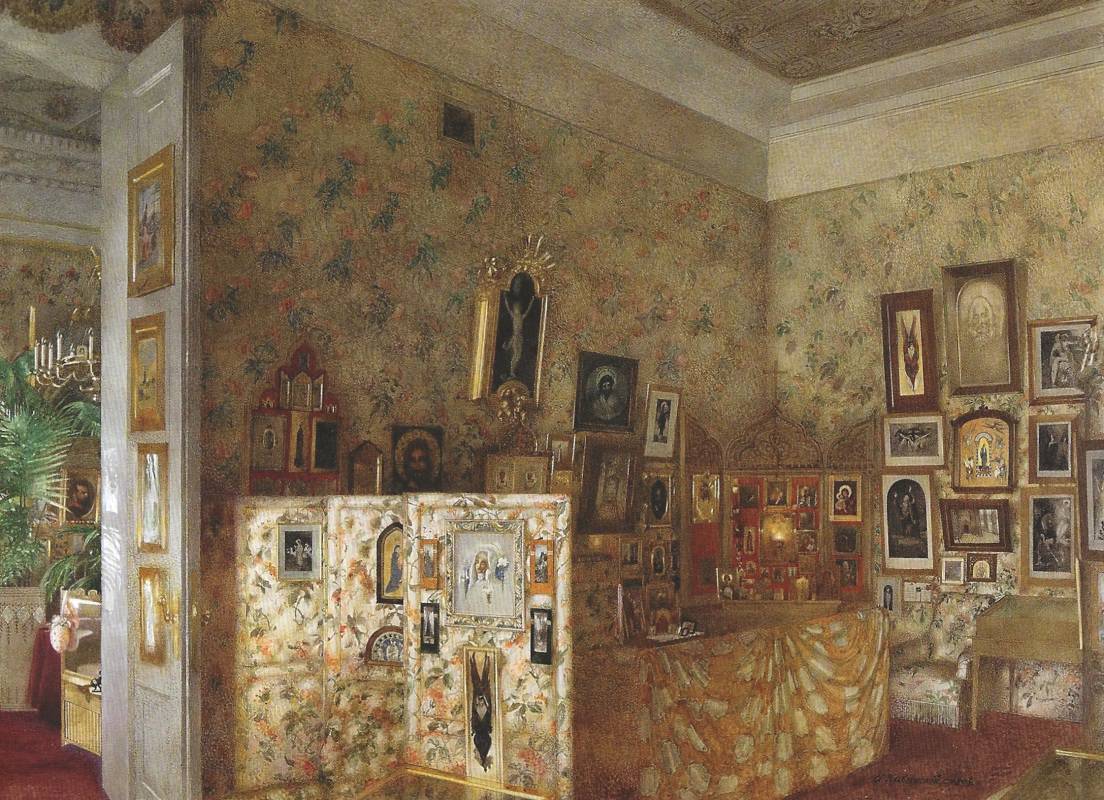
Bedchamber of Grand Duke Sergei Alexandrovich and Grand Duchess Elizaveta Feodorovna. Corner with carved oak icon case and icons. By Ignaty Nivinsky, 1904


Private sitting room of Grand Duchess Elizaveta Feodorovna. By Ignaty Nivinsky, 1909