Inspired by Pushkin
13 October 2020
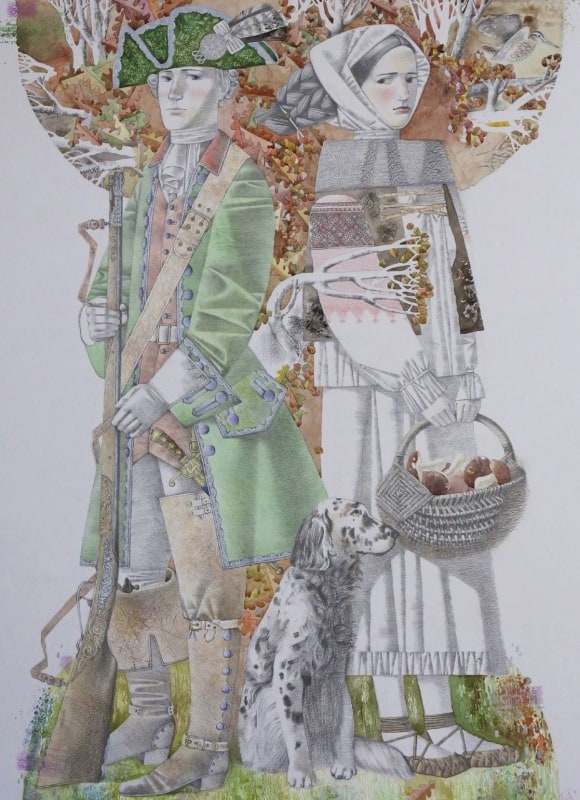
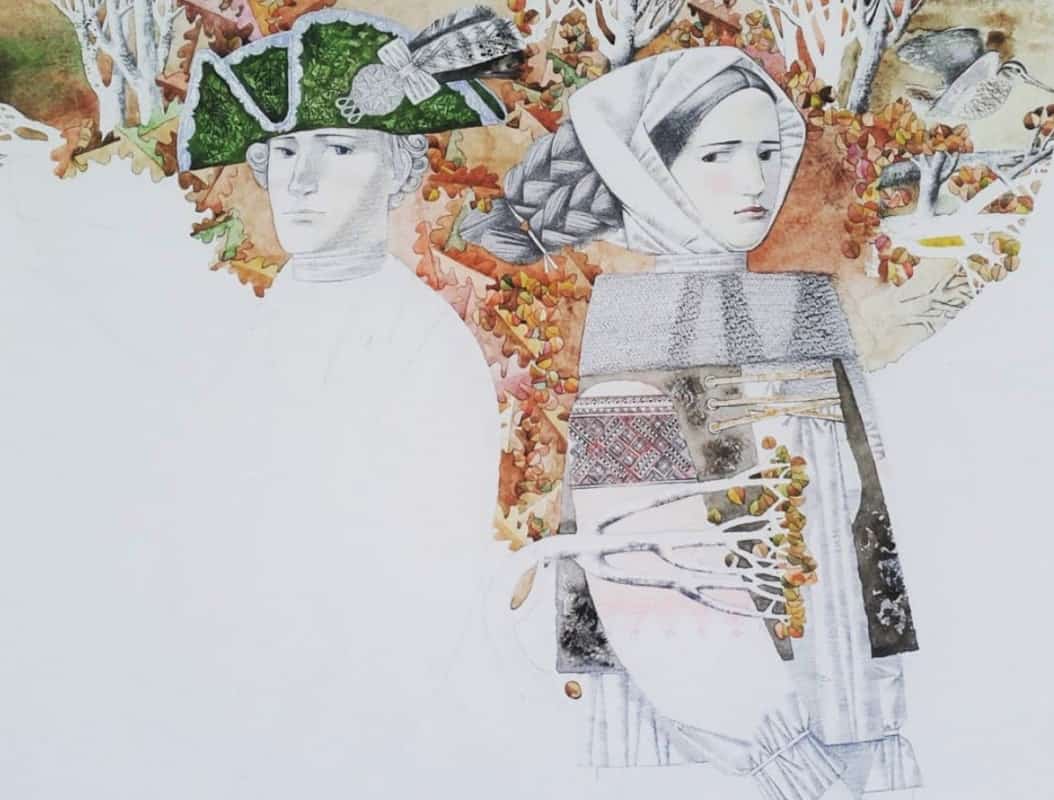
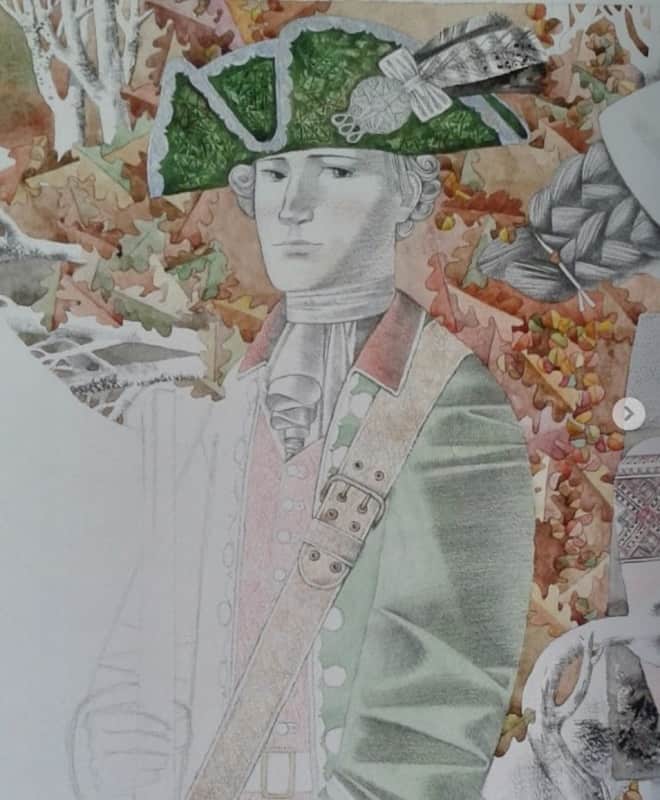
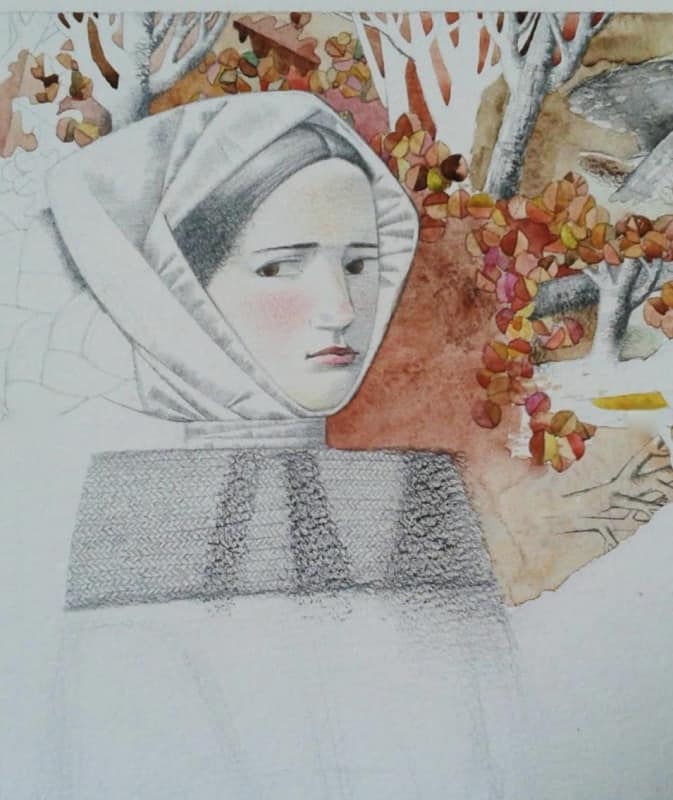
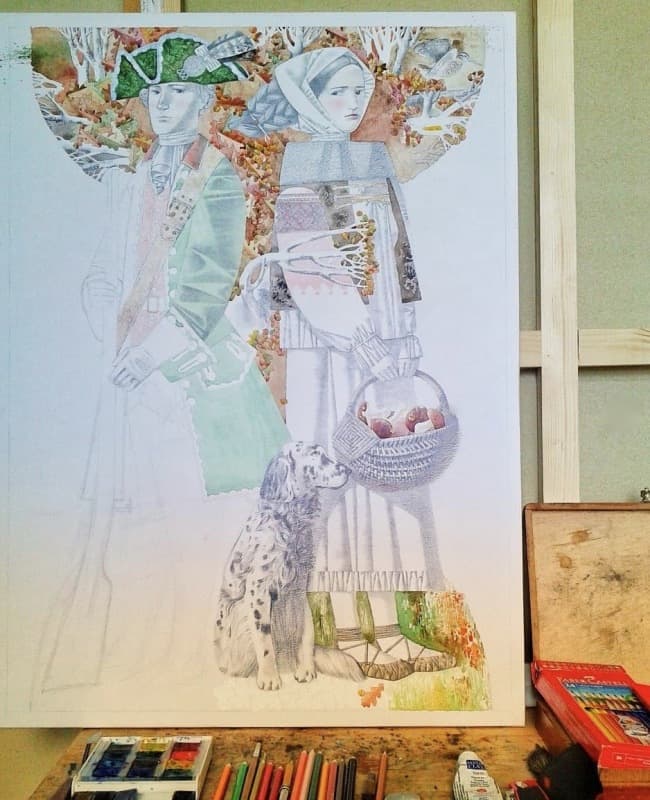
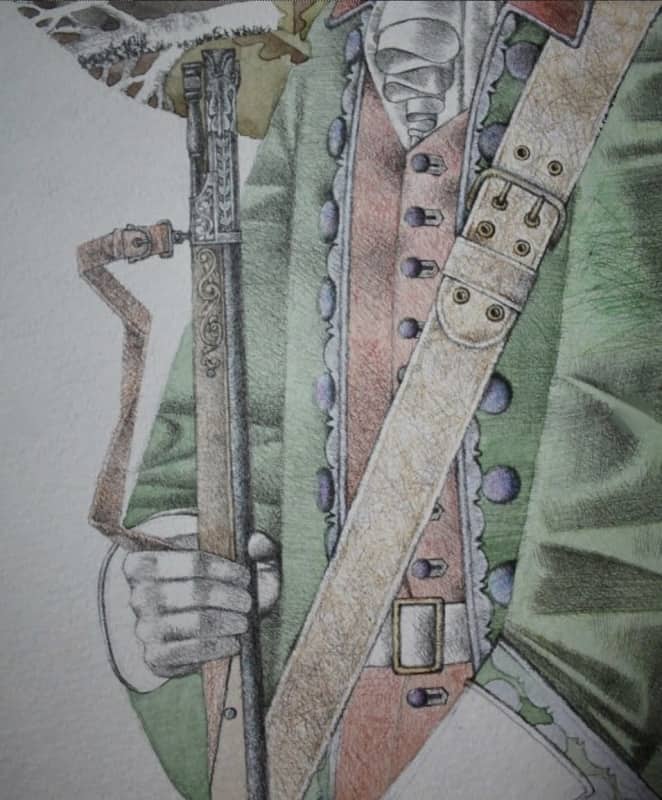
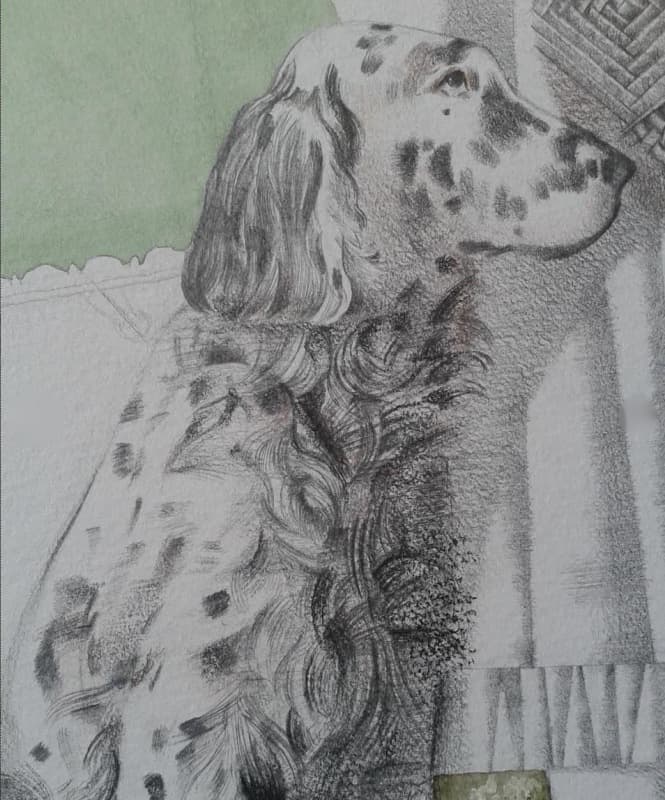
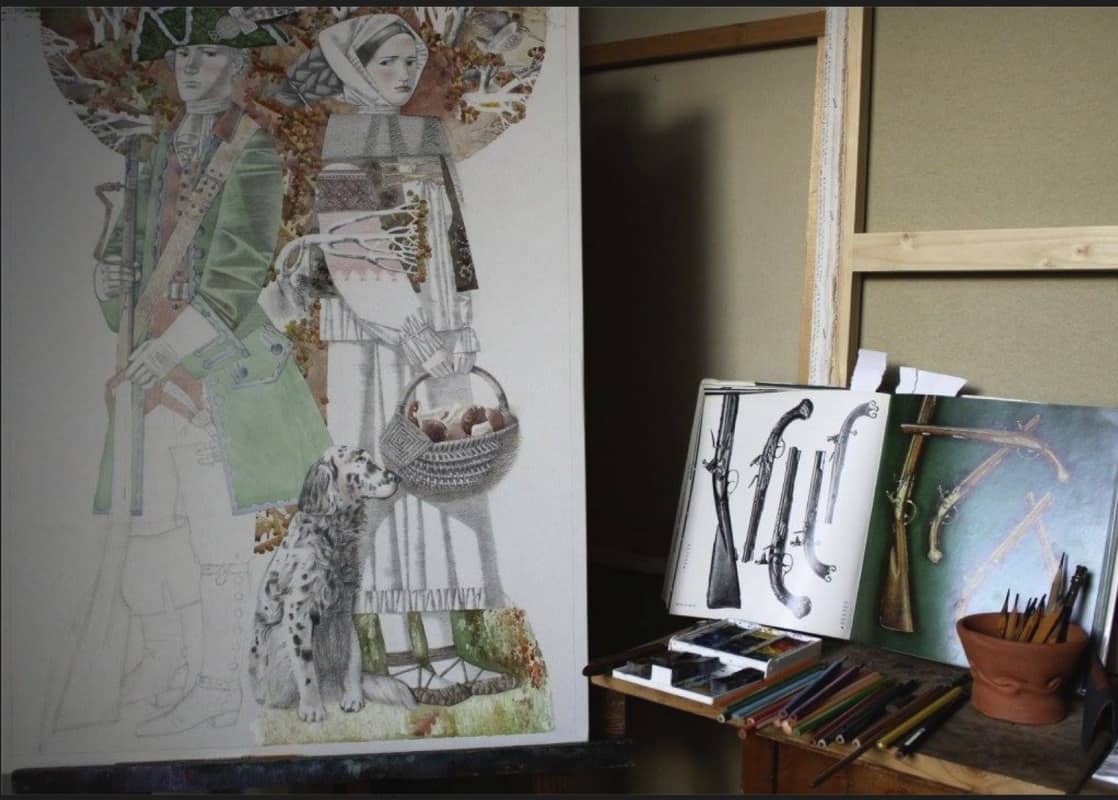
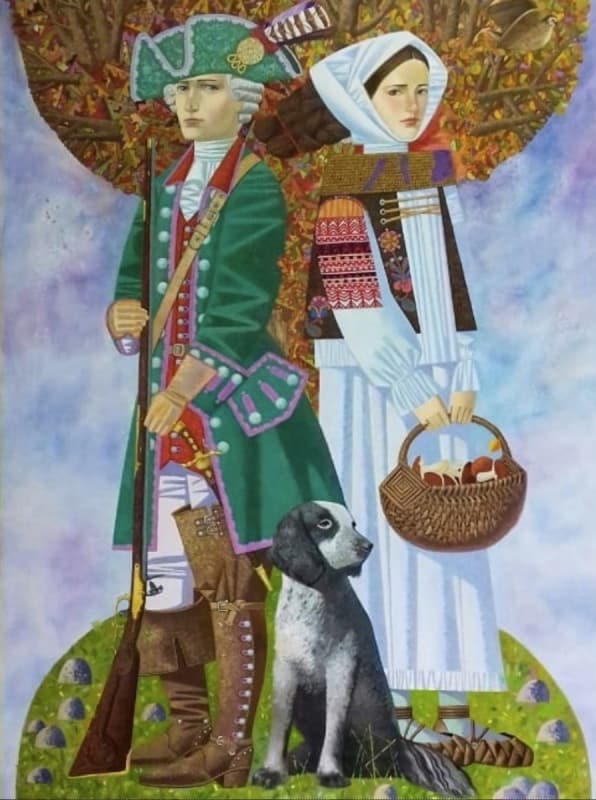
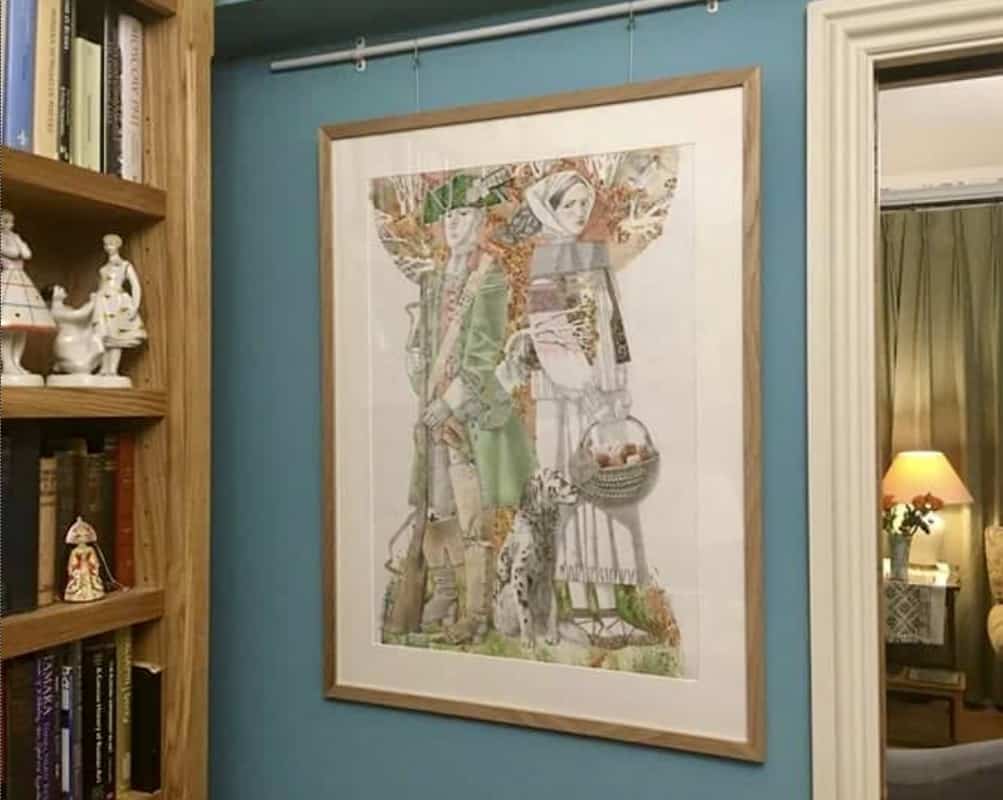
‘ Встреча на тихой охоте’. (Literally ‘Meeting on a quiet hunt’.) Pencil + watercolour on paper. Andrey Simakov, 2015.
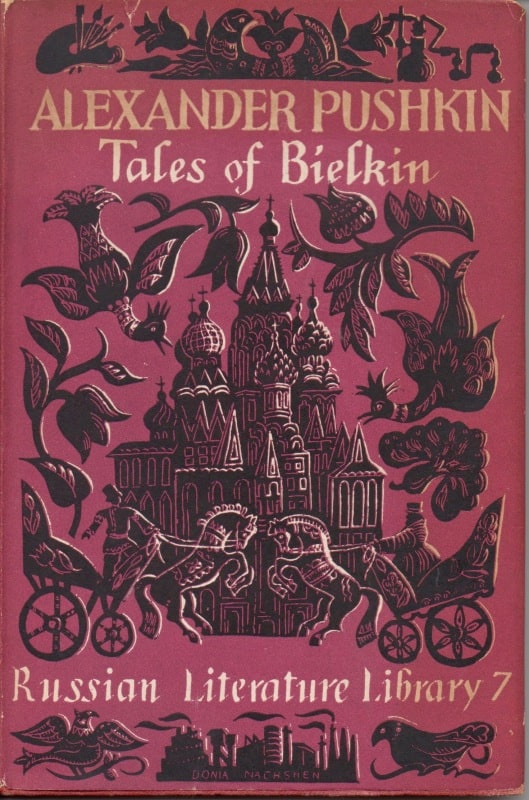
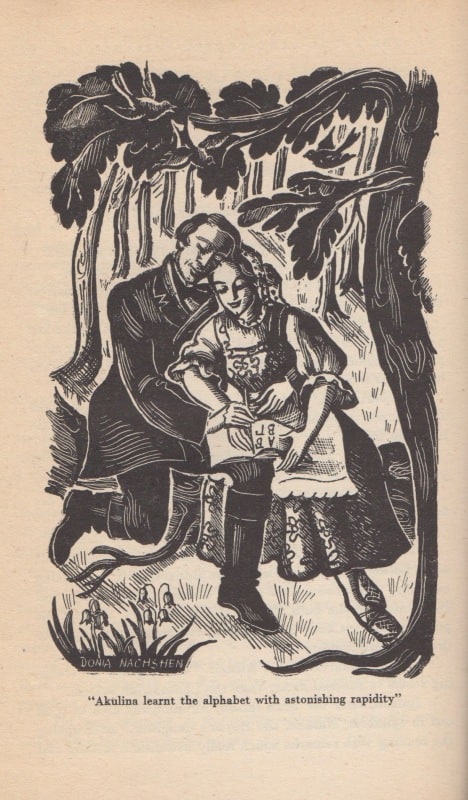
I bought this work from the artist at Art in Action in Oxfordshire. When I asked Andrey what was going on in the picture, he was a bit surprised that I didn’t already know the story. It must be very famous in Russia, where everybody knows and loves the works of Pushkin. But since then, I keep coming across the story in different circumstances. I was at a conference on Russian Dress at the University of Durham where two of the speakers analysed the meaning of peasant dress as it occurs in this story. I found it on my own bookshelves in two different translations, including in a lovely little volume published in 1947, which has some interesting illustrations by Donia Nachshen. The story was originally published in 1831.
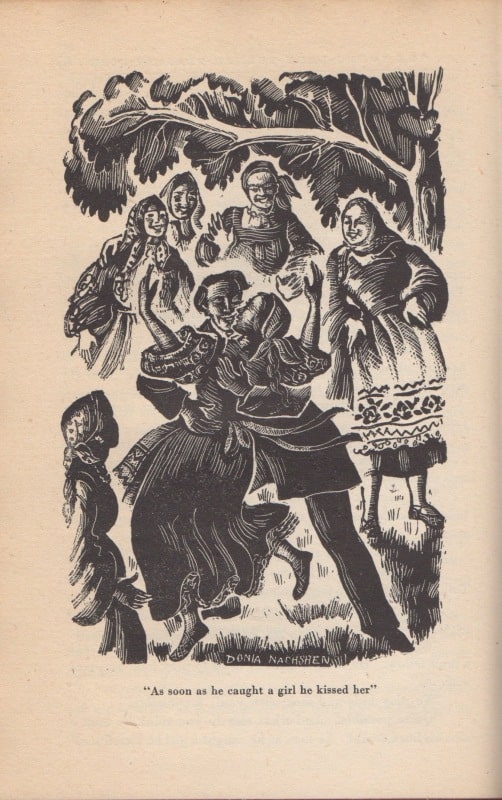
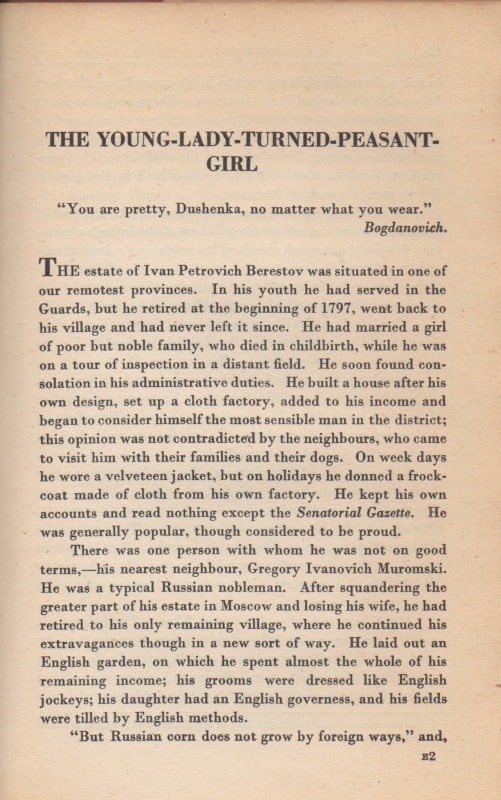
The story opens with Lizaveta Muromsky’s maid Nastya informing her that she is going to the Berestov estate to celebrate a name-day party being held for one of her friends who is a servant there. On her return Nastya tells Lizaveta of Alexei’s behaviour at the party, about how energetic and entertaining he was, even joining in the peasants’ games. This is at odds with what Lizaveta had previously heard about Alexei, namely that he acted in a melancholy manner, as was common among young, upper-class early-19th-century Russians. She resolves to find out for herself by dressing in peasant clothes and going to collect mushrooms in a forest where Alexei often goes hunting.
Lizaveta meets Alexei in the forest as she had hoped, and begins to talk to him in the guise and dialect of a peasant girl, Akulina. He is enchanted with her, and soon teaches her to write so they may correspond, and is amazed when she becomes completely literate within two weeks. This continues for some time, until one morning, the elder Muromsky is injured in a hunting accident and is taken in by Berestov. The two reconcile their differences, and the Berestovs are invited to the Muromsky estate for dinner. Lizaveta is terrified by this prospect and begs her father to allow her to conceal her identity. Because Lizaveta has a reputation as a prankster, her father allows her to do so, and the dinner passes without her identity being revealed, thanks to her rich clothing and liberal use of make-up. A short time after, the Berestov family encounters financial difficulties, and Berestov commands Alexei to marry Lizaveta Muromsky, the only suitable heiress in the area. At first, he is hesitant, and runs to the Muromskys’ house to explain to Lizaveta that his father wishes that they marry, but he cannot marry her because he loves Akulina. Alexei enters the Muromsky’s kitchen, only to find Lizaveta reading one of his letters. Alexei realises Lizaveta/Akulina’s true identity. The ending is amusingly abrupt as Pushkin just says ‘The reader will spare me the quite unnecessary task of describing the dénouement.’
And then I bought this book in the Russian Museum in St Petersburg, published in conjunction with an exhibition in 2014. I realised that the title comes from the heading Pushkin uses for his story:
‘Во всех ты, Душенька, нарядах хороша.’
‘You are pretty, Dushenka, no matter what you wear.’
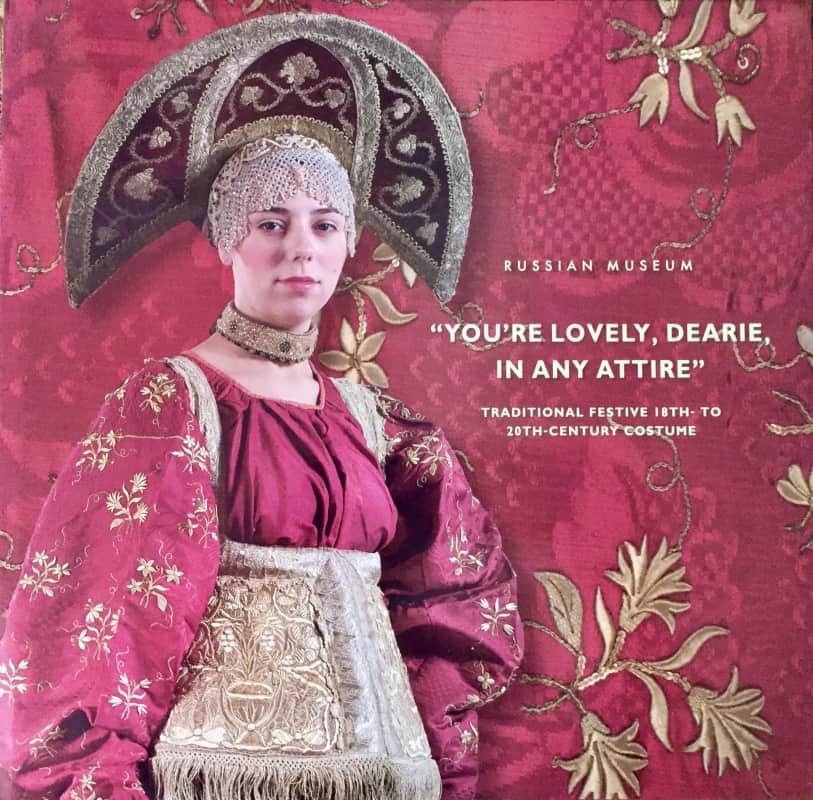
The book’s introduction explains the version of this quote used as its title:
‘”You’re lovely, dearie, in any attire” was a popular phrase used by Alexander Pushkin as an epigraph to his tale The Lady Peasant. The phrase originated with Ippolit Bogdanovich‘s poem Dushenka, based on the love story of ancient mythological figures Cupid and Psyche. The poem’s author renamed the heroine in the Russian manner, using a feminine term of endearment, dushenka – (or, in English, ‘dearie’) – a diminutive form of the Russian word for ‘soul’, to render the Greek word for ‘soul’ – ie psyche.
The story’s protagonist, the young daughter of a country squire, dresses up in peasant costume in order to get to know and make an impression on a young neighbouring landowner, but without being recognised. So comely does she appear in her thick homespun shirt and blue sarafan with brass buttons that she immediately wins the heart of her future husband. Such is the folk costume’s chief virtue – to beautify a woman, to emphasise her natural grace, bearing, disposition and kind-heartedness.”
Here are a few images from the book:
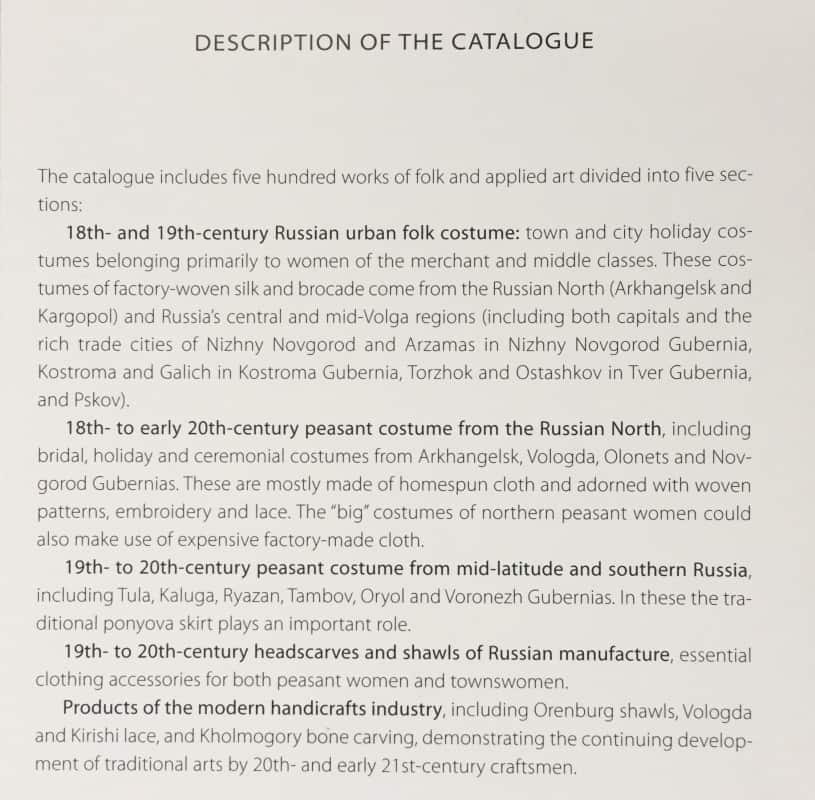
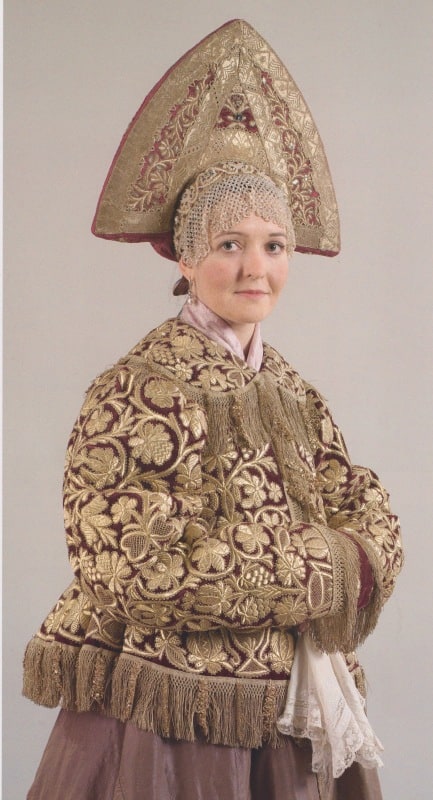
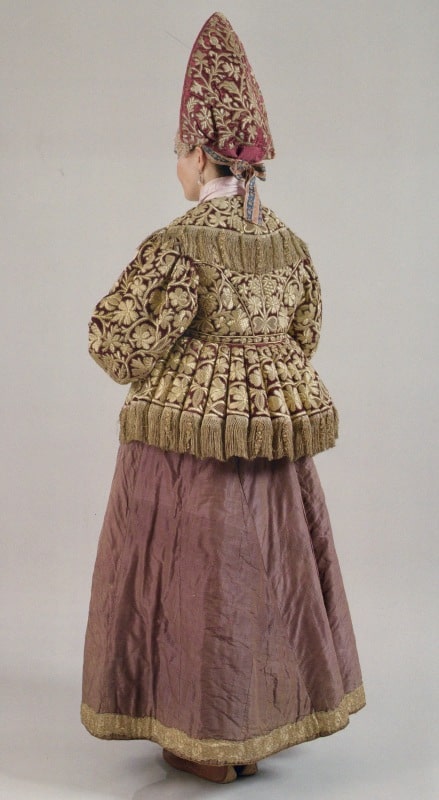
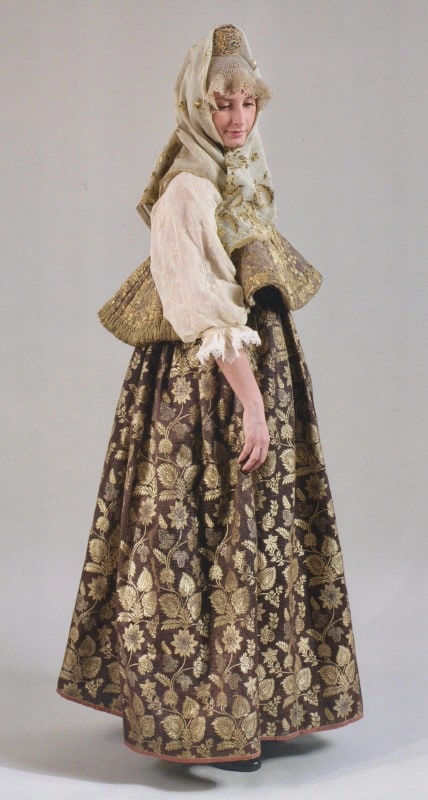
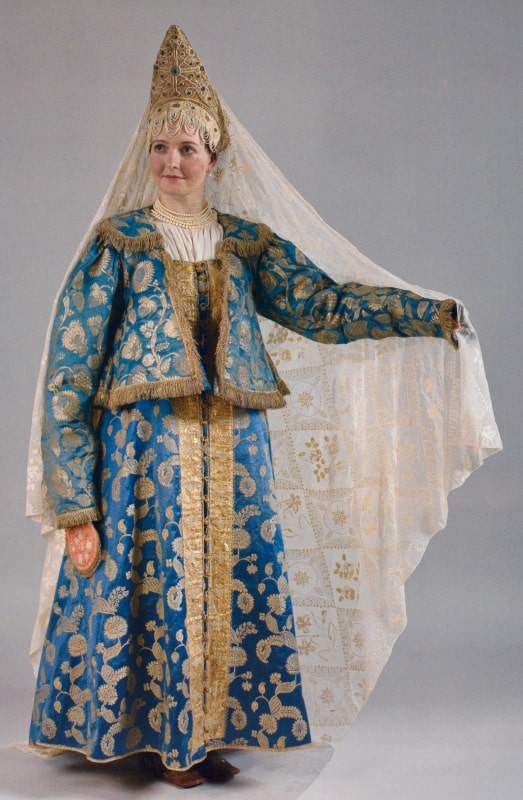
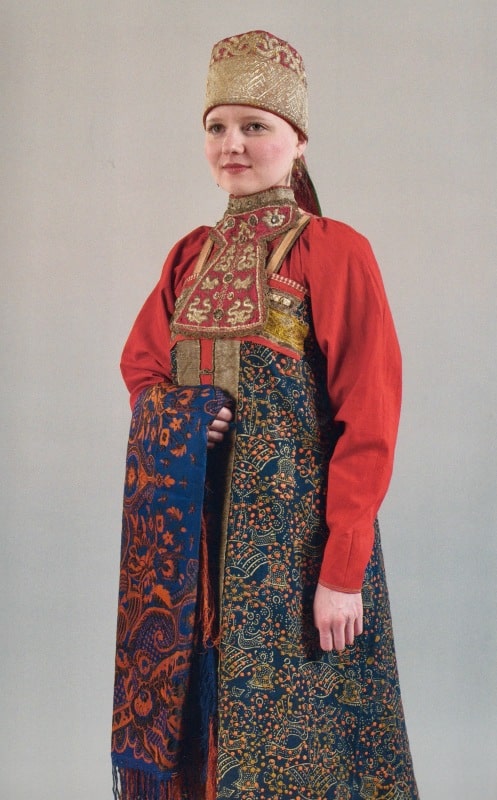
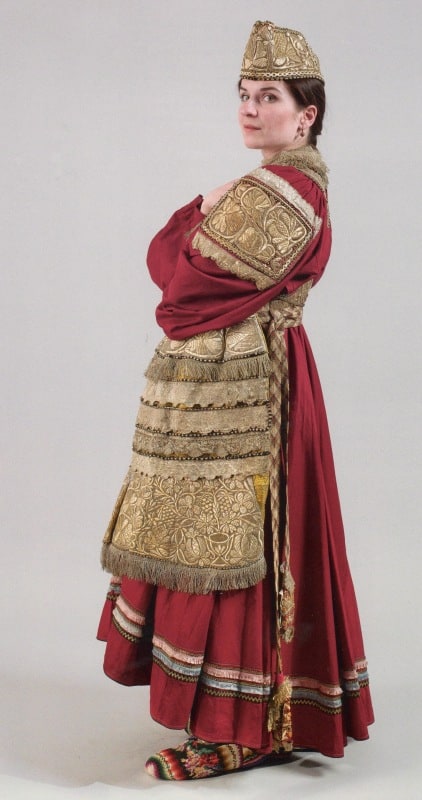
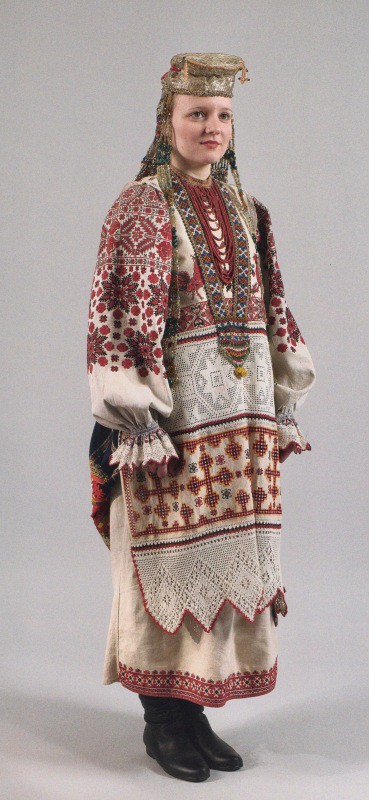
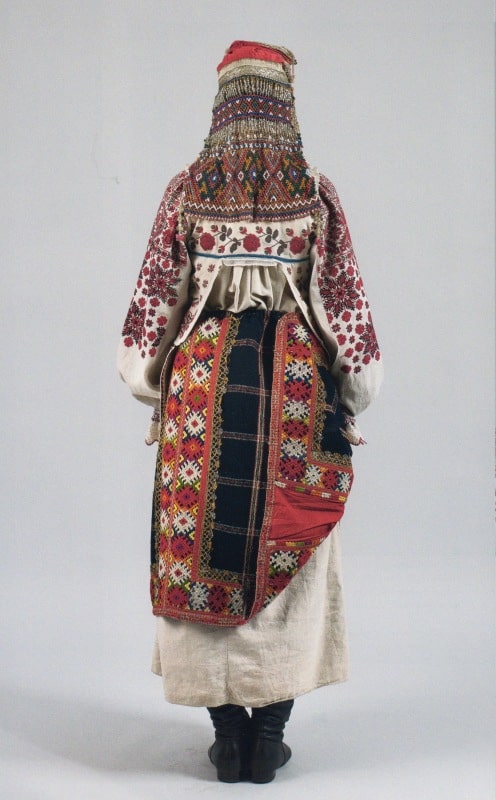
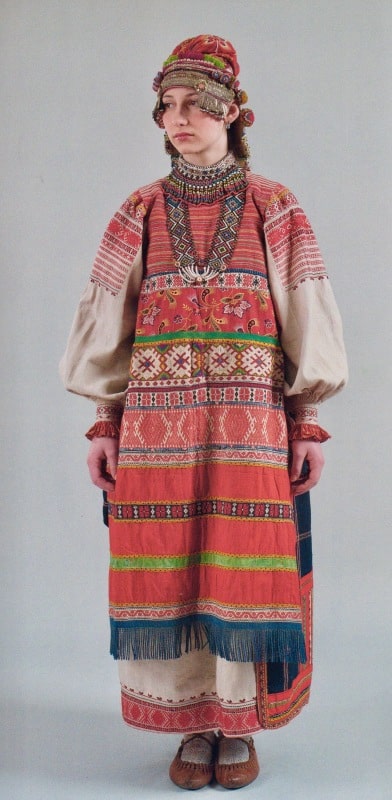
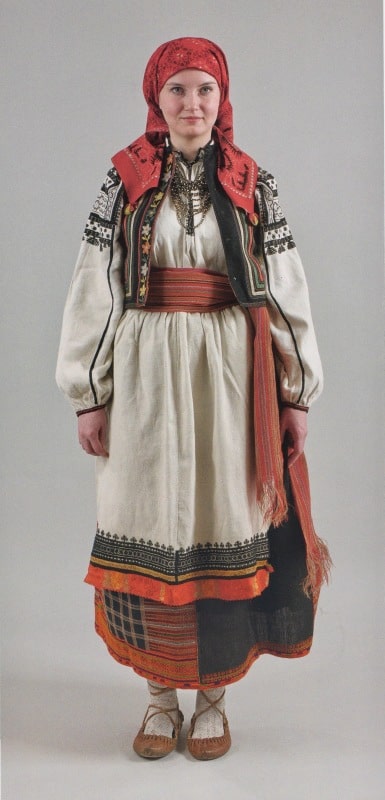
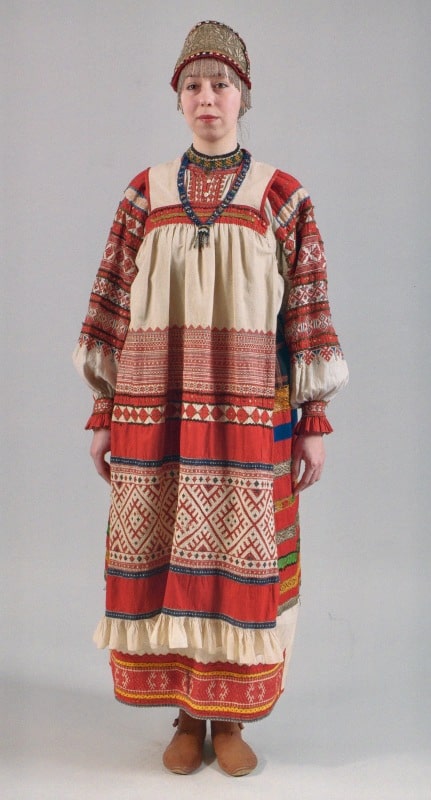
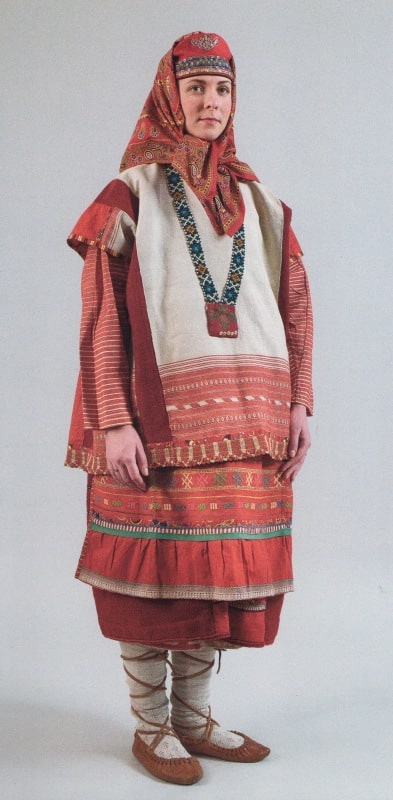
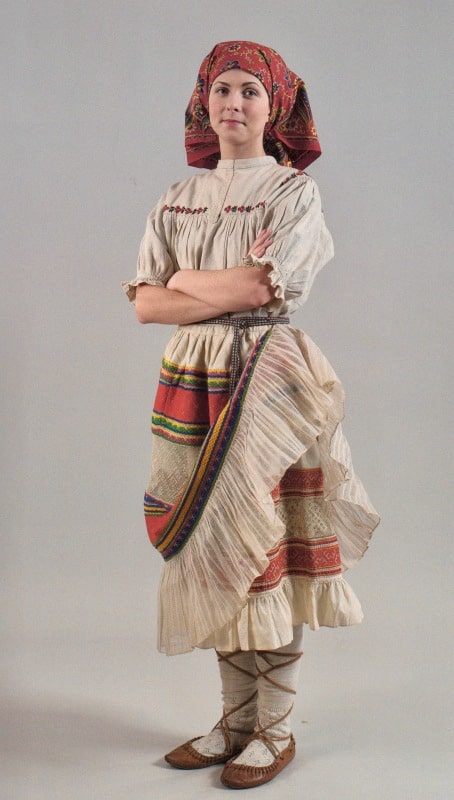
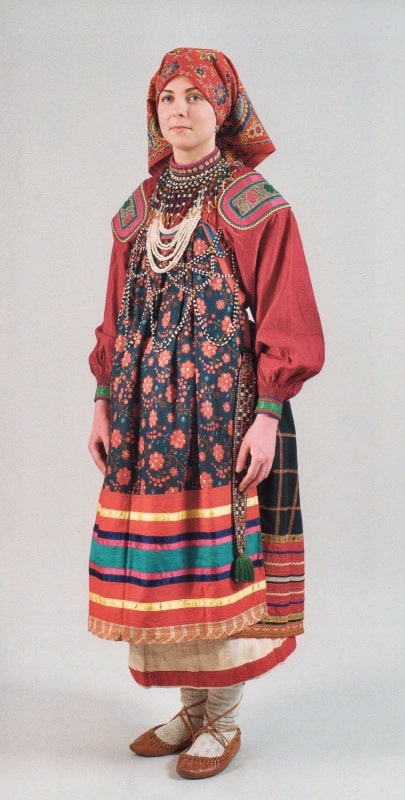
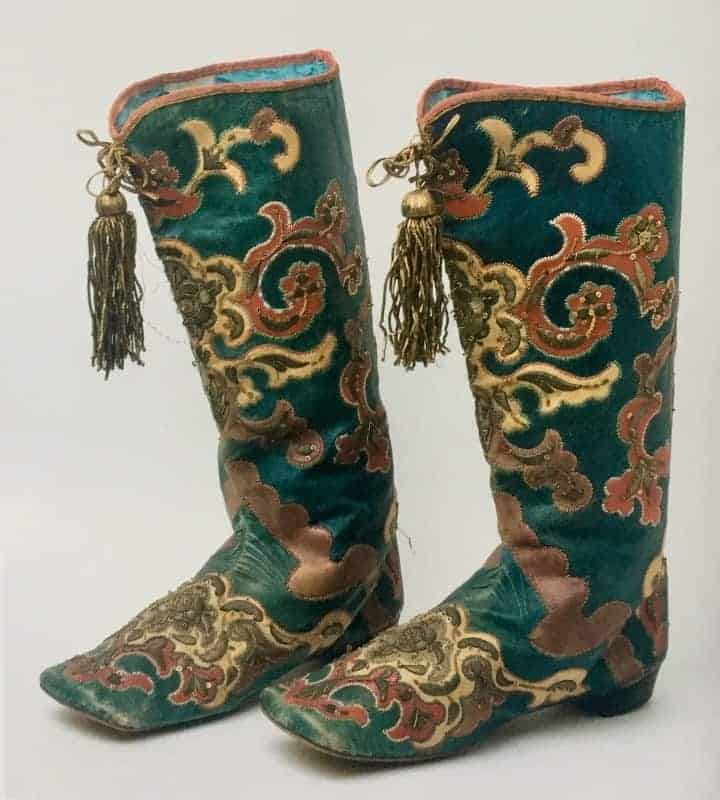
Embroidered boots from Torzhok, Tver region