Sadko
30 July 2021
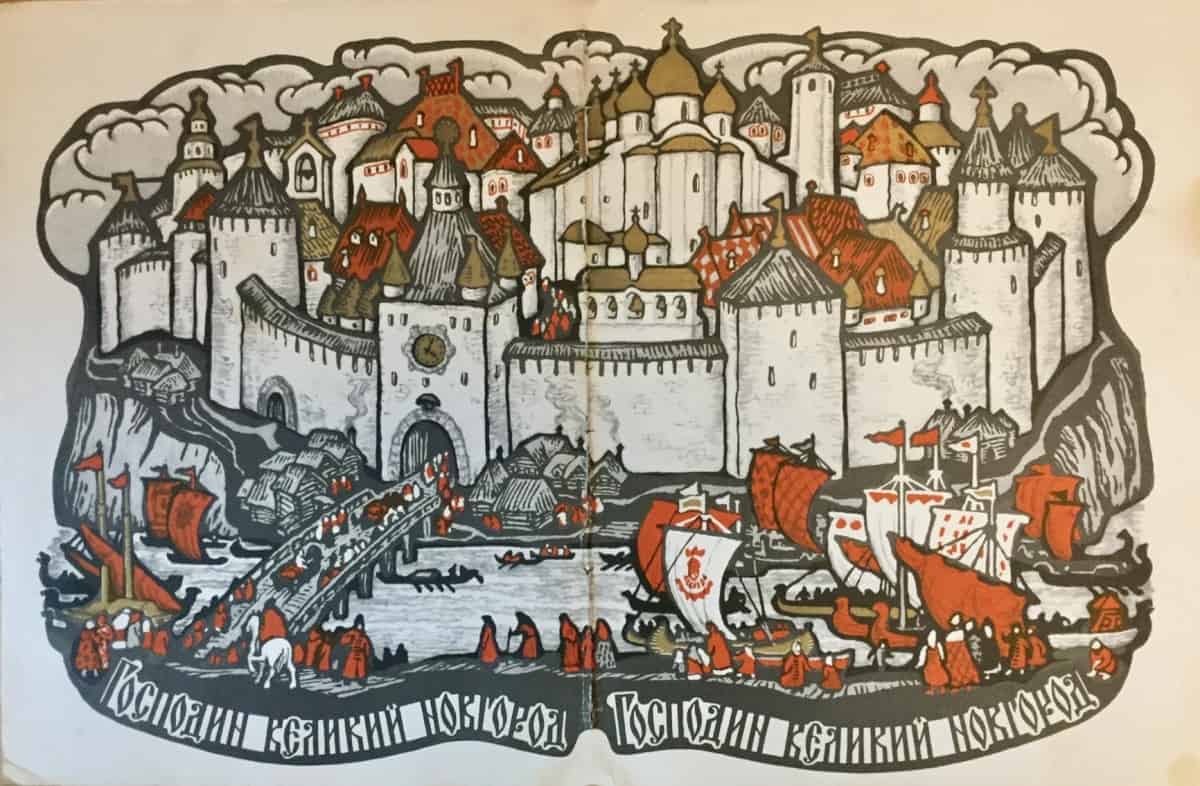
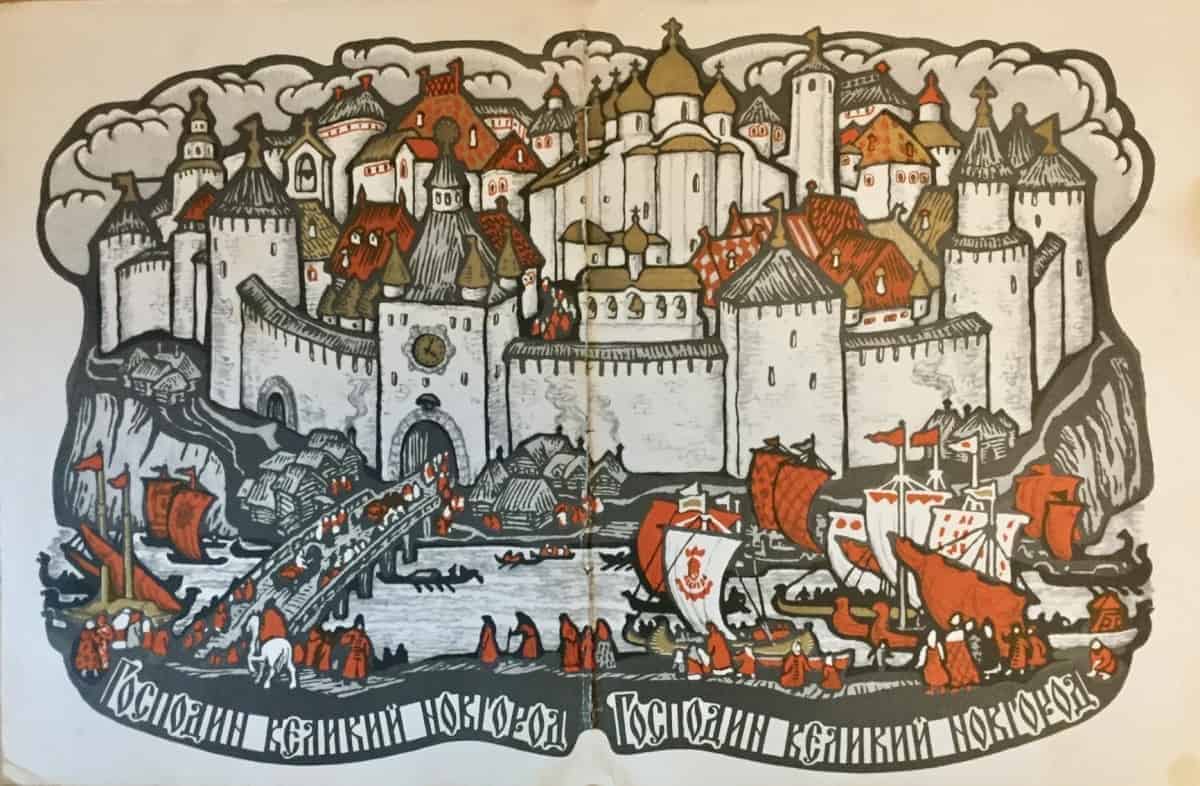
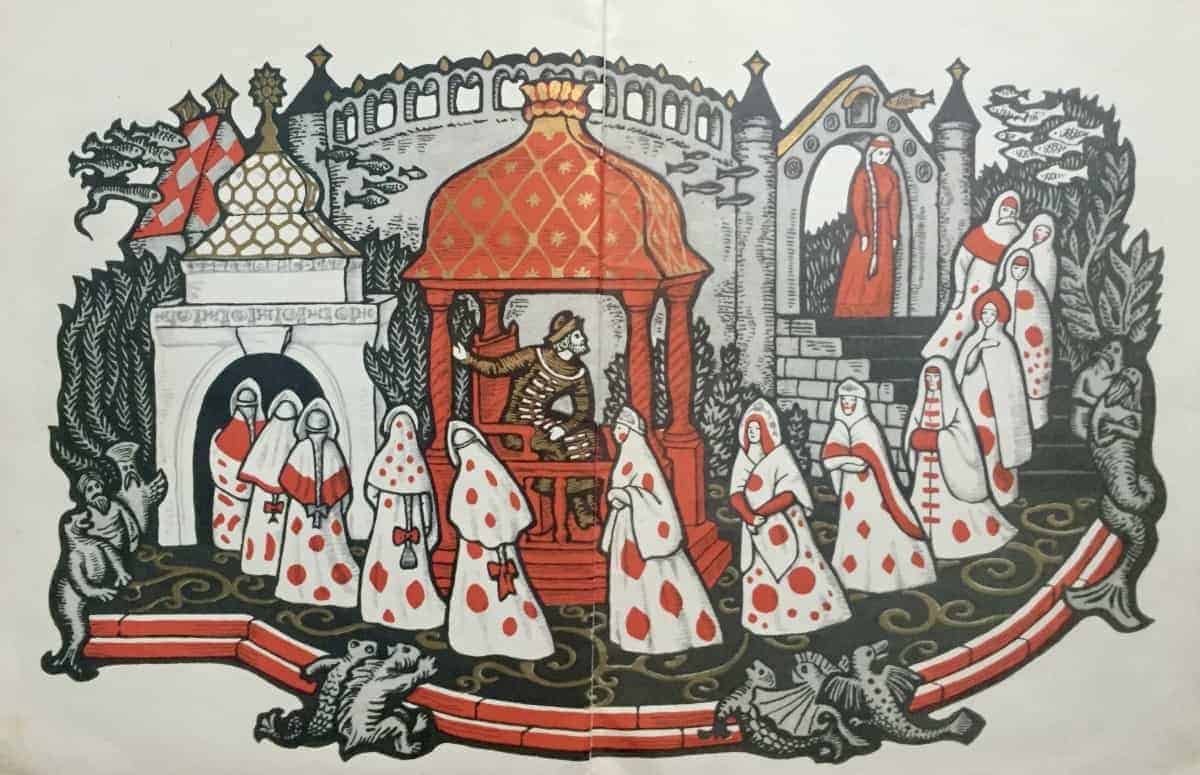
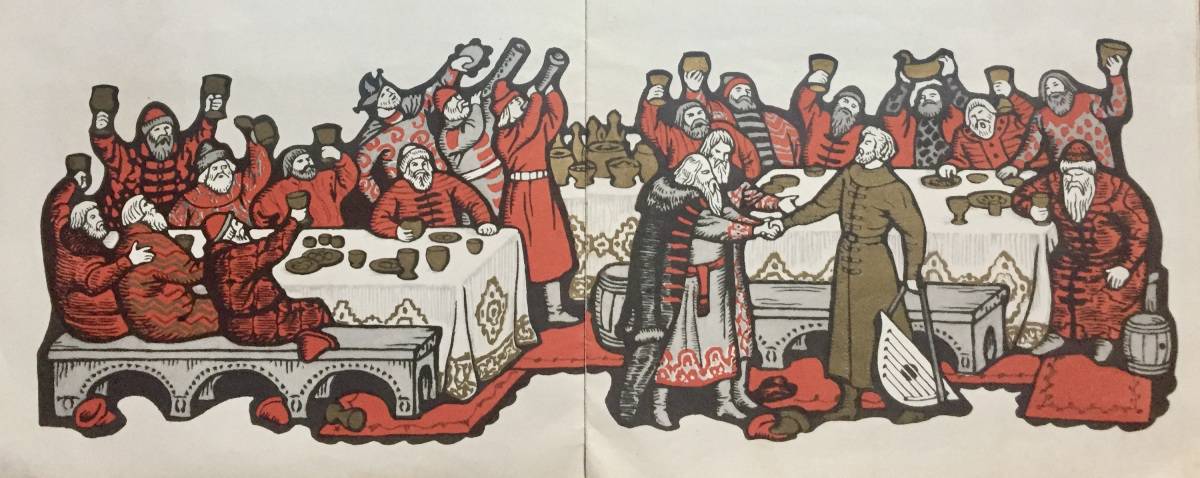
This post was prompted by another of those lightbulb moments when I saw the connection between two artworks. I was looking through the Soviet children’s books that I have and realised that the style of the illustrations in one of them – the folk tale, ‘Sadko’ – looked familiar to me. The book was published in 1966, at the next-to-nothing price of 23 kopeks. Above is a double-page spread depicting Great Novgorod – the ancient city that features in the story.
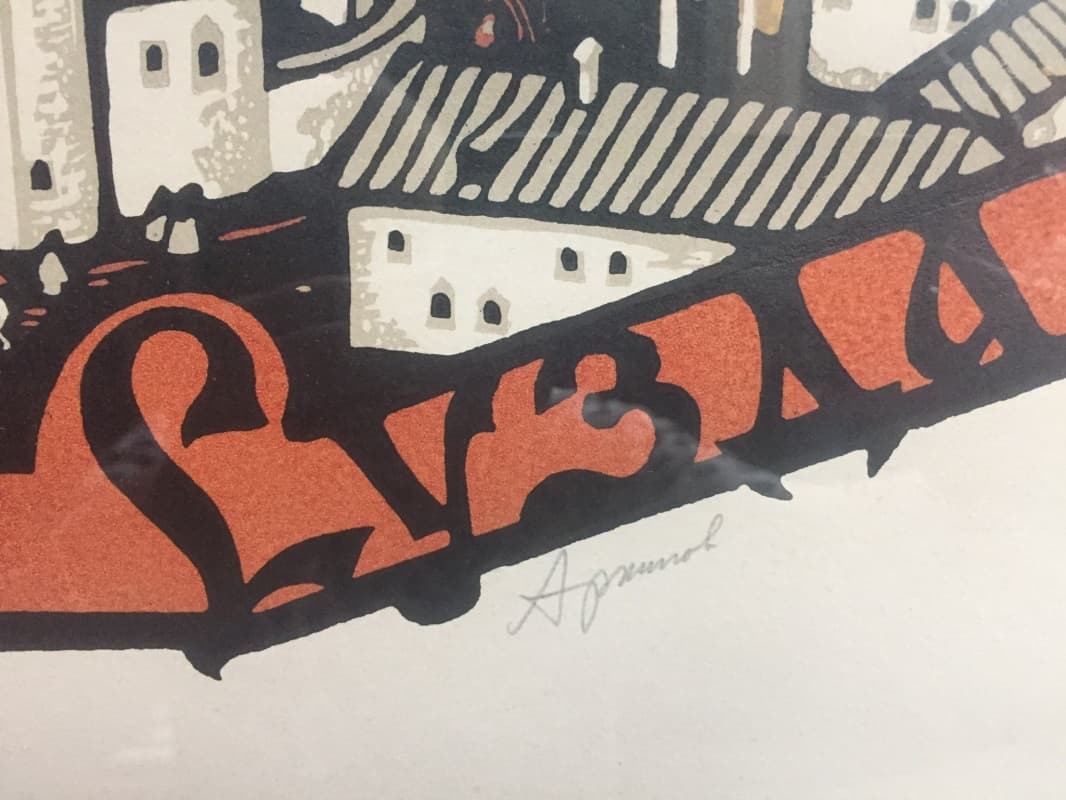
Some years ago, at a fundraising event for Russian arts in Oxford, I bought a large print, which I had framed and which has been hanging on the wall above my desk ever since. It shows ‘The Ancient Town of Suzdal’. I’ve been to Suzdal several times. No-one could fail to be entranced by it. You can spot the most important churches and monasteries in this picture, with the river Kamenka running through the centre. At the top are the distinctive red walls and towers of the monastery of Saint Euthymius and, below that to the left, the Povkrov convent, site of my ‘horse in the fog‘ experience. You can see the little log houses where we stayed, within the white walls, nearest to the river. I love the style of this work as well as the subject. The ‘Sadko’ illustrations are by Ivan Arkhipov and sure enough I found his signature in pencil on my Suzdal picture.

There are many versions of ‘Sadko’ but, briefly, this is the one told in Rimsky-Korsakov’s opera:
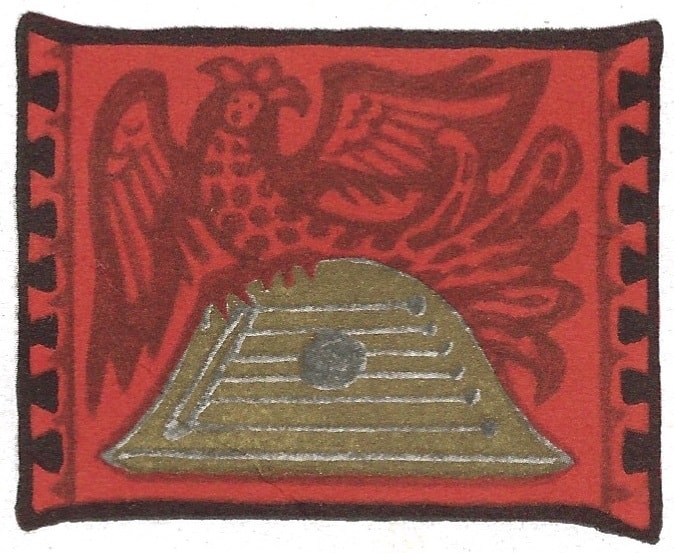
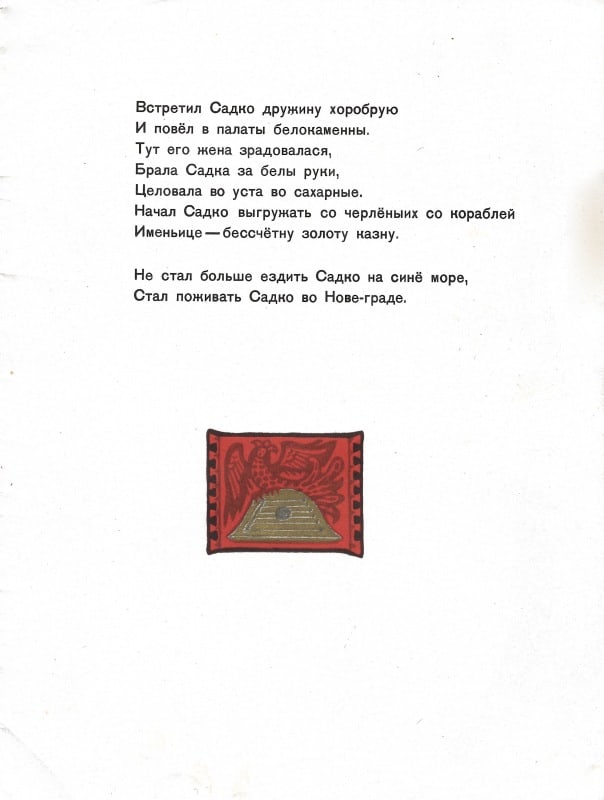
The story comes from a bylina, an epic oral poem of the Russian folk tradition, and tells of how the historic city of Novgorod came to be connected to the sea. Sadko is a poor musician in Novgorod; he plays the gusli, a kind of folk zither. Beside Lake Ilmen his playing entrances Volkhova, daughter of the Tsar of the Sea, who tells him how he can make a fortune by catching golden fish. Sadko returns to Novgorod, makes a bet with the merchants that he can produce these miraculous fish, then does so and wins three ships laden with valuable goods. He then sets sail in search of more riches. After a mutiny, he is thrown overboard, and ends up in the world of the Tsar of the Sea, where he again meets Volkhova and marries her (though he already has a wife in Novgorod, Lyubava). Ultimately, Volkhova sacrifices herself for Sadko, and transforms into the river that then connects Novgorod to the sea, occasioning much rejoicing amongst the merchants of the city. Sadko is happily reunited with his terrestial wife.

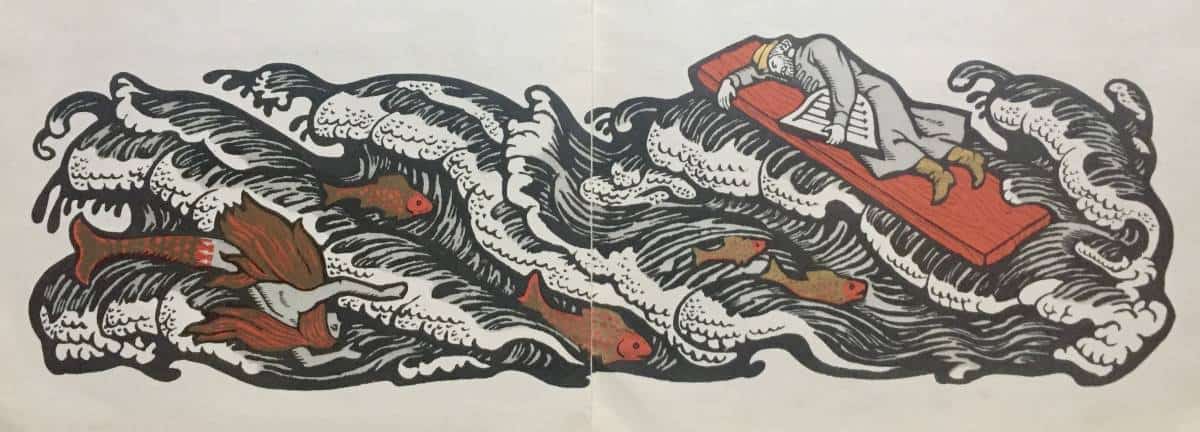
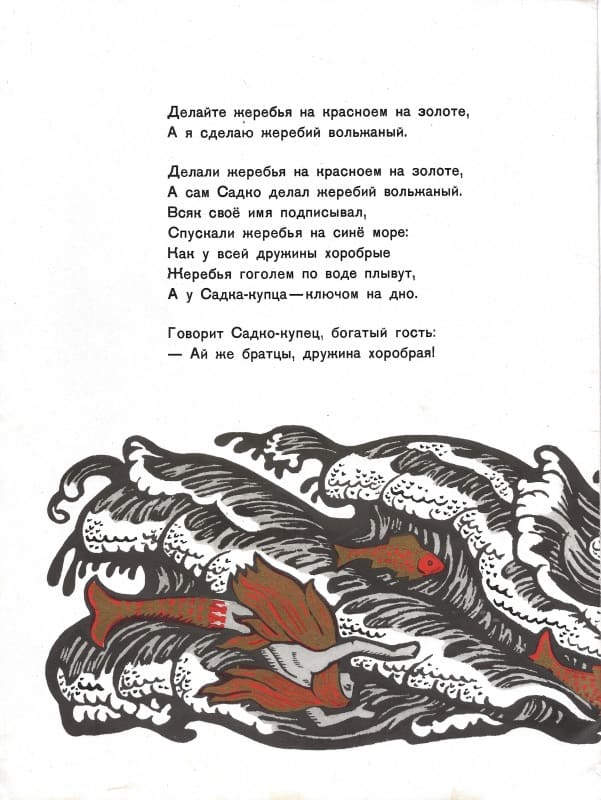
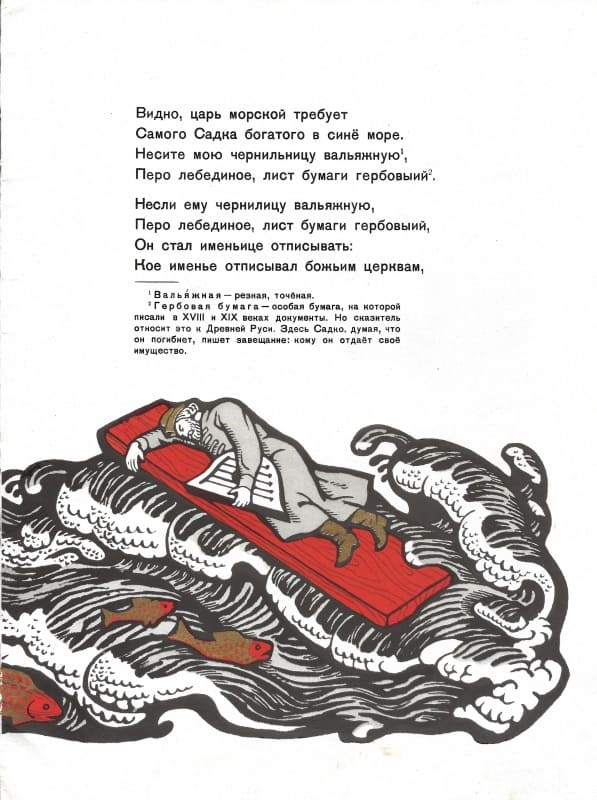
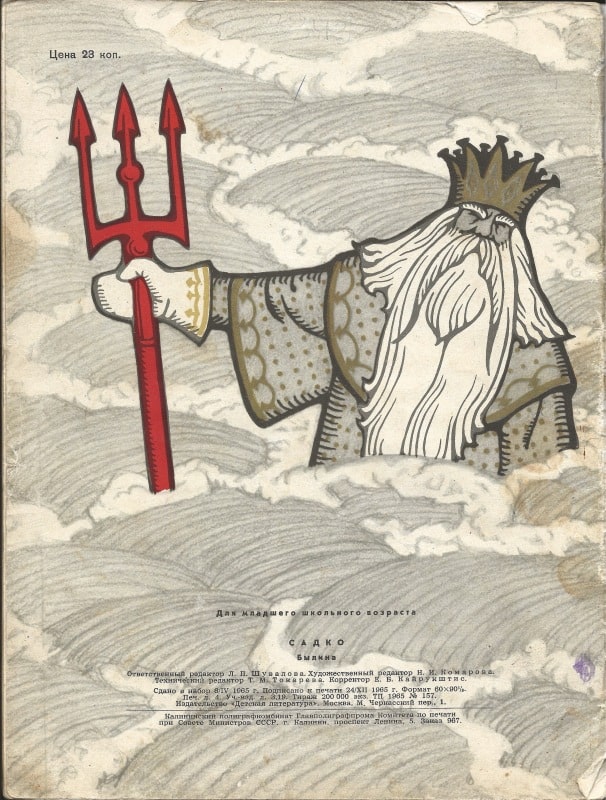
When a storm threatens Sadko’s ships, the sailors consider the Sea Tsar has been offended and a sacrifice must be made. Different versions have Sadko being thrown overboard or volunteering to jump into the sea. He floats on a plank for a while and then descends into the underwater kingdom.
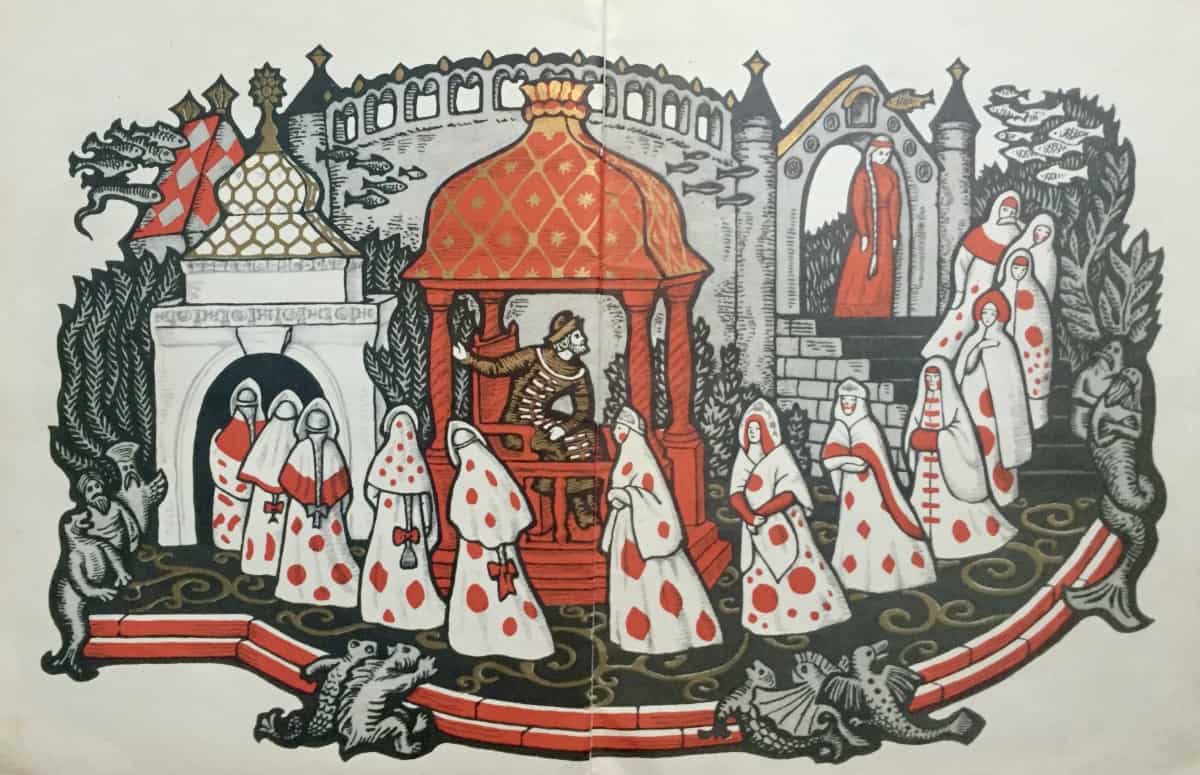
Sadko is required to choose a bride from amongst the Sea Tsar’s hundreds of daughters. (I like the ogling sea creatures…)
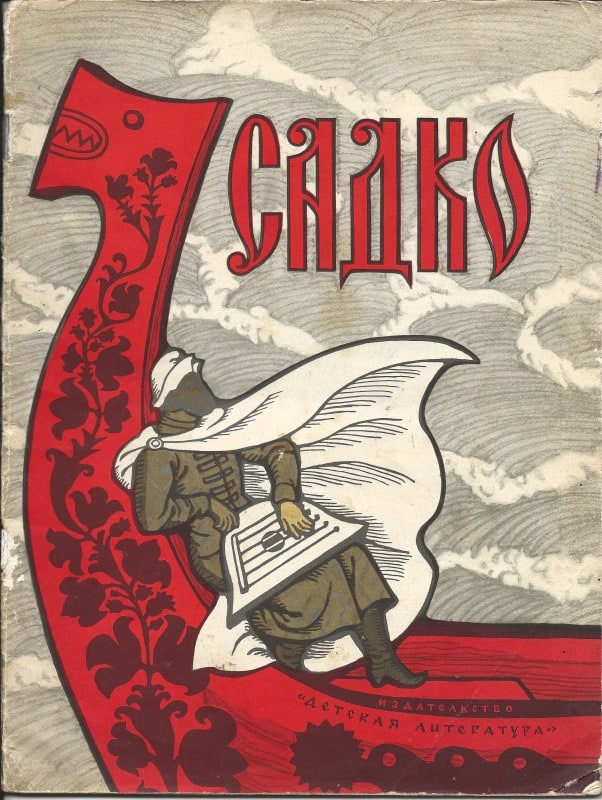
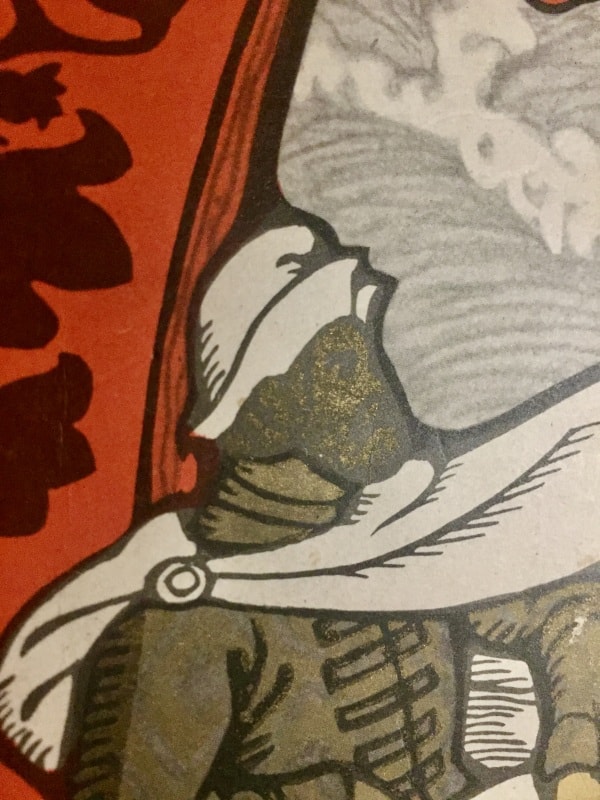
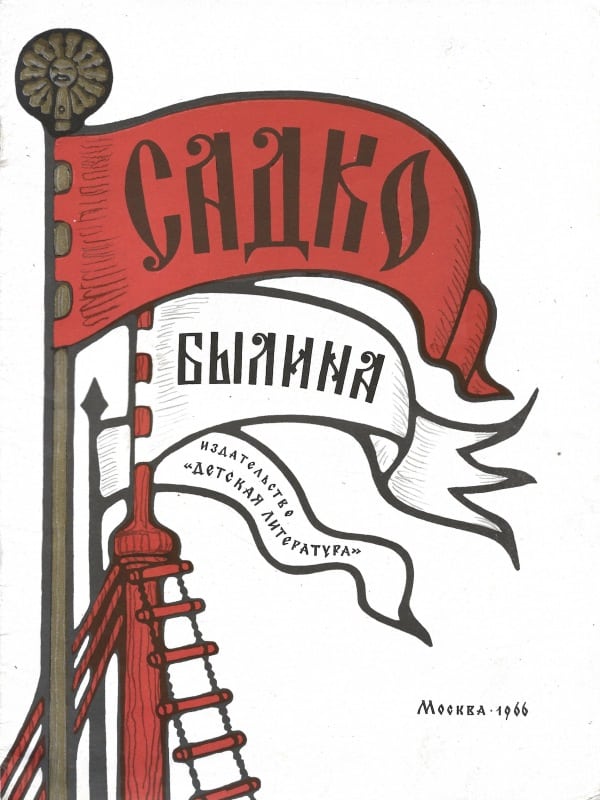
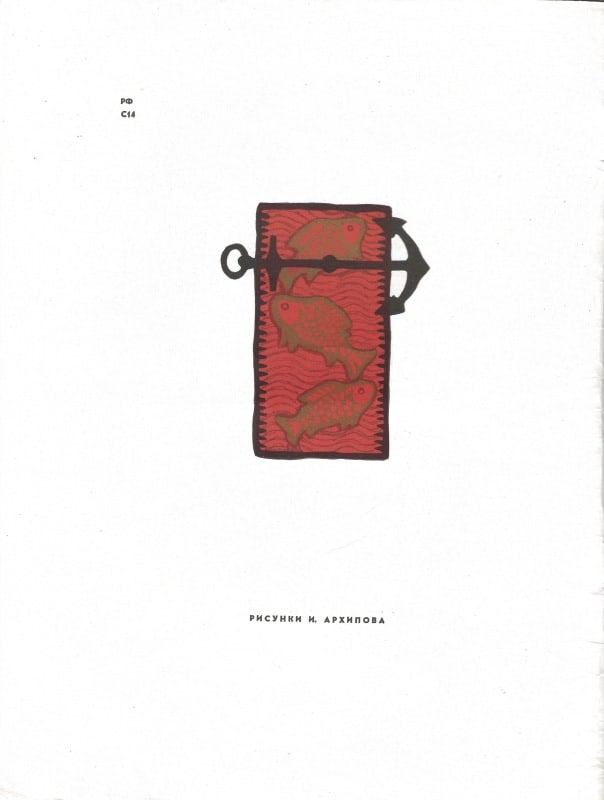
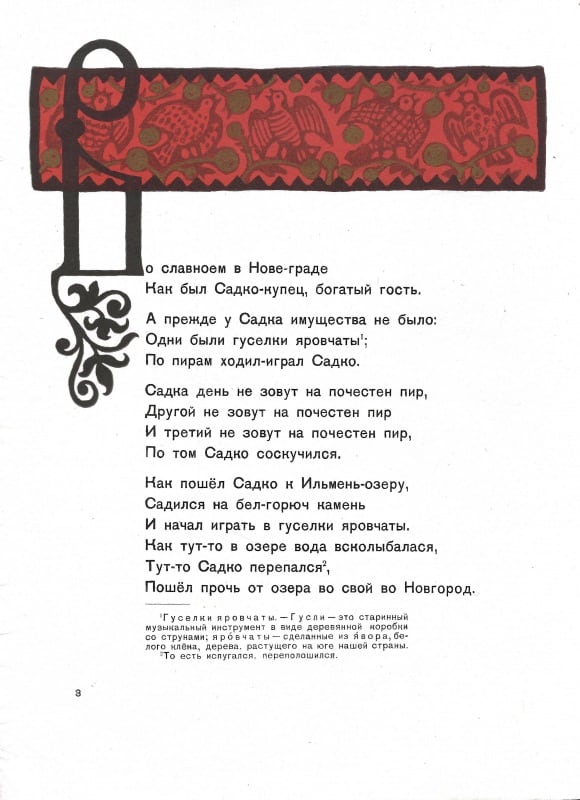
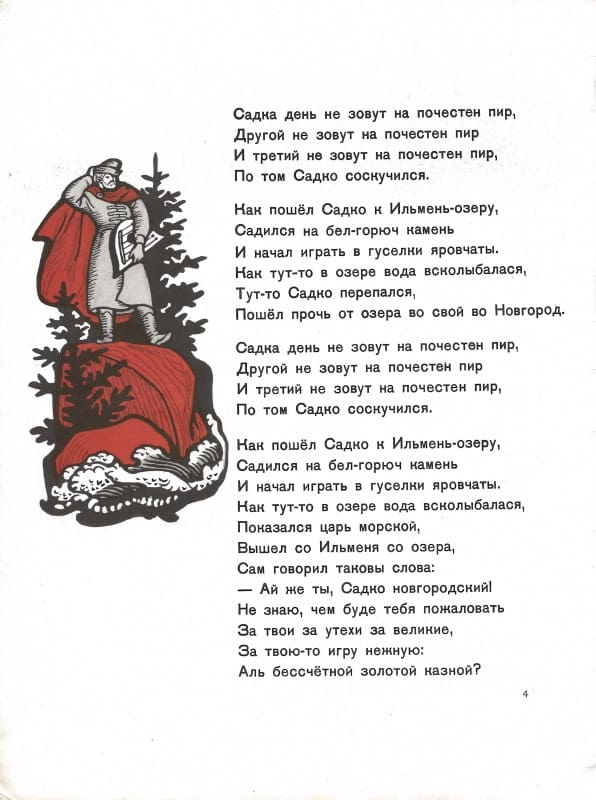
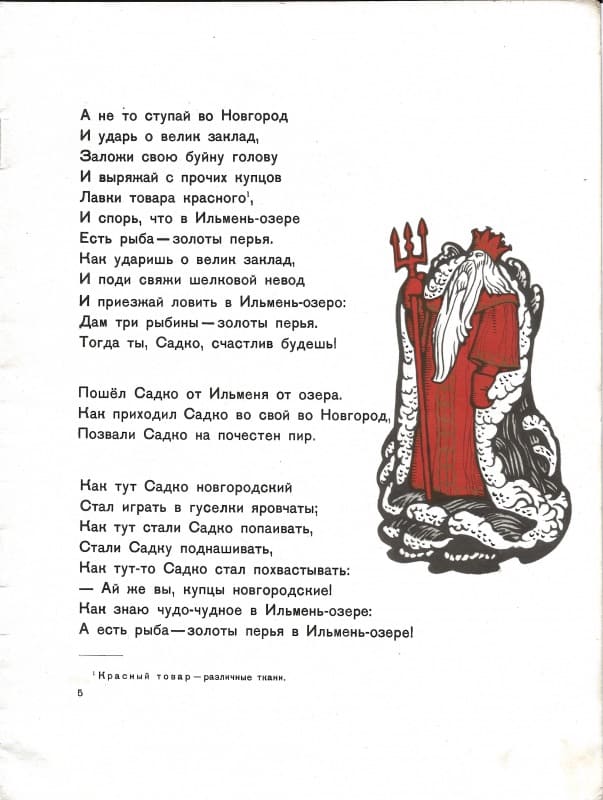
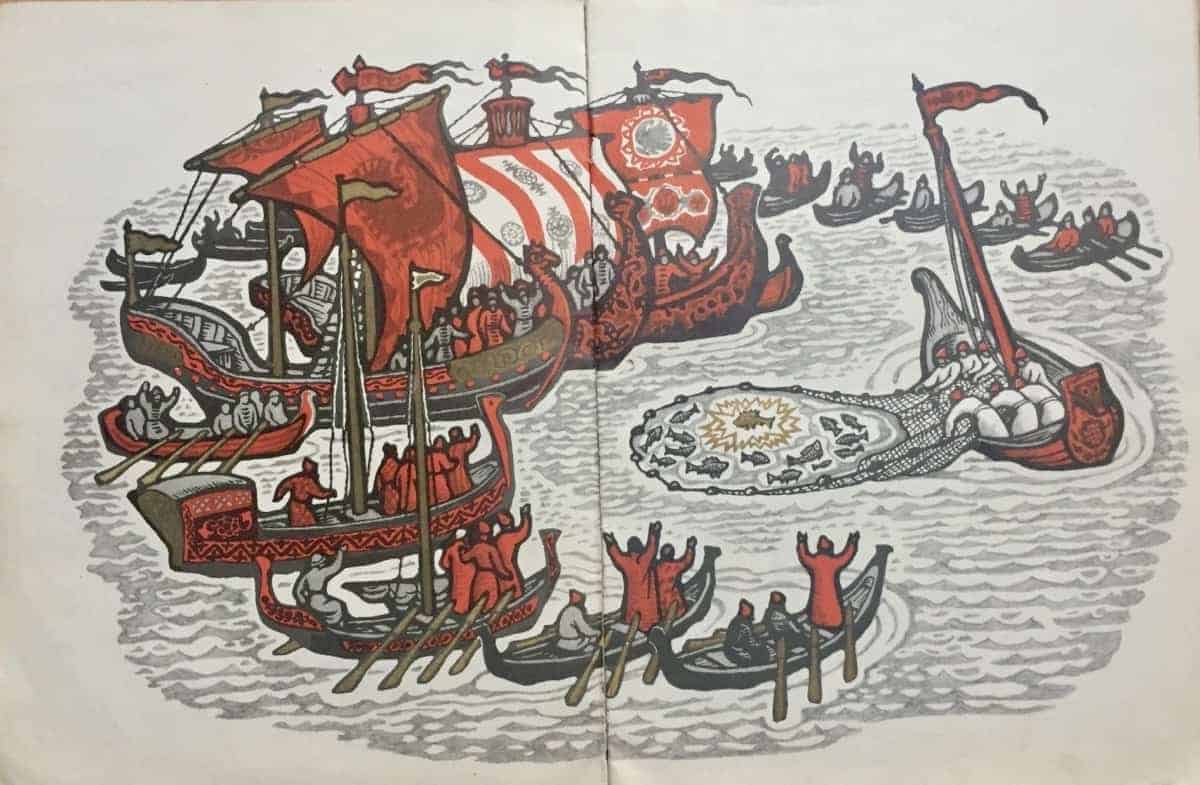
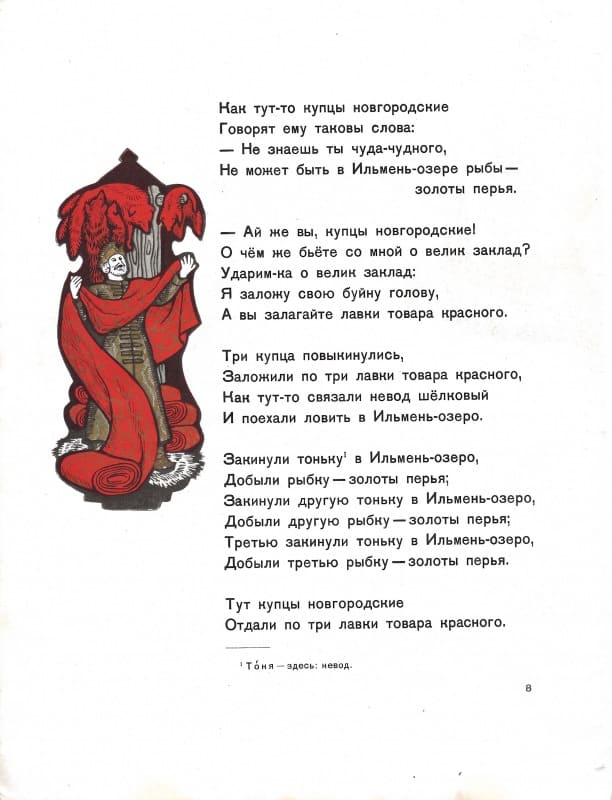
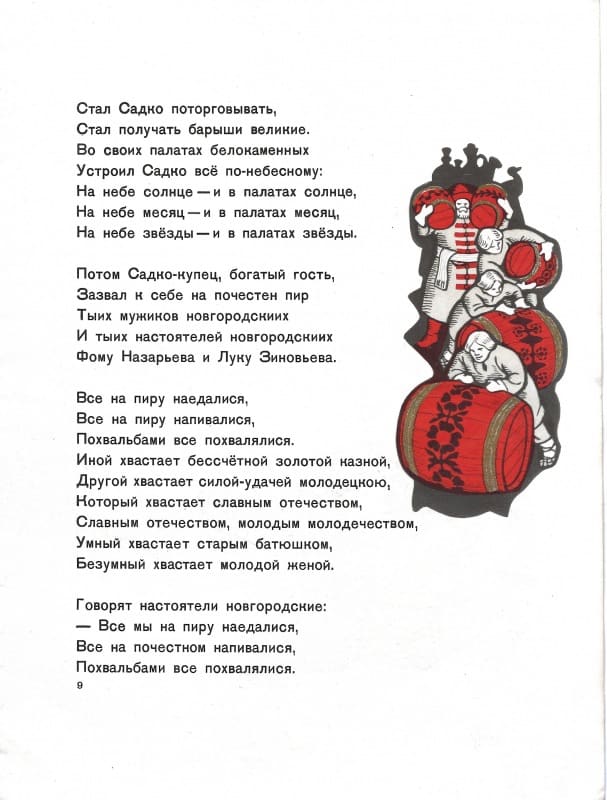
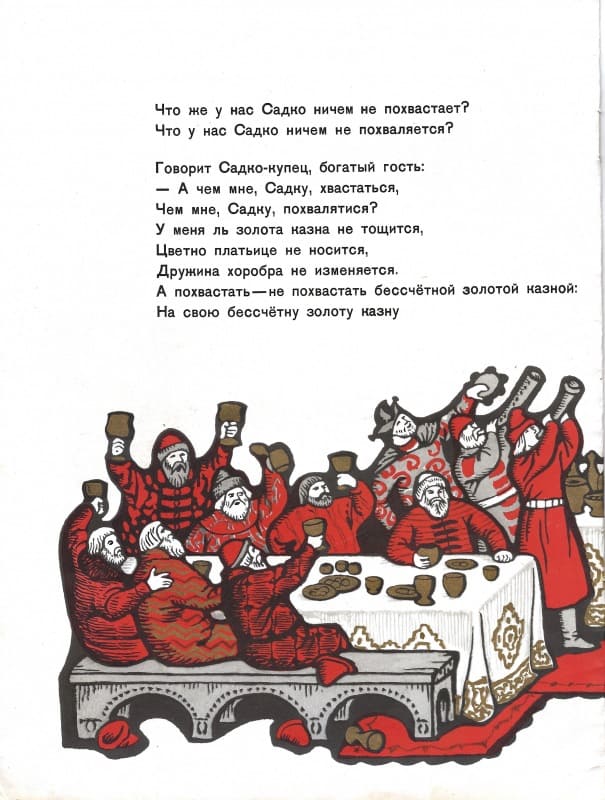
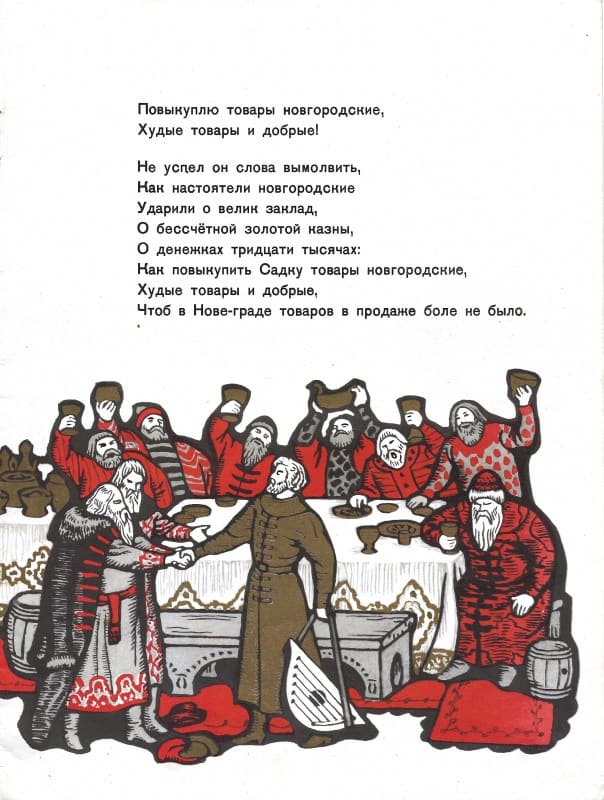
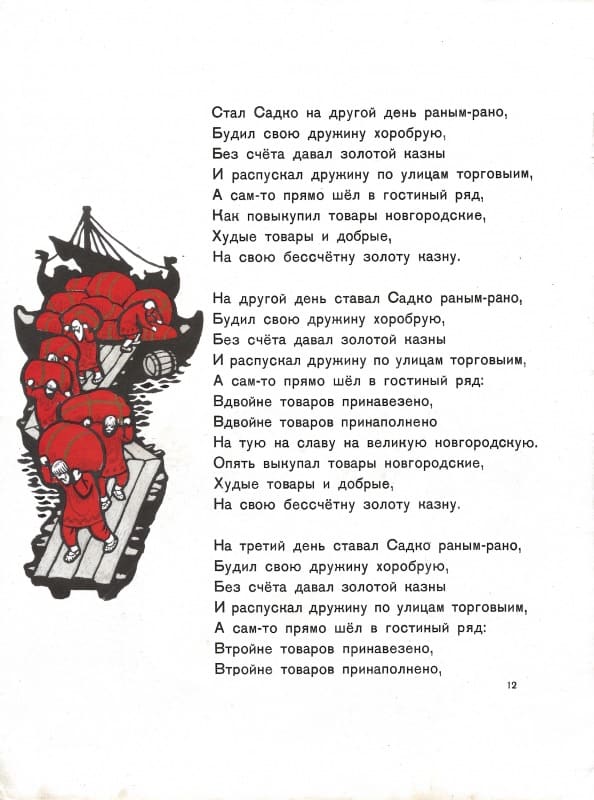

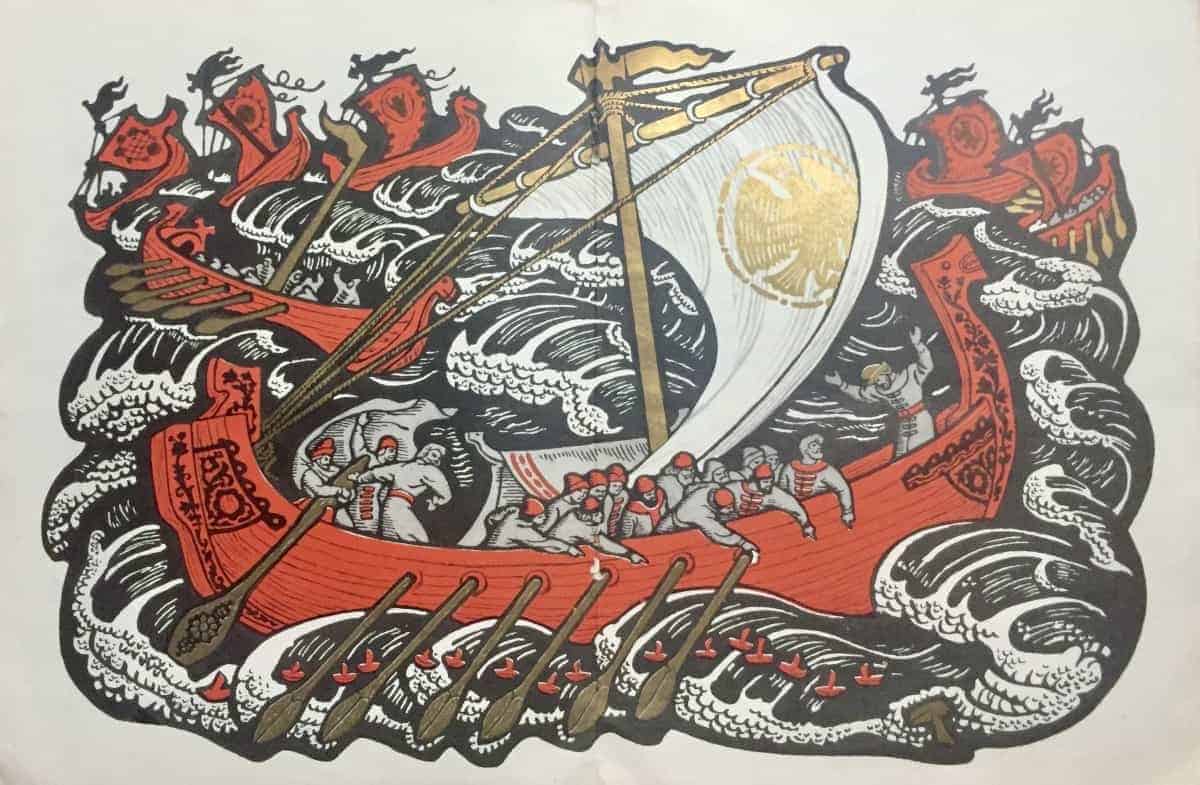
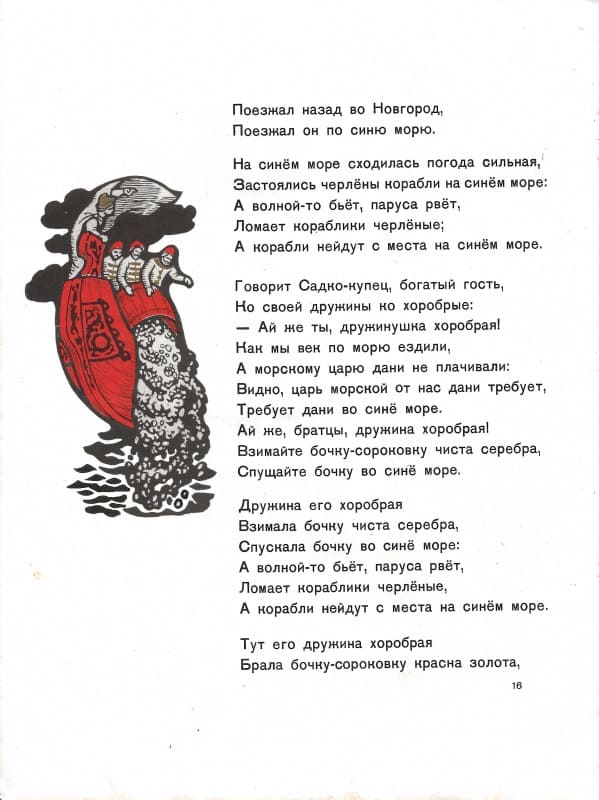
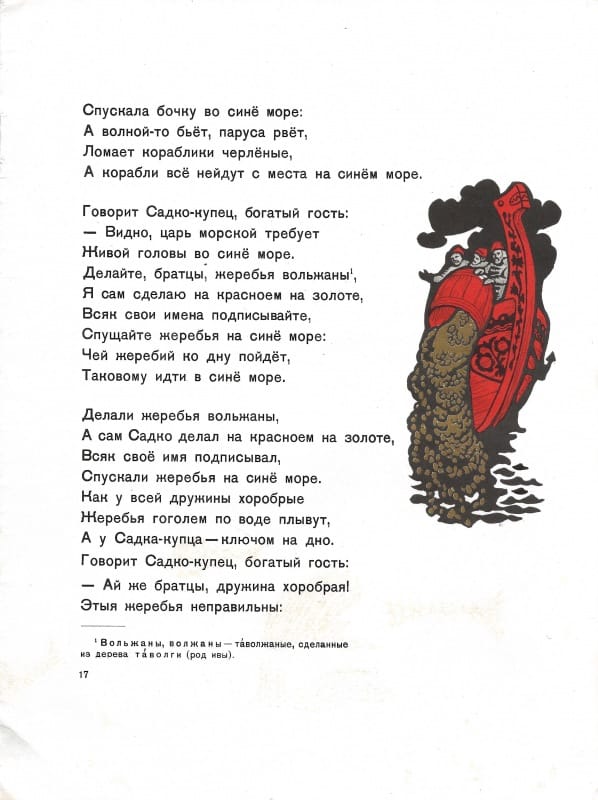

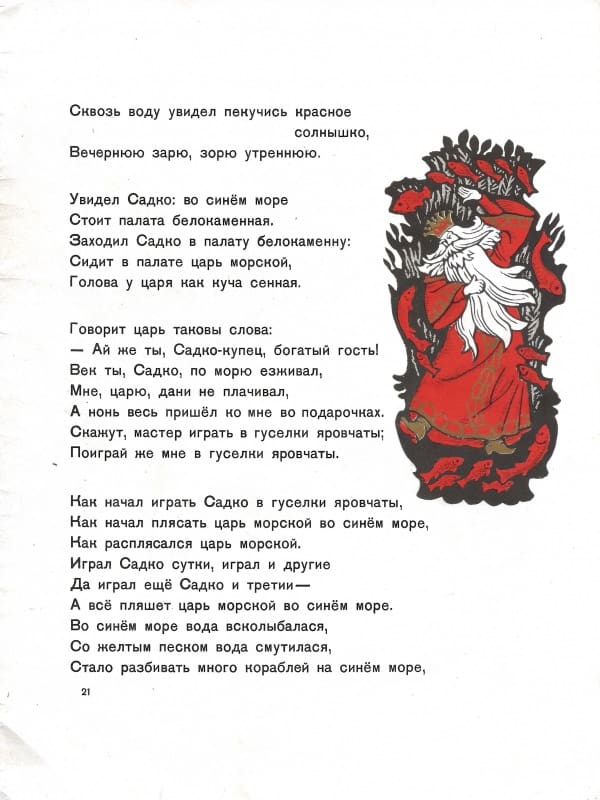
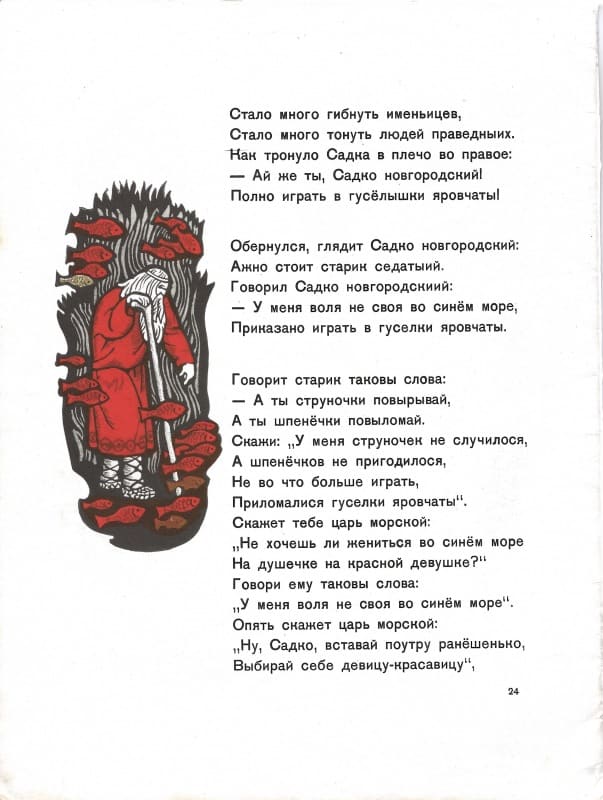
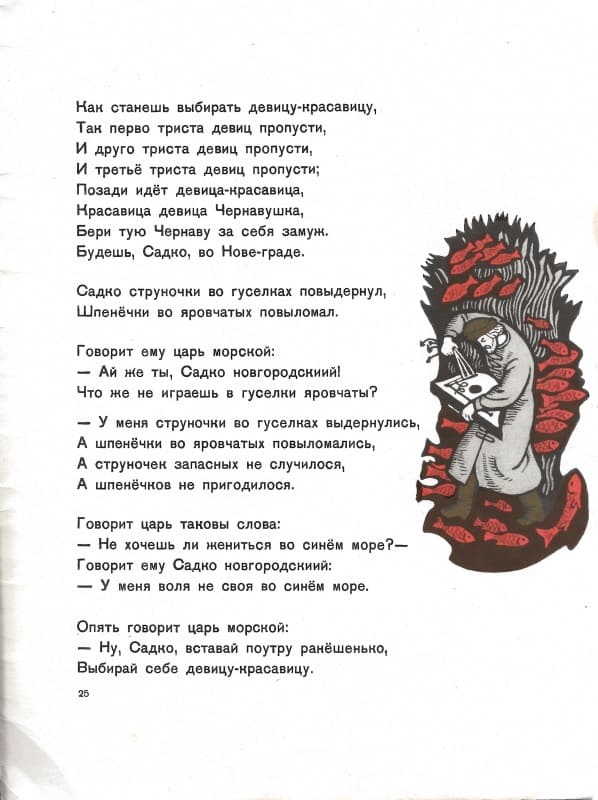
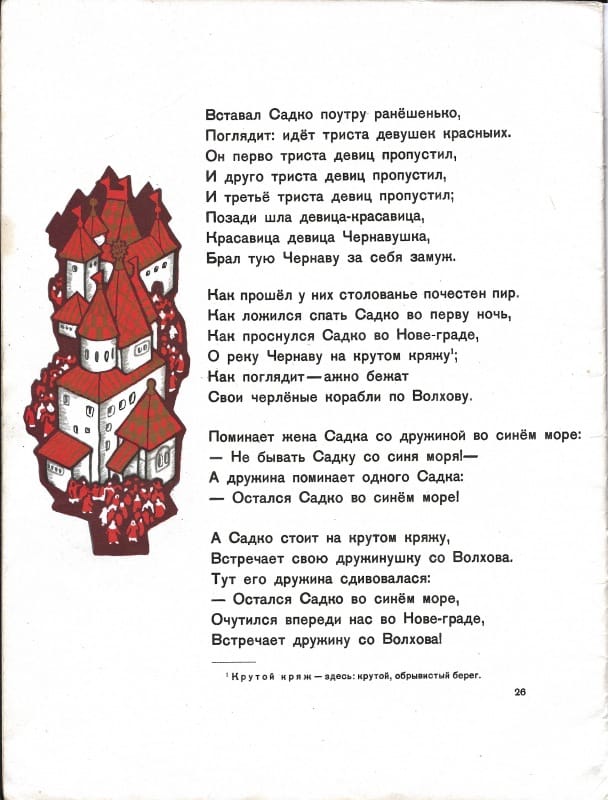
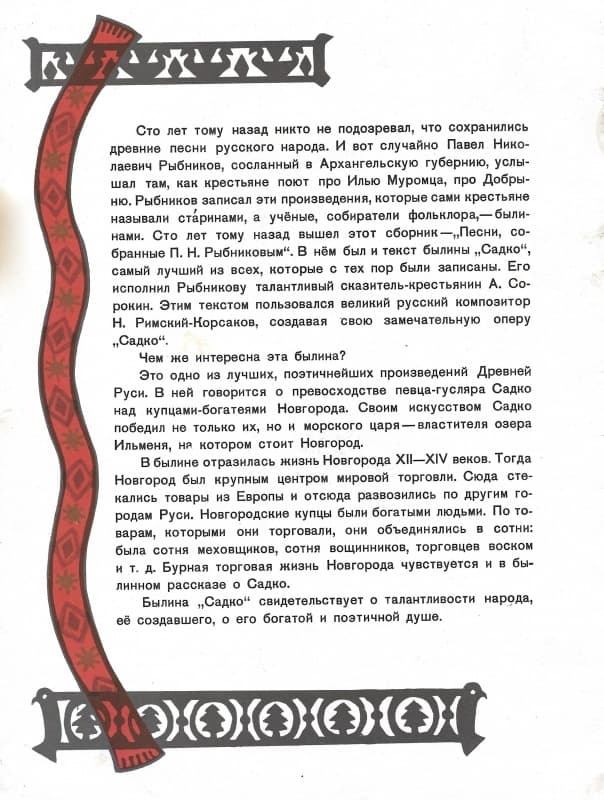
‘A hundred years ago, no one suspected that the ancient songs of the Russian people had been preserved. By chance Pavel Nikolaevich Rybnikov, exiled to Arkhangelsk province, heard peasants singing about Ilya Muromets and Dobrynya (two legendary heroes – or ‘bogatyrs‘). Rybnikov recorded these works, which the peasants themselves called ста́рины, and the learned collectors of folklore, были́ны. “Songs – collected by P. N. Rybnikov” was published. It includes the best text of the epic tale “Sadko” of any that has been recorded since then. It was performed to Rybnikov by the talented peasant storyteller A. Sorokin. This text was used by the great Russian composer N. Rimsky-Korsakov when creating his wonderful opera “Sadko”.
What is so interesting about this epic tale?
This is one of the finest poetic works of Ancient Rus’. It speaks of the superiority of Sadko the guslar (one who sings and plays the gusli) over the wealthy Novgorod merchants. With his art, Sadko defeats not only them, but also the Sea Tsar, the lord of Lake Ilmen, on which Novgorod stands.
The epic reflects the life of Novgorod in the XII-XIV centuries. Then Novgorod was a major centre of world trade (a member of the Hanseatic League of north European trading ports and towns). Goods from Europe poured in, and from here they were transported to other cities of Russia. Novgorod merchants were rich people. They were organised into groups of one hundred according to the goods they traded: there were a hundred furriers, a hundred wax merchants, and so on. The tempestuous trading life of Novgorod is conveyed in the epic story of Sadko.
“Sadko” is a testimony to the talent of the common people who created it out of their rich and poetic souls.’
This is all I’ve been able to find out about the artist Ivan Arkhipov:
‘Ivan Dmitrievich Arkhipov was born on 19 October 1926 in the picturesque village of Rusinovo, Kaluga Region. In 1945, he graduated from the Moscow Secondary Art School and in the same year entered the Moscow State Art Institute named after V.I.Surikov. Arkhipov became a student of the famous Soviet graphic artist and book illustrator Boris Dekhterev. Boris Alexandrovich was a talented teacher who passed on to his students a love for the art of book graphics. Arkhipov was one of his most able pupils, professionally and with a soul carried away by the design of the book and finding his own style. He gave preference to classical literature, children’s stories and fairy tales. He illustrated poems by Homer, stories by I. S. Turgenev, A. N. Tolstoy, R. I. Fraerman and others. He worked a lot as a graphic artist, creating series of works, interesting in their documentary significance, from the life of his contemporaries, from the history of industrial production of his region and the everyday life of factory labour. Among his paintings there are portraits and landscapes, distinguished by their originality and bright sonorous colour.’