Georgy Nikolsky – Illustrator of Nature
13 July 2021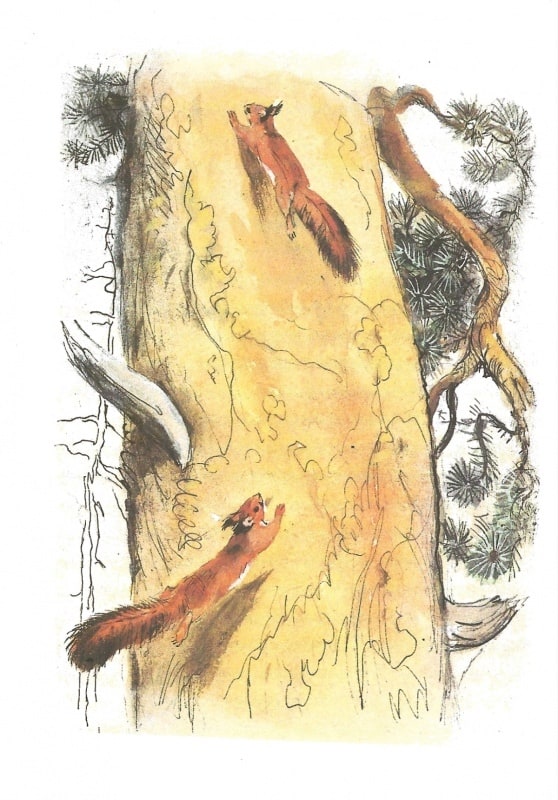
For many years I’ve collected all sorts of Russia- and East Europe-related images and objects – without necessarily knowing anything about the artist or the maker – just because they appealed to me. Postcards and well-worn Soviet children’s books are a case in point. I’ve written here before about having bought many sets of postcards in Дом книги (House of Books) in Moscow in the 1980s. They were so cheap and attractive in their cardboard slip-covers. The annual Russian church Christmas bazaar in Kensington has proved a good source of dog-eared but delightful children’s books, as well as the second-hand section in the basement of Bookshop Moscow on Tver Street. I love it when, perhaps a long time after something has come into my possession, I suddenly find an article or a post on Facebook about a certain artist and I realise I have examples of his or her work. This happened with cards by Vladimir Zarubin and again recently, when a post appeared on the Эрмитаж Facebook group page about the illustrator, Georgy Nikolsky, including these images and text:

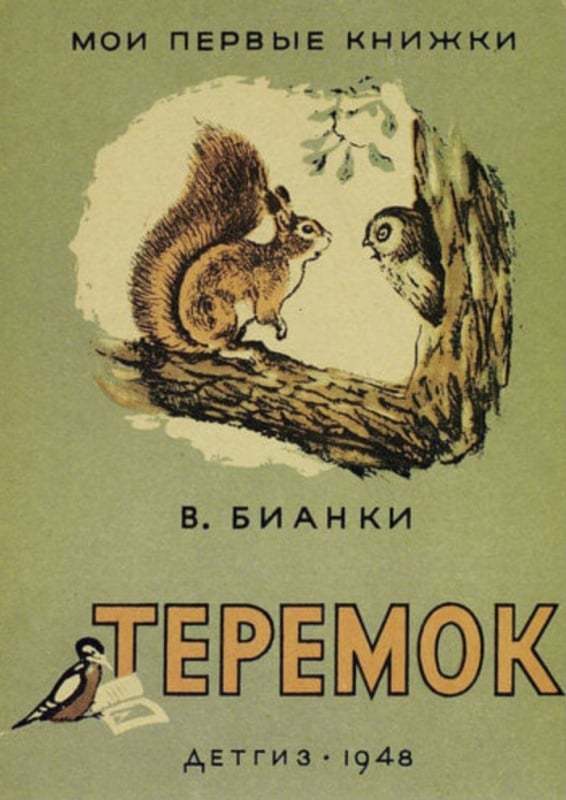

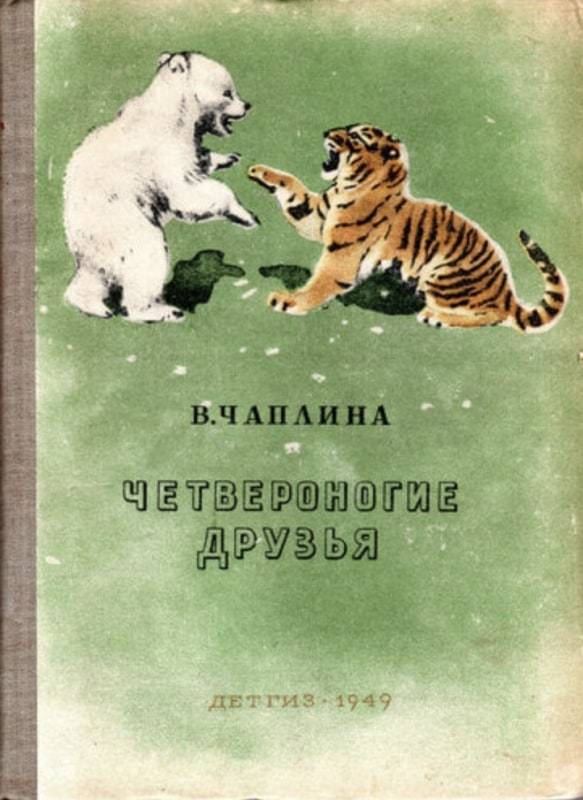
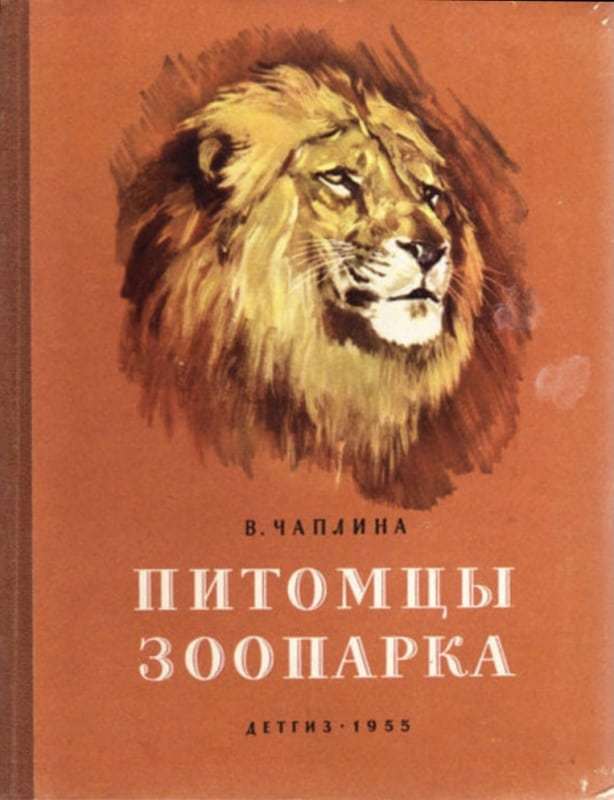
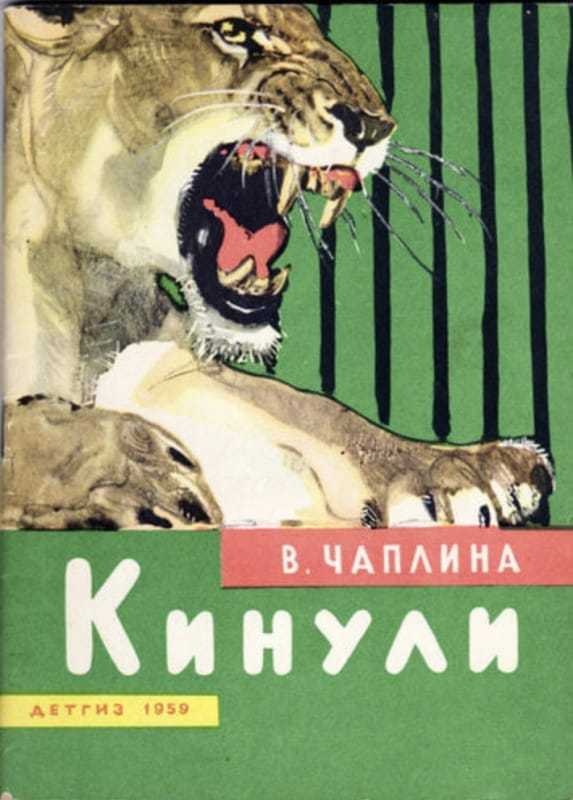
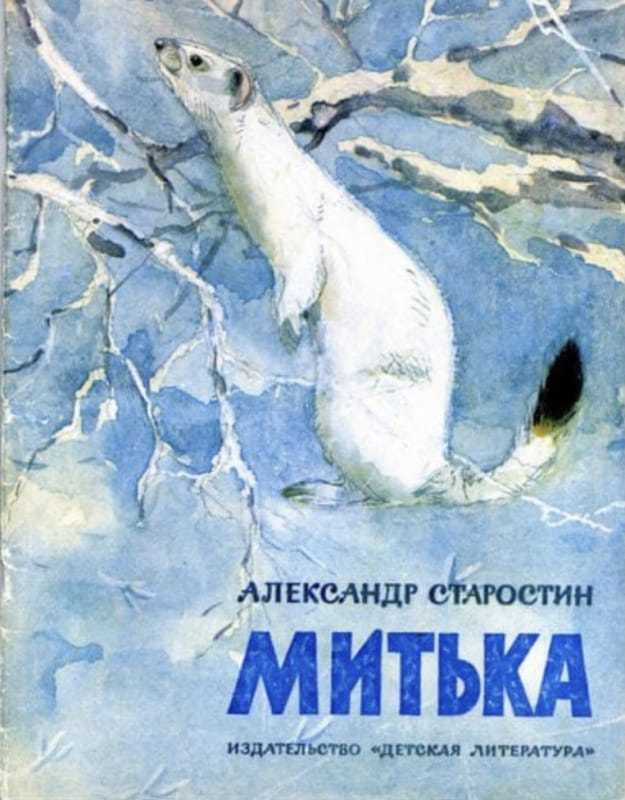

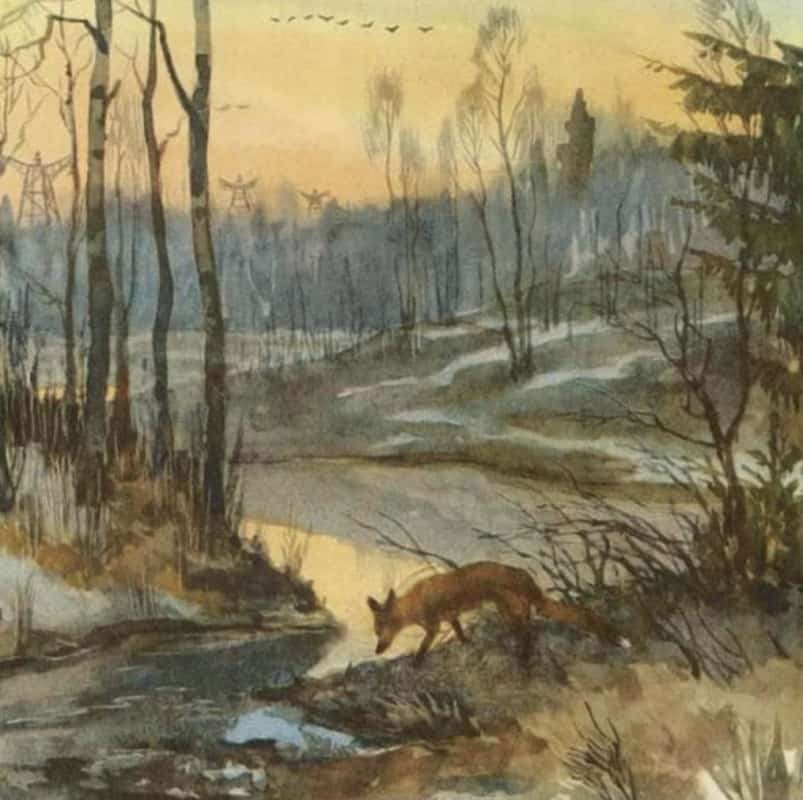
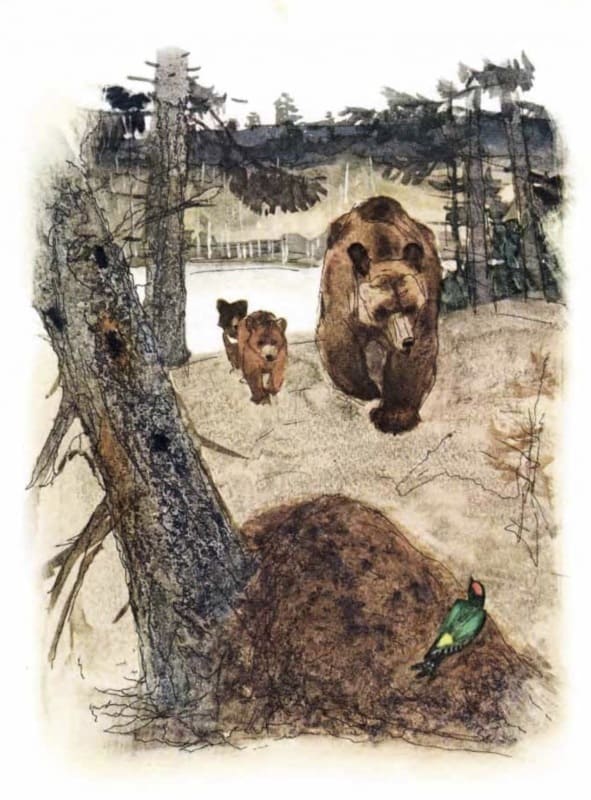
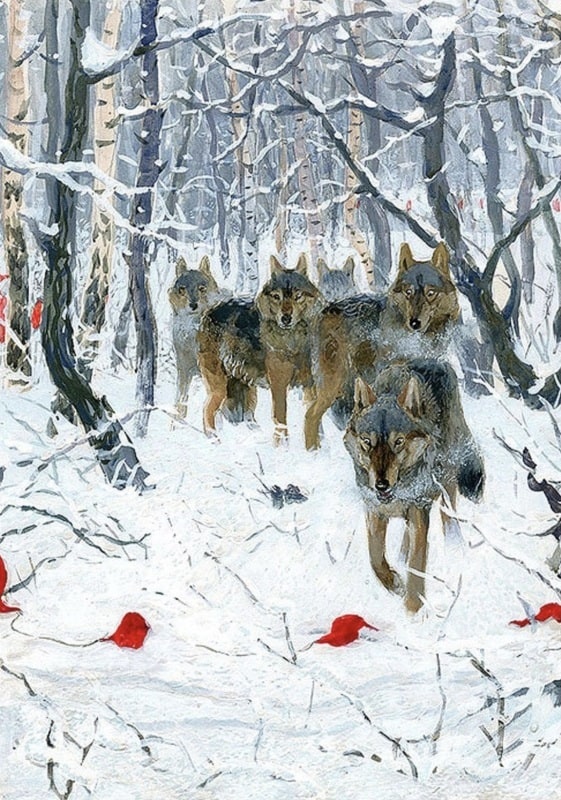
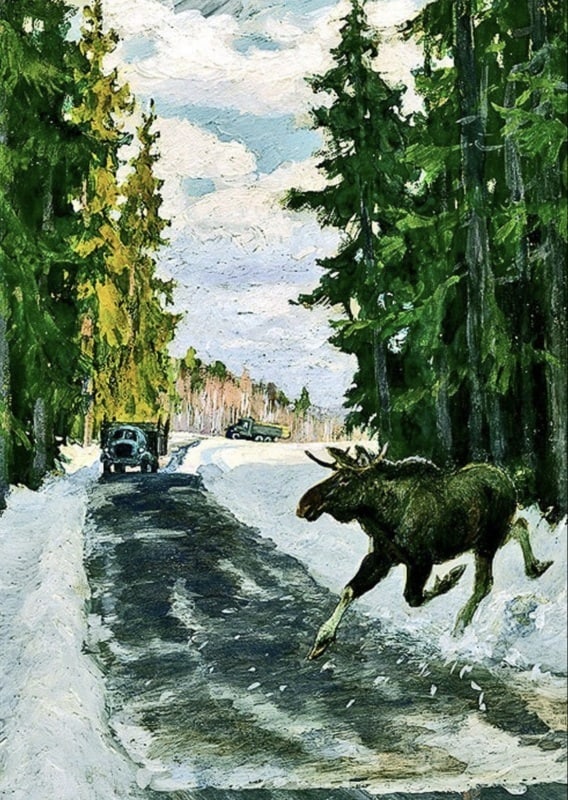

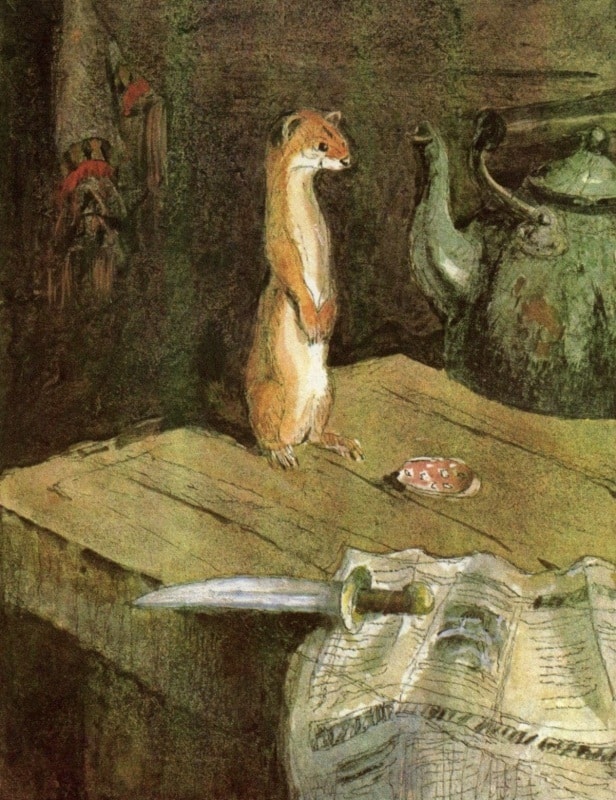
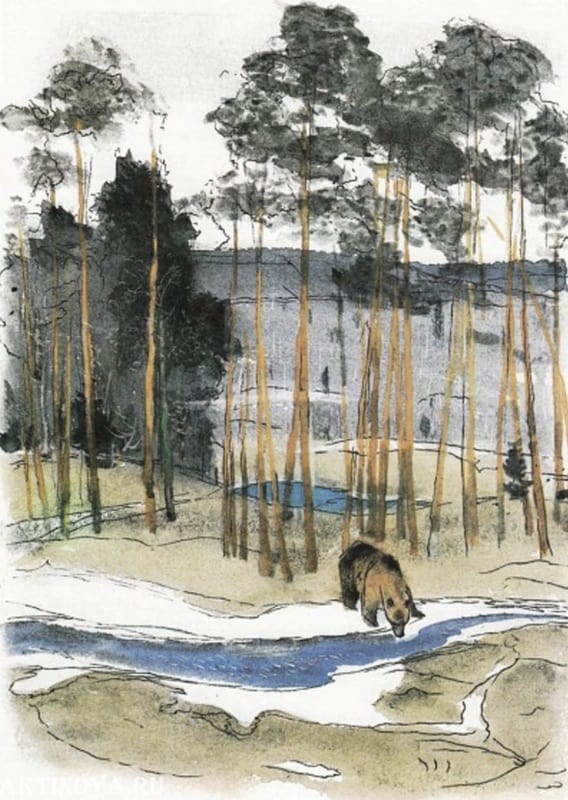
During the Great Patriotic War Nikolsky, despite heart disease, sought to be transferred from the reserve to active service, and from the middle of the war he was attached to the official war artists’ studio. From the mid-1940s, he returned to book illustration where he rapidly became successful. Between 1944 and 1949 thirty-five books illustrated by him were published. He also collaborated with the studio Диафильм (Filmstrip), for which he made a series of drawings for the film based on Rudyard Kipling’s ‘Mowgli’. V. Duvidov, another children’s book illustrator, wrote this appreciation of Nikolsky’s work: “He was undoubtedly a happy person. The purpose of his life … was a passionate, close observation and study of nature, its condition, its variability. Animals, as an inseparable part of nature, were the centre of his attention. In his notebooks and albums, next to drawings from life, there are verbal descriptions of the posture of an animal, the turning of a leaf or branch of a tree, impressions of evening or early morning … Working in the field of children’s book illustration requires not only scientific and artistic knowledge, but also a generosity of soul and true love of nature.”
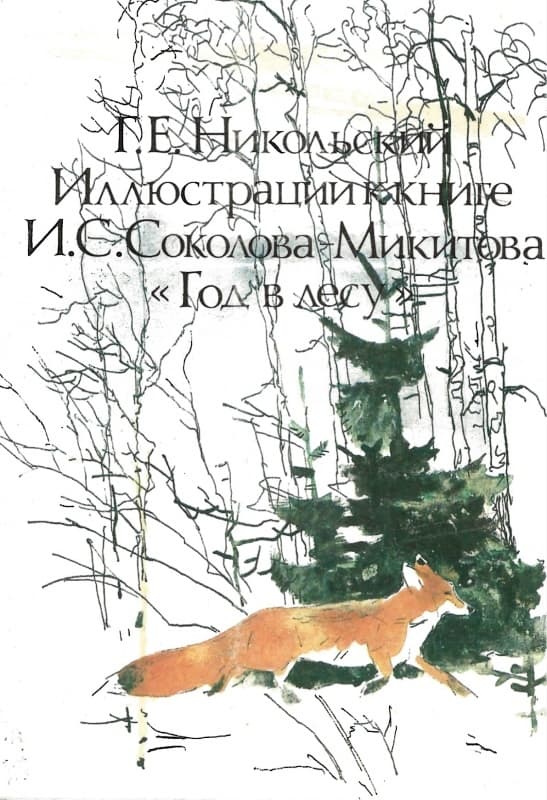
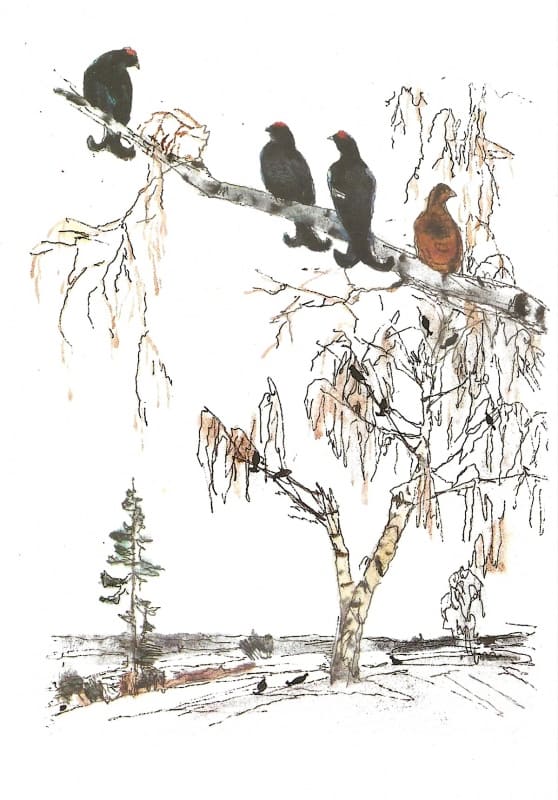
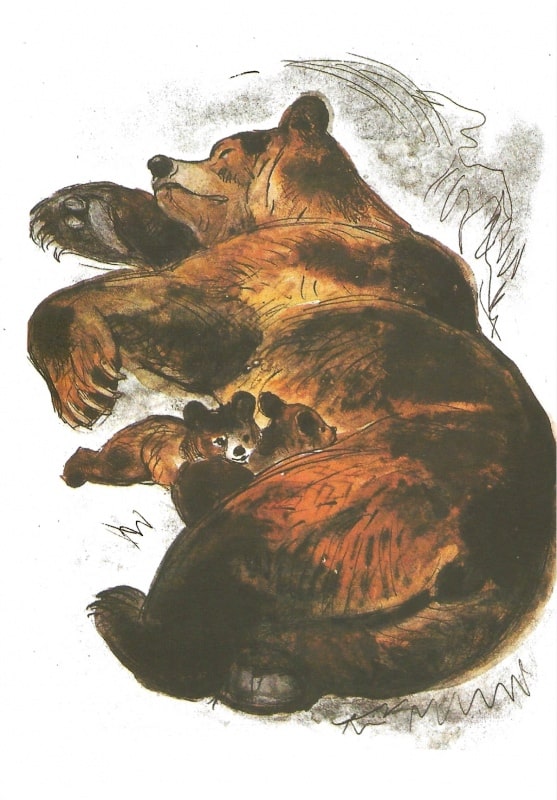
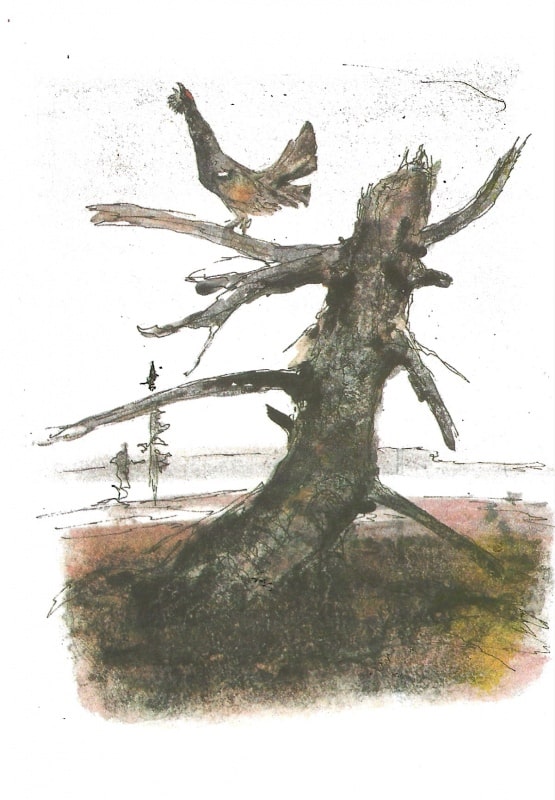
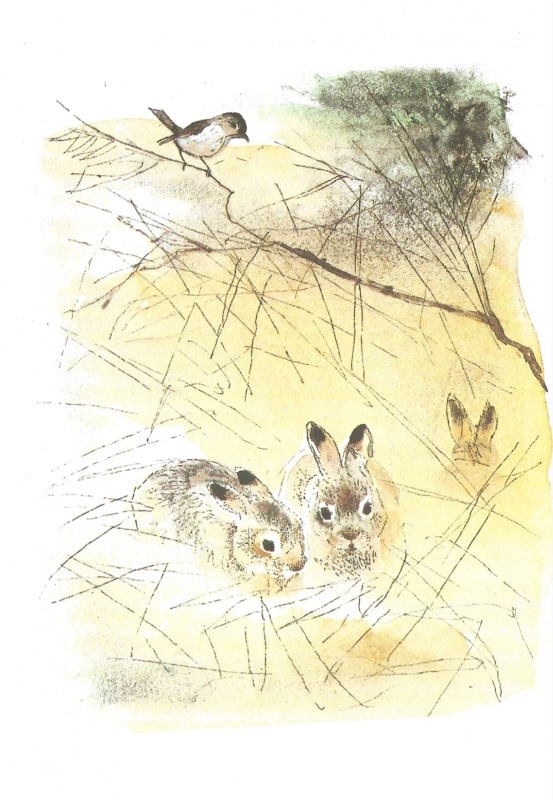
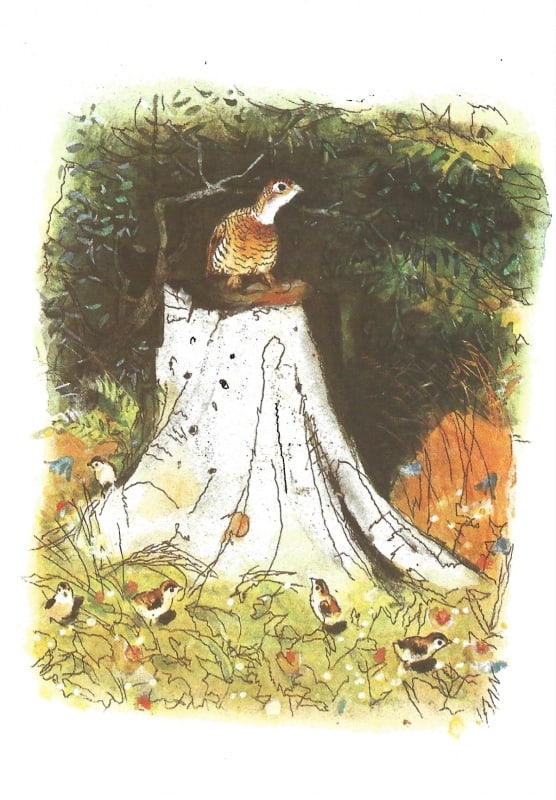
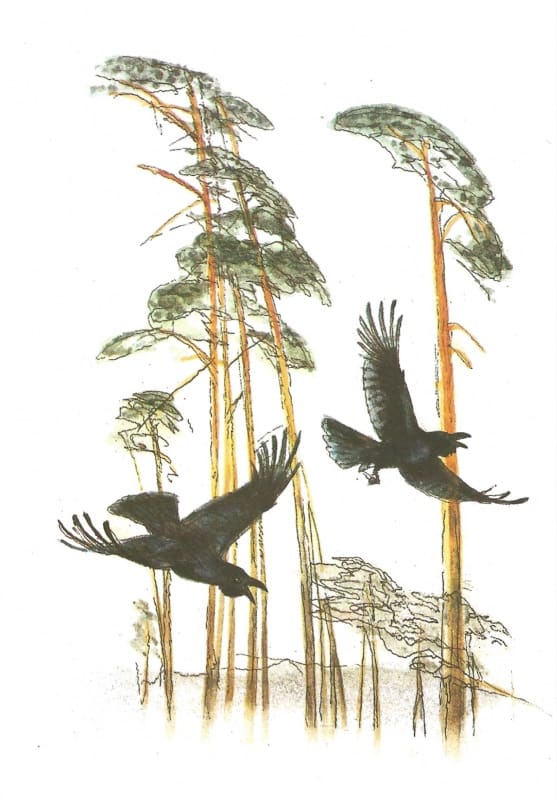
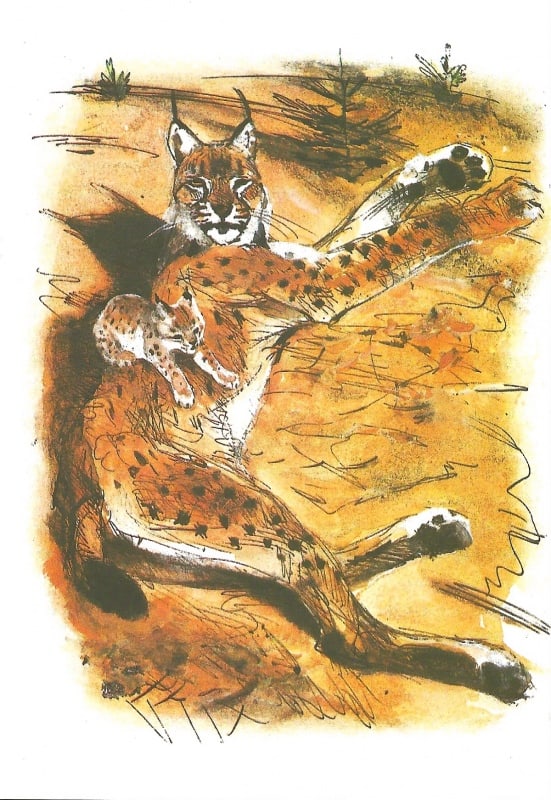
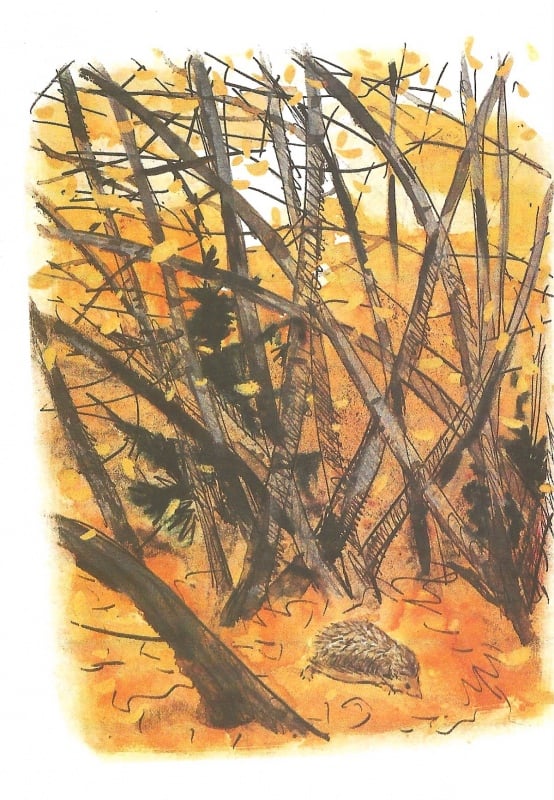
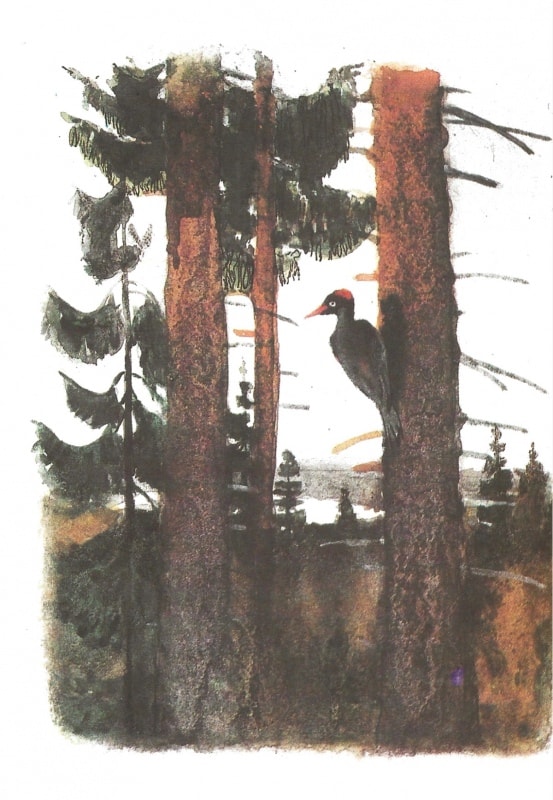
The style of some of the drawings on the Эрмитаж post looked familiar and I found I have this set of postcards – Nikolsky’s illustrations to I S Sokolov-Mikitov’s book ‘A Year in the Forest’ (published in English as ‘Forest Seasons’). I think these must have been done later in his career as they are so confidently loose and sketchy.