Vladimir Zarubin, ‘the man who drew New Year’
5 January 2021

Following on from my previous post about Soviet New Year cards, I’ve been prompted to investigate further after reading a post by Yelena Zhidkova, who wrote about the illustrator Vladimir Zarubin on the ‘Эрмитаж’ group page on Facebook. (I have slightly edited her text and tidied up the English translation.)
An early card by Zarubin (1963) – following the trend at the time for designs referencing Soviet achievements in space

‘Vladimir Ivanovich Zarubin was the creator of a whole world of funny animals. Over 30 years of work, more than 1.5 billion postcards and envelopes with his drawings were produced, but the artist died almost in poverty.
Vladimir Zarubin was born in 1925, the third son in the family, in a small village in the Oryol region. His parents encouraged his passion and talent for drawing. His father suggested he start his own collection of postcards. In those years, receiving a beautiful picture with a short message from your loved ones was a real pleasure. The artist managed to keep in his memory the happiness associated with the postman bringing news from distant friends and then embody it in his own drawings. The boy’s postcard collection grew to about five thousand colourful cards.
During the war, the family became scattered. The eldest sons went to the Front, and the youngest, Vladimir, found his home under German occupation. He was sent to Germany with other villagers, worked in a factory, almost got shot several times, but survived and managed to return home safely after the end of the war. He didn’t stay in his village but was conscripted into the army. Later he settled in Moscow, worked in a factory again, and studied at night school.
Together with a huge number of children who survived those terrible years, Vladimir Zarubin managed to catch up and recover what the war had taken away from him – including his high school and student years. He attended courses in drawing cartoons, and for many years the talented artist worked at the Soyuzmult Film (animation) studio. Looking at his postcards, few knew that the same artist was the creator of images in hundreds of their favourite Soviet cartoon films.
Zarubin started drawing postcards in 1962. In the era of the state-approved Socialist Realism form of art, strict rules were laid down, regulating any type of creative work, and especially anything for mass consumption. Every new picture had to be approved by the bureaucrats of the artistic council. Zarubin’s drawings of hedgehogs and rabbits at first perplexed those in judgement – was this a new direction in Soviet art or a symptom of capitalist decadence?
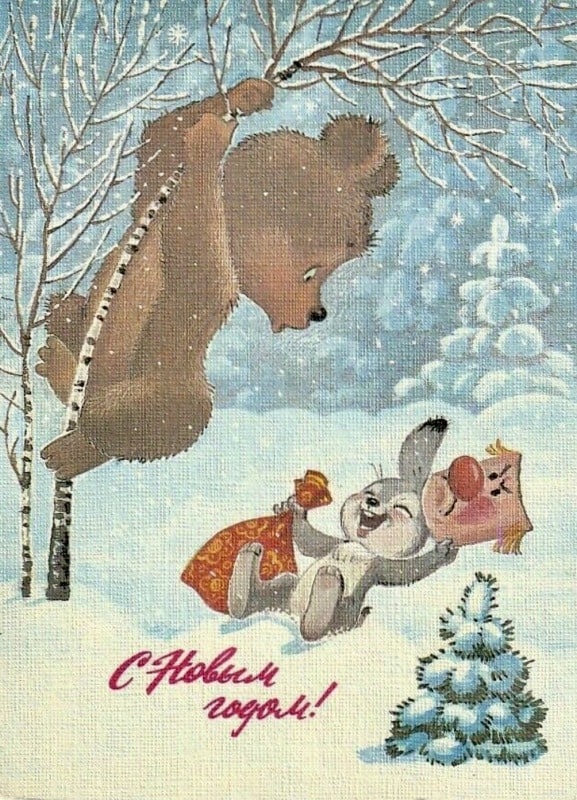
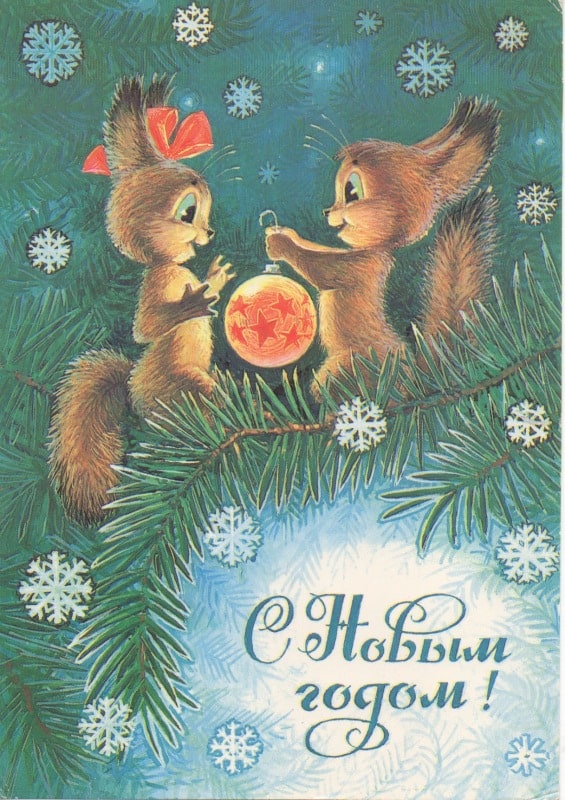
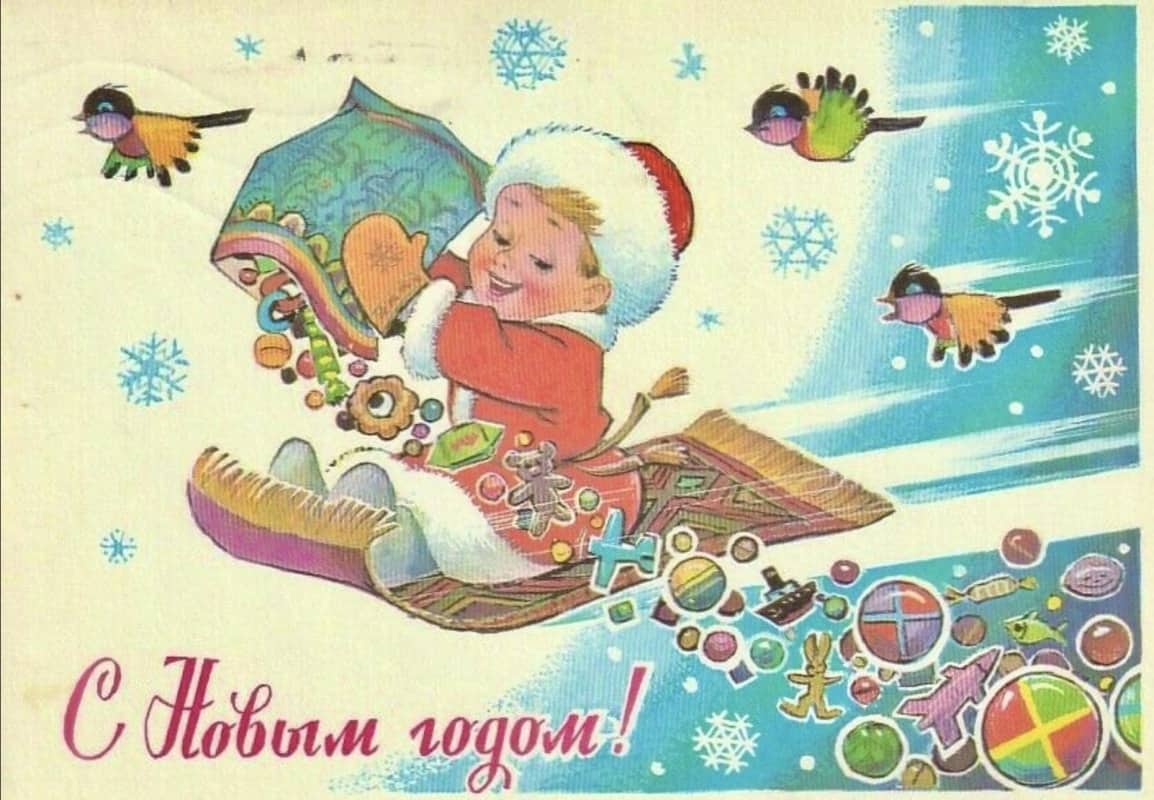
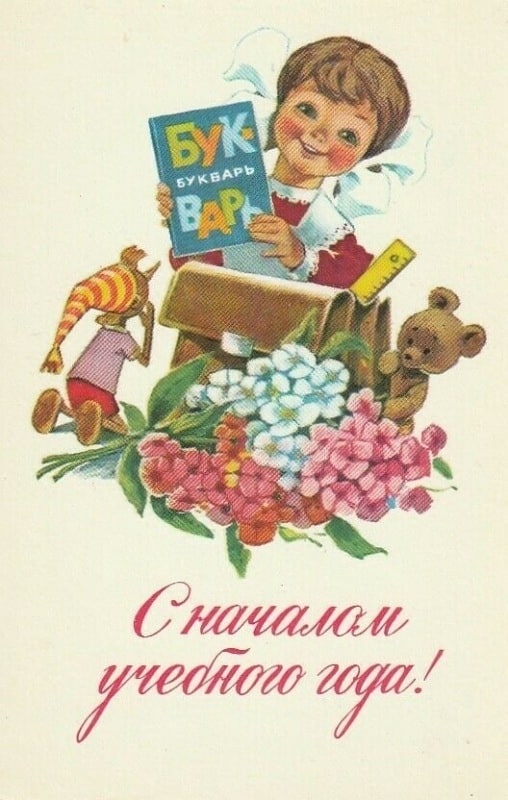
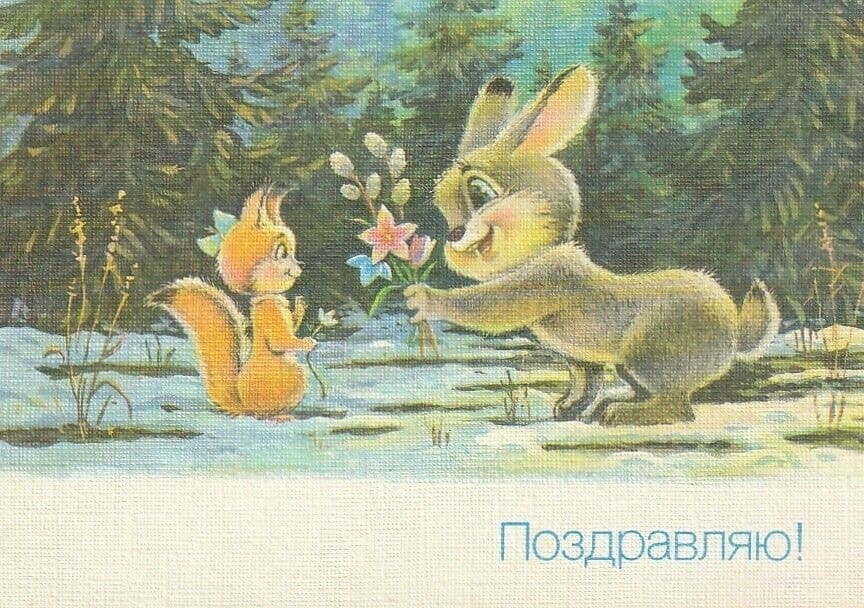
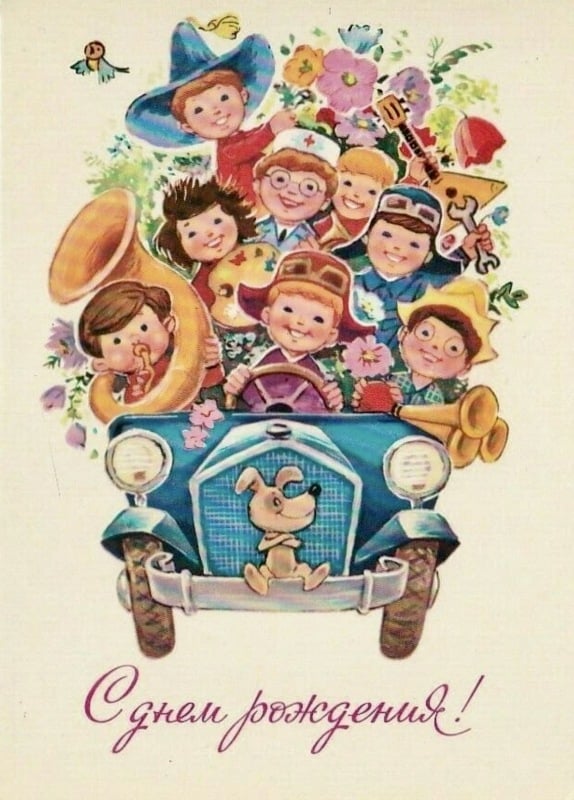
Many ideas had to be abandoned, but the artist continued to draw in his own style, and soon millions of ordinary people chose to buy his cards, which depicted not brave pioneers vigorously walking under a banner to a bright future, but bears on sledges, snowmen, dressing up the New Year’s tree, and bunnies with flowers rushing to wish someone in a fabulous forest a happy birthday. This is how Vladimir Zarubin’s postcards became an integral part of Soviet life. Few people knew the artist’s name, but many enjoyed copying his cute animals.
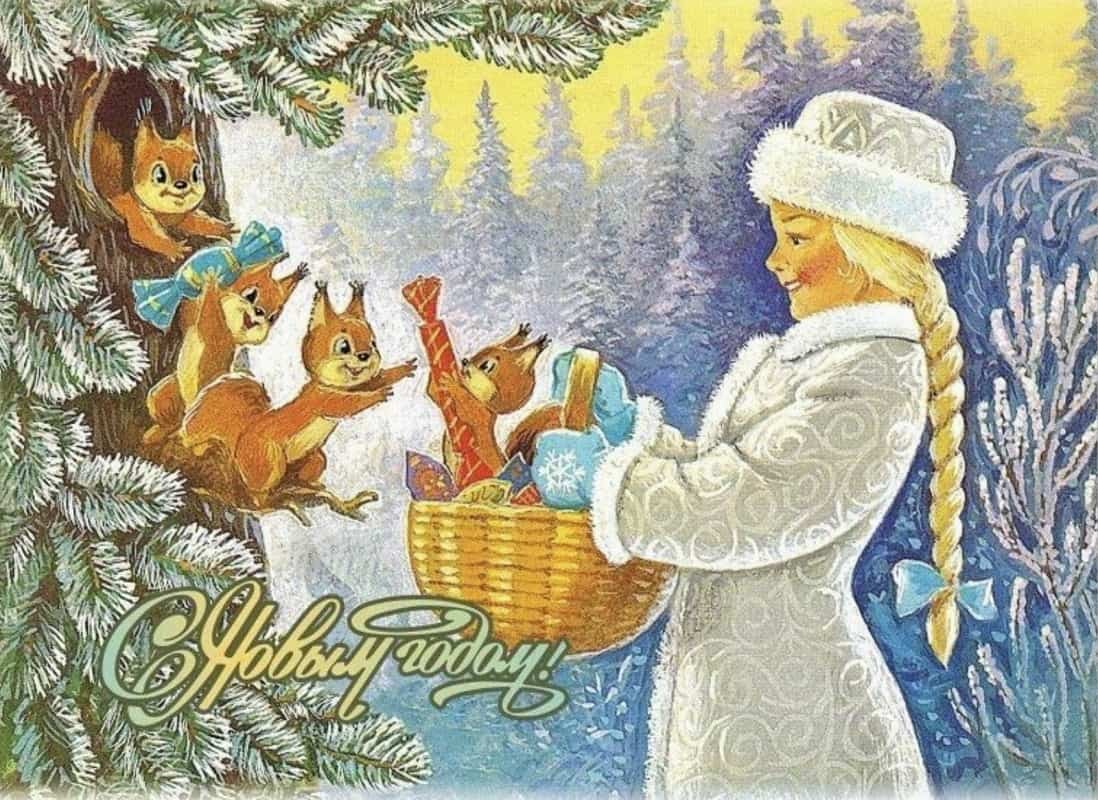
Vladimir Zarubin became well known as the artist who drew postcards, and he received a lot of fan mail. Contemporaries remember that he always responded to these letters. His character could be said to be immediately visible in his work: sincere, open, kind – that’s exactly what he was in life, so fans of his work, receiving letters full of warmth, were not disappointed in their idol. Unfortunately, the changing times meant his work became less commercial. In the 1990s, he was already in his seventh decade, and it was difficult for him to adapt to a world that was collapsing before his eyes. Postcards were catastrophically losing relevance, with the postal service itself seemingly under threat. To try to earn a living, the artist had to respond to the market and he took his work to small publishers. In 1996, after a call from a struggling publishing house telling him that he would not receive payment for the last week’s work, Zarubin collapsed and died of a heart attack.
A colossal number of Zarubin’s drawings were published between the 1960s and 1990s, and today they are appreciated by collectors. Some cards are considered rarities and are very expensive. And surely everyone brought up in the USSR will find at home somewhere in a pile of old postcards or in an album an example of this wonderful artist’s creativity. His work is so recognizable that a signature is unnecessary.’

New Year postcards


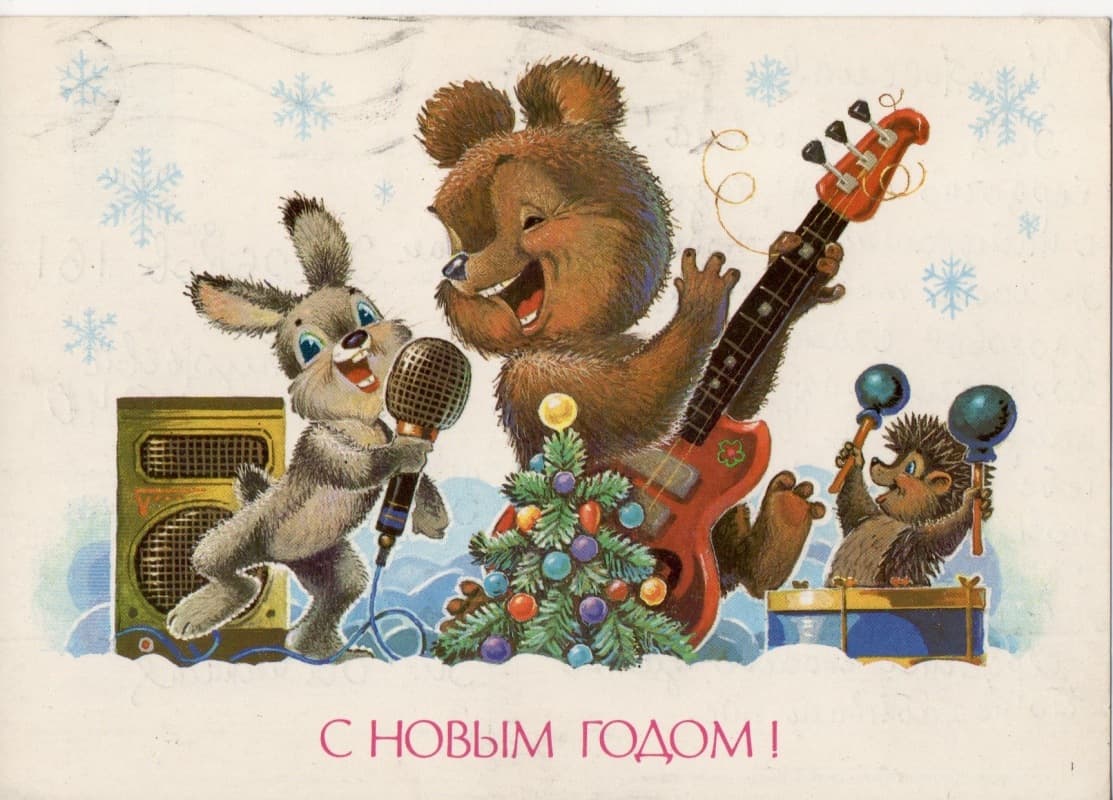
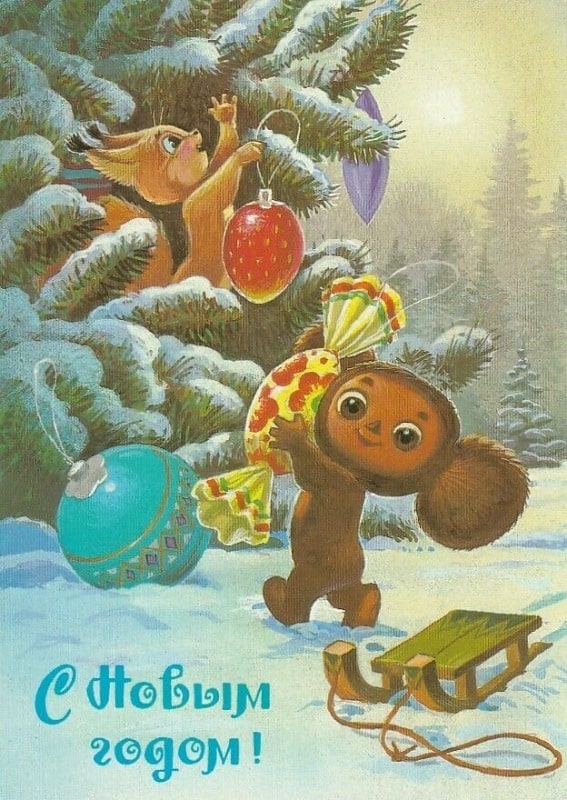


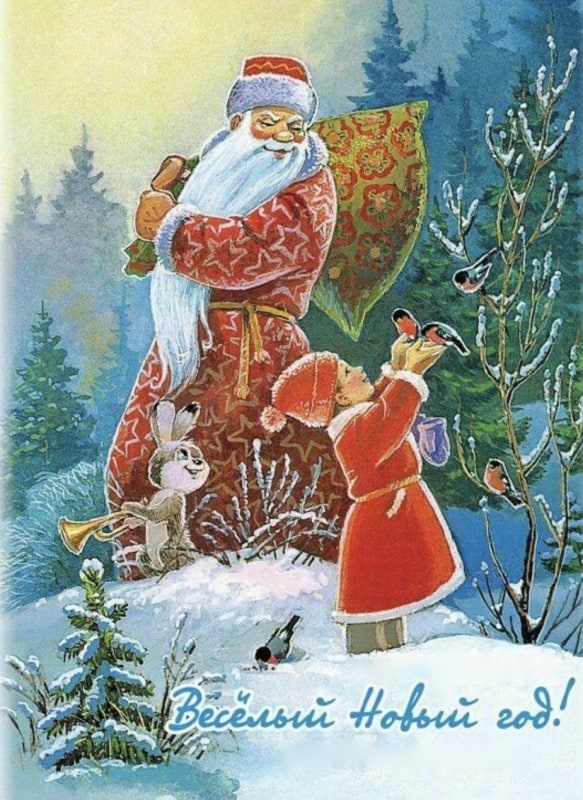













I also discovered a long-buried memory of my own. As a small child growing up in London in the 1950s, I used to love the cartoon drawings of animals in my Jack and Jill and other annuals, and grew very familiar with them as my father painted copies for me. I wonder why I didn’t have a go at copying them myself, like those Soviet children were doing with Zarubin’s animals at a similar time.
An early New Year’s card
