Singer and ‘Costumes of the World’
16 September 2021
The Museum of Ethnography in Brasov, Romania recently put up a post on Facebook illustrated with these images, produced in 1892 by the Singer sewing machine manufacturing company.
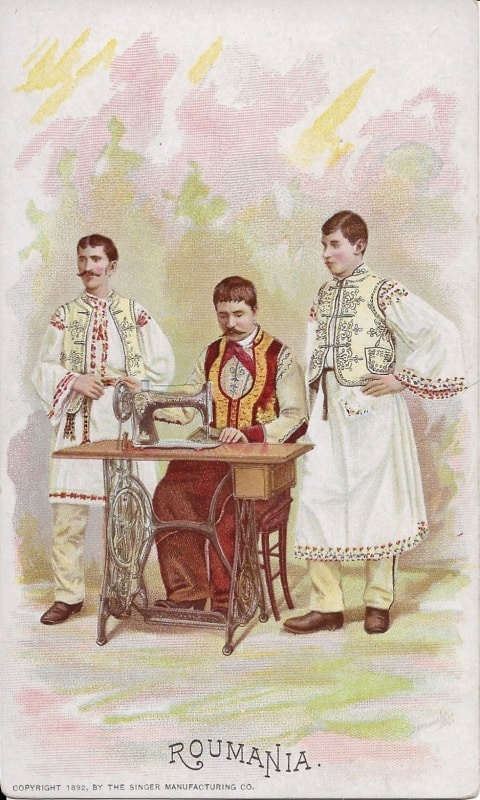
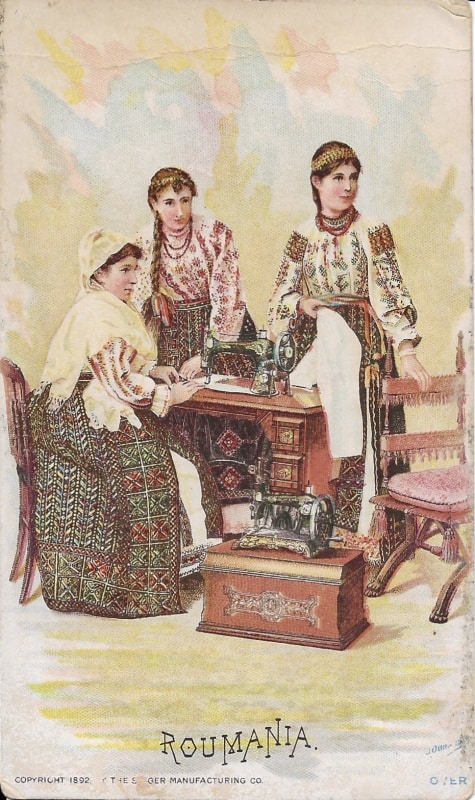
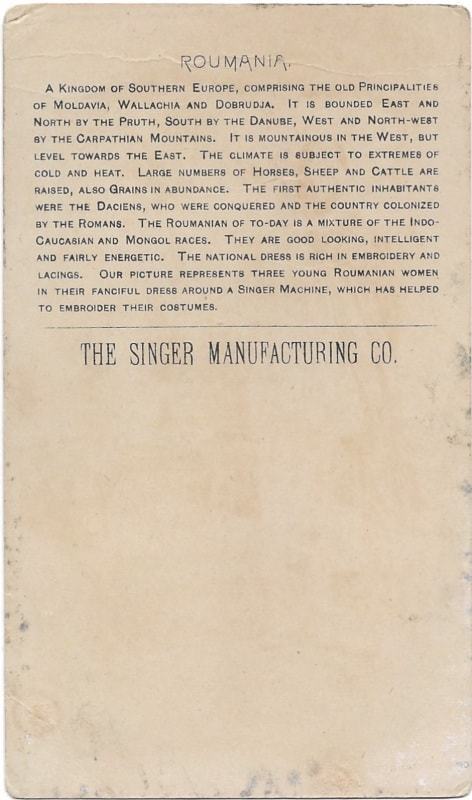
The post says that, in the Museum of Urban Civilization in Brasov, there is an original Singer machine, set in a diorama that reconstructs the atmosphere of a home sewing workshop at the end of the 19th century. Perhaps it looks something like this – a Romanian interior shown on another Singer trade card.
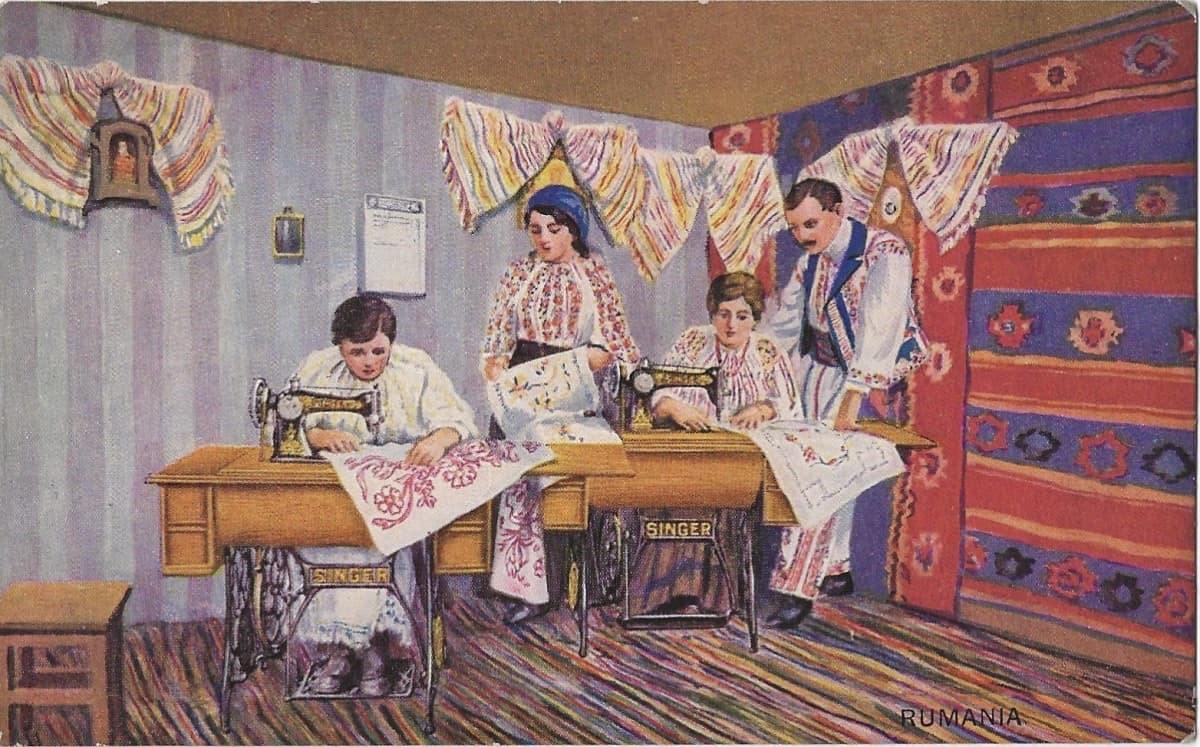
This reminded me that I wrote an article for Selvedge magazine about these trade cards, which show peoples of the world in their national dress working at their Singer sewing machines. (The article was in issue 27, March/April 2009).
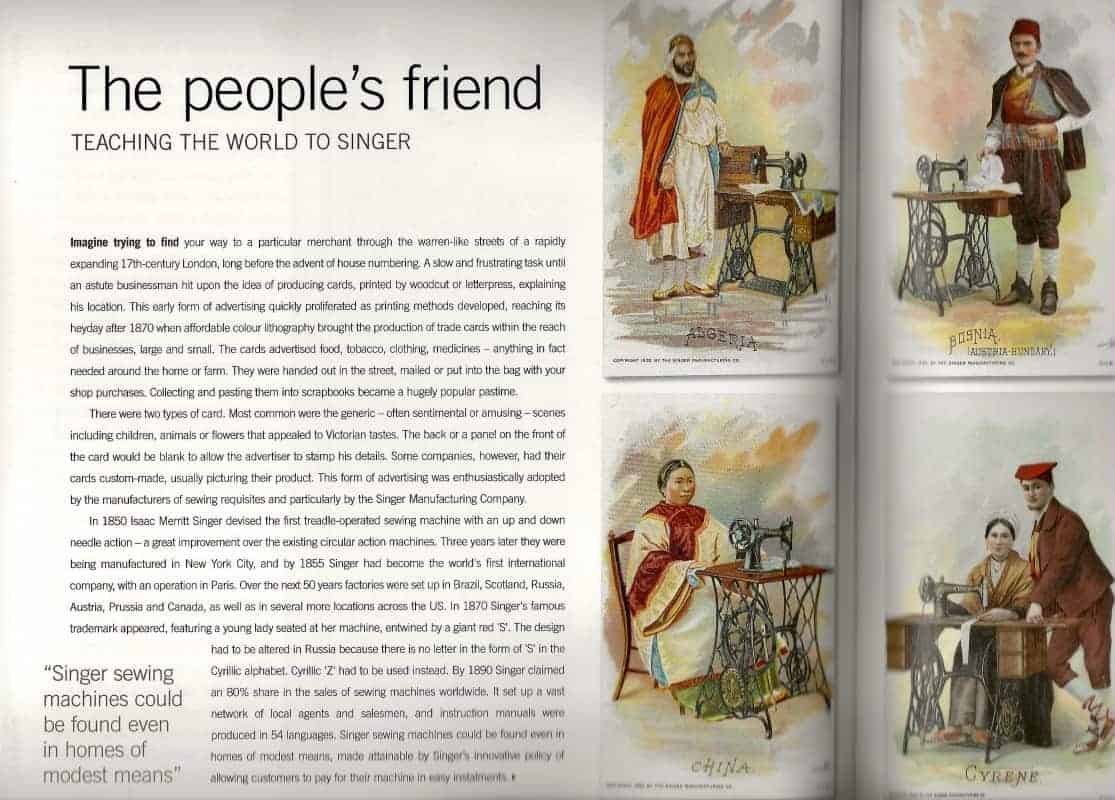
Here’s the text, interspersed with cards from my collection:
“Imagine trying to find your way to a particular merchant through the warren-like streets of a rapidly expanding 17th-century London, long before the advent of house numbering. A slow and frustrating task until an astute businessman hit upon the idea of producing cards, printed by woodcut or letterpress, explaining his location. This early form of advertising quickly proliferated as printing methods developed, reaching its heyday after 1870 when affordable colour lithography brought the production of trade cards within the reach of businesses large and small. The cards advertised food, tobacco, clothing, medicines – anything in fact needed around the home or farm. They were handed out in the street, mailed or put into the bag with your shop purchases. Collecting and pasting them into scrapbooks became a hugely popular pastime.
There were two types of card. Most common were the generic – often sentimental or amusing scenes including children, animals or flowers that appealed to Victorian tastes. The back or a panel on the front of the card would be blank to allow the advertiser to stamp his details. Some companies, however, had their cards custom-made, usually picturing their product. This form of advertising was enthusiastically adopted by the manufacturers of sewing requisites and particularly by the Singer Manufacturing Company.
In 1850 Isaac Merritt Singer devised the first treadle-operated sewing machine with an up and down needle action – a great improvement over the existing circular action machines. Three years later they were being manufactured in New York City, and by 1855 Singer had become the world’s first international company, with an operation in Paris. Over the next 50 years factories were set up in Brazil, Scotland, Russia, Austria, Prussia and Canada, as well as in several more locations across the US. In 1870 Singer’s famous trademark appeared, featuring a young lady seated at her machine, entwined with a giant red ‘S’. The design had to be altered in Russia because there is no letter in the form of ‘S’ in the Cyrillic alphabet. Cyrillic ‘Z’ had to be used instead.
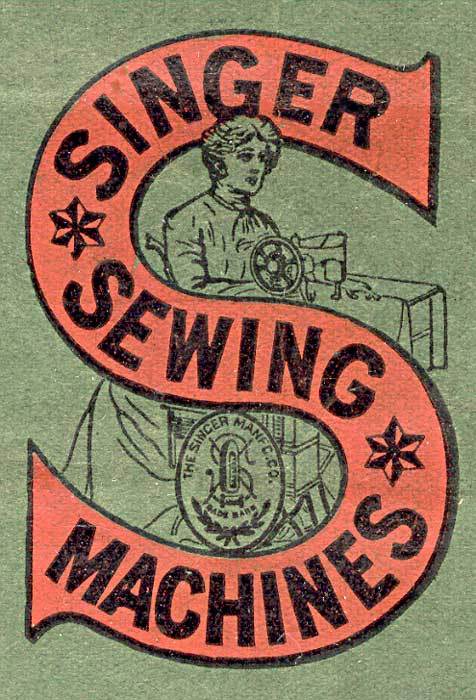
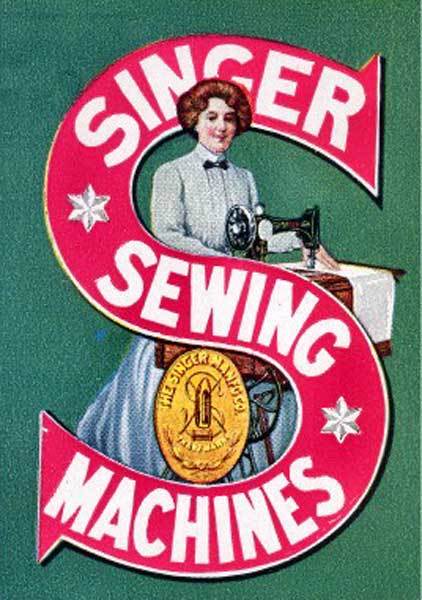
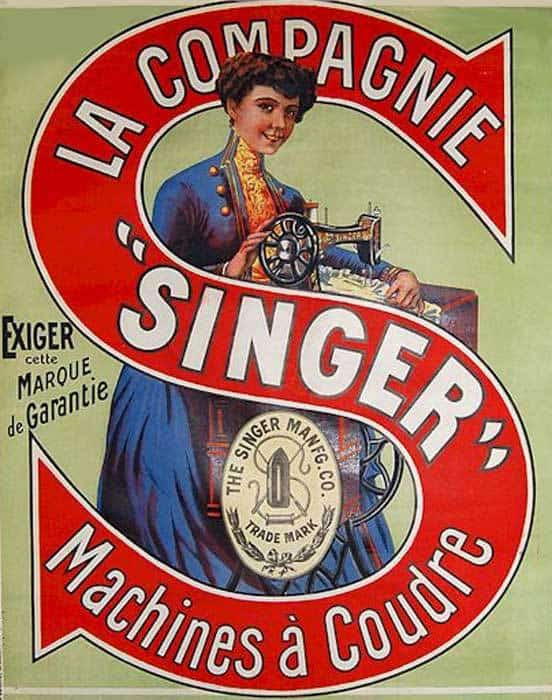

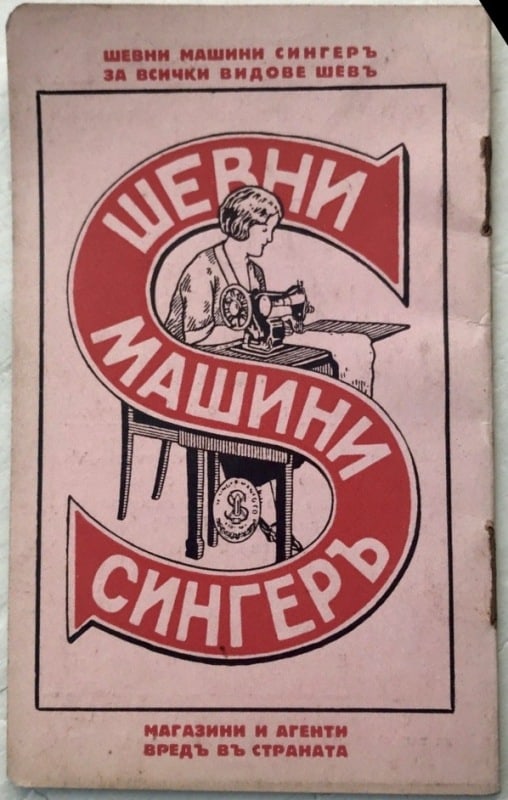
Variations on the logo. Only in Russia was the ‘S’ form changed. It’s interesting that in Bulgaria the form wasn’t changed, despite Bulgarian also using the Cyrillic alphabet – at least, this example of a Bulgarian machine owner’s logbook from 1939 would suggest that. Here the company name is given as Singer (СИНГЕРЪ) rather than Zinger (ЗИНГЕРЪ), as it was in Russia.
By 1890 Singer claimed an 80% share in the sales of sewing machines worldwide. It set up a vast network of local agents and salesmen, and instruction manuals were produced in 54 languages. Singer sewing machines could be found even in homes of modest means, made attainable by the company’s innovative policy of allowing customers to pay for their machines in easy instalments.
Singer’s international profile became a key element of its advertising strategy and provided the theme for the trade cards it produced for the 1893 ‘World’s Columbian Exposition’ – or World’s Fair – in Chicago. Singer had stands in three pavilions, showing machines for family sewing and art work in the Liberal Arts Building, machines for manufacturing in the Machinery Hall, and machines for sewing leather in the Leather and Shoe Trades Building. The catalogue Singer produced included pictures of ‘Costumes of the World’. Thirty-six of these images were produced as trade cards and many sets of these were given away at the Fair.
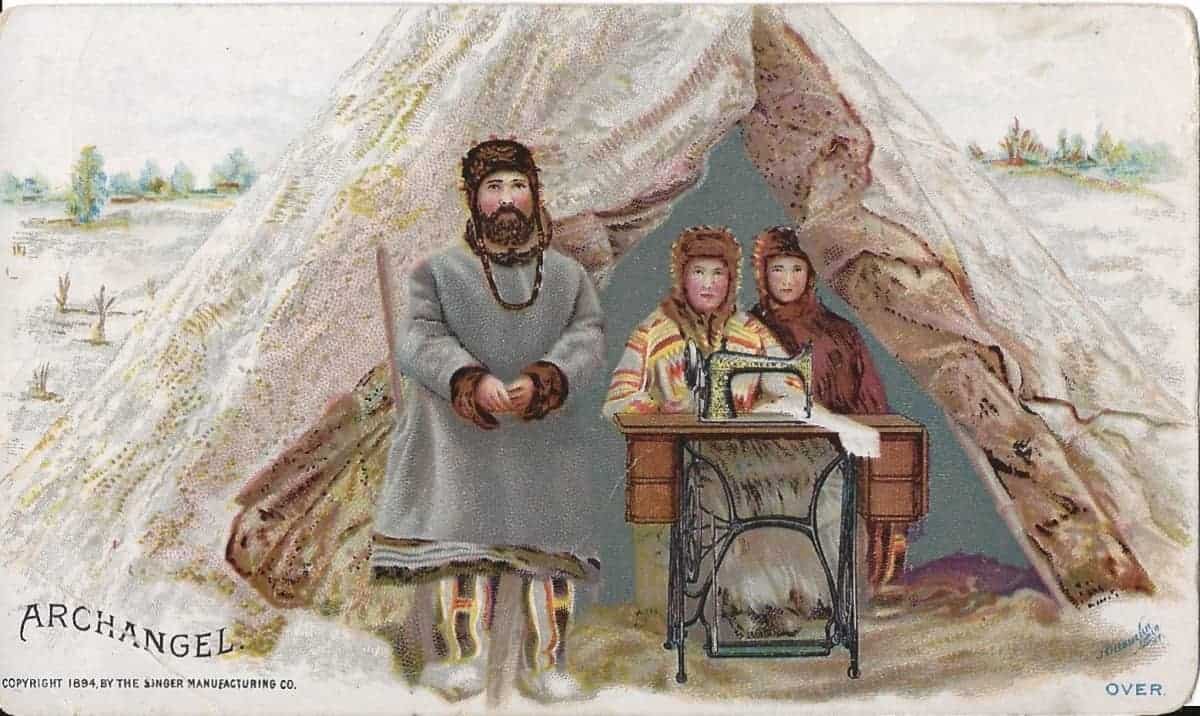
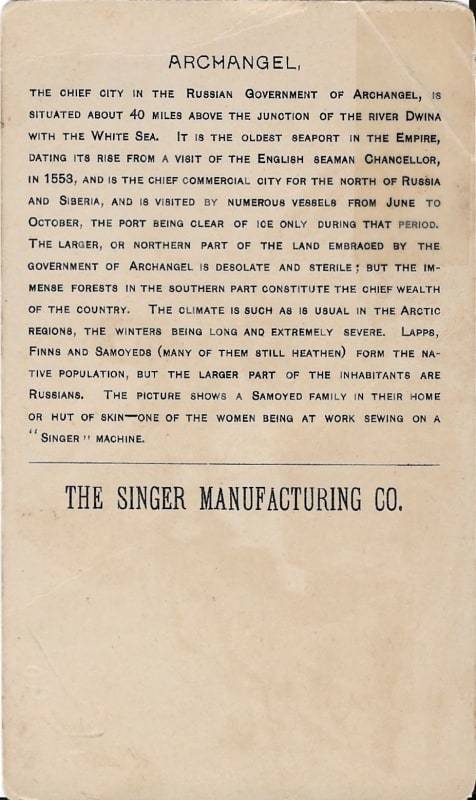
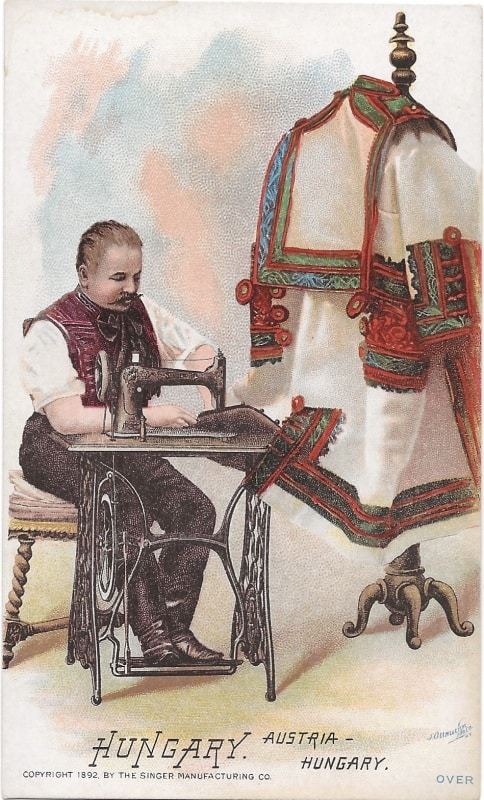
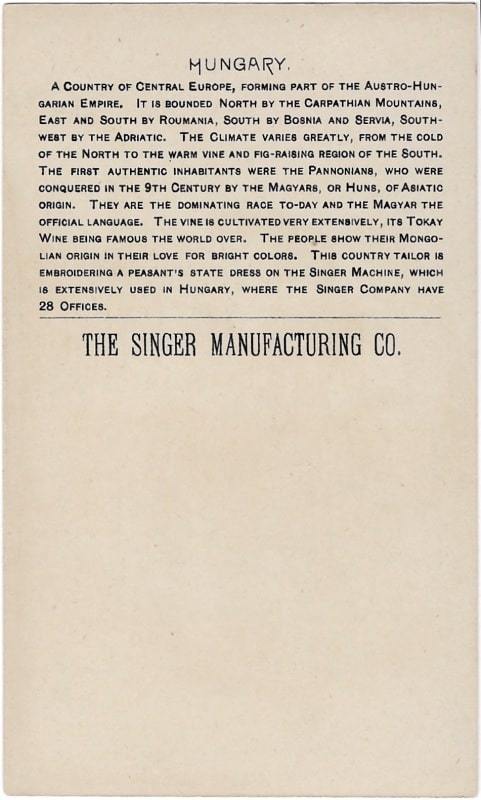
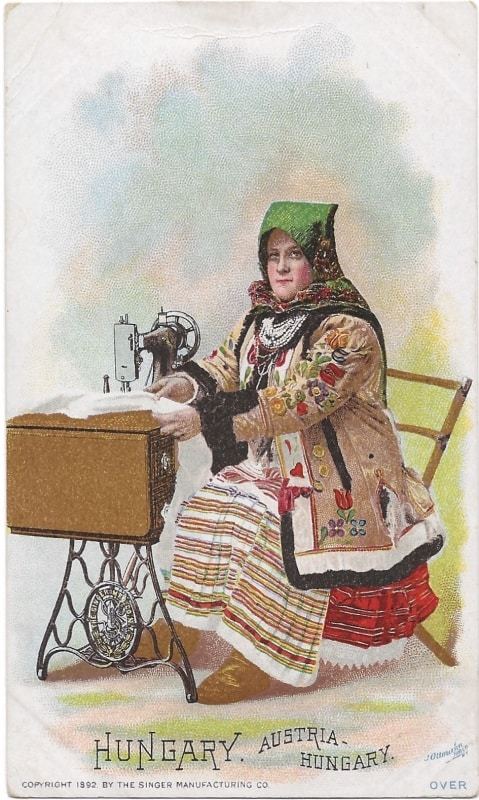
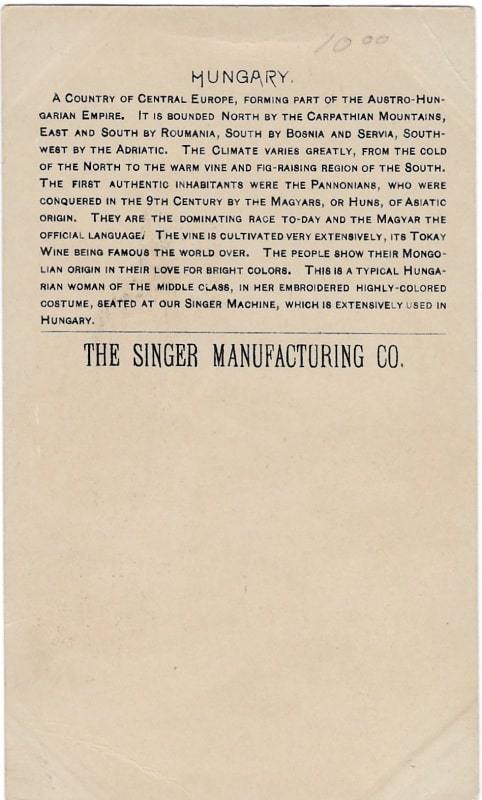
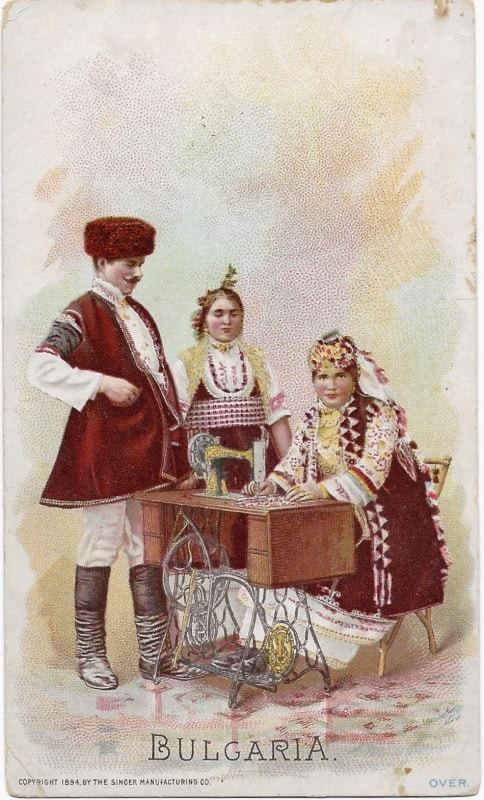
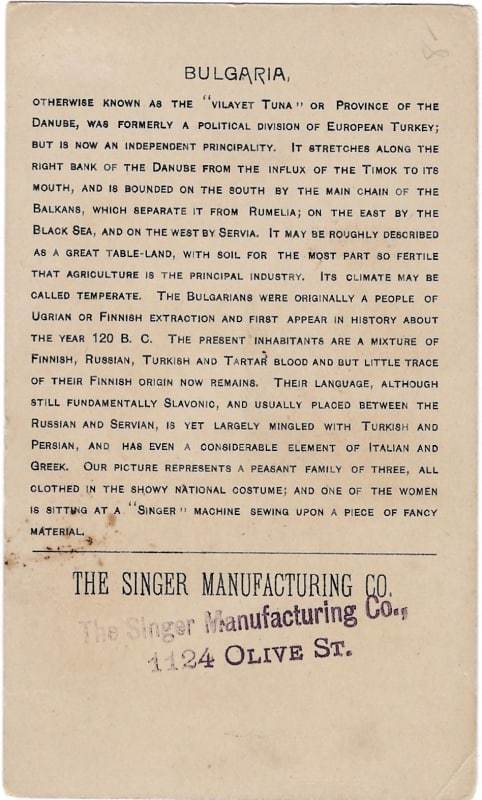
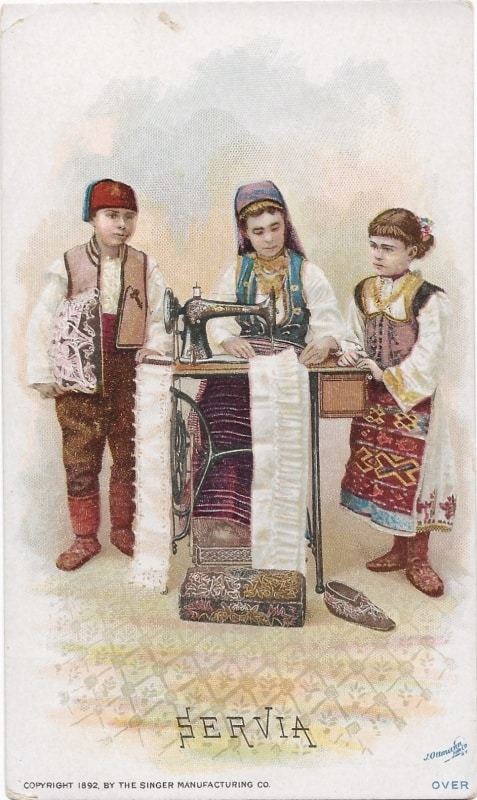
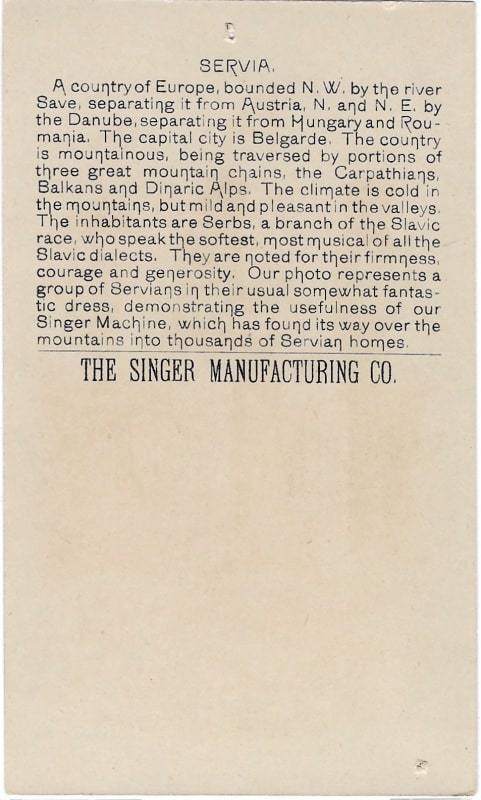
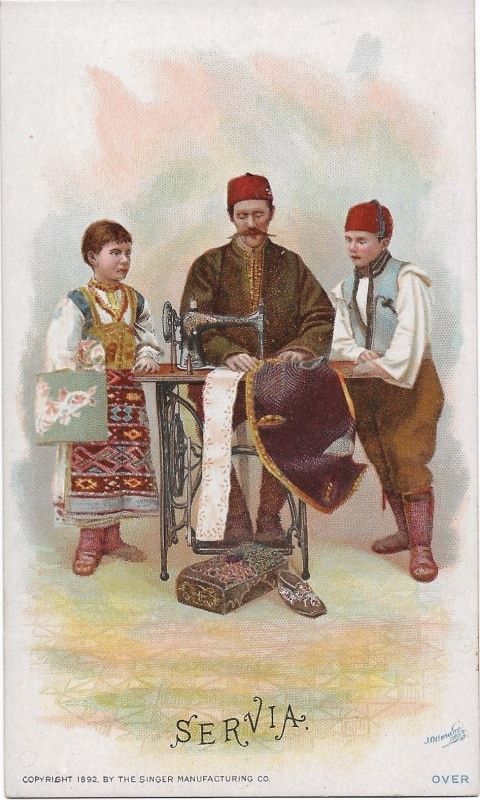
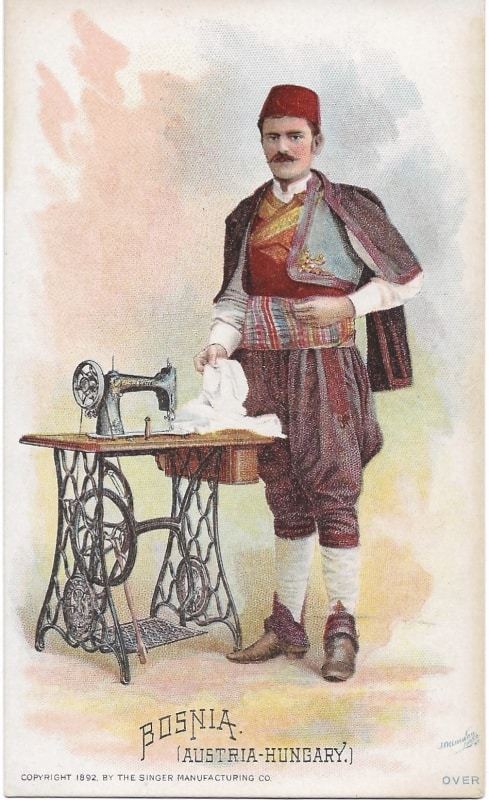
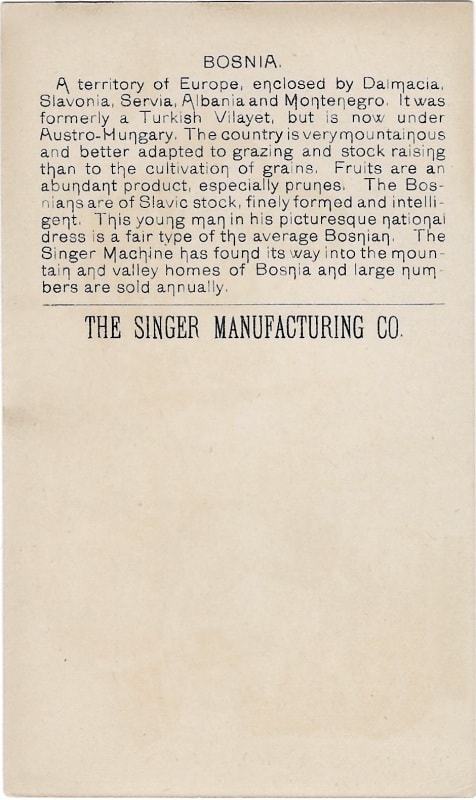
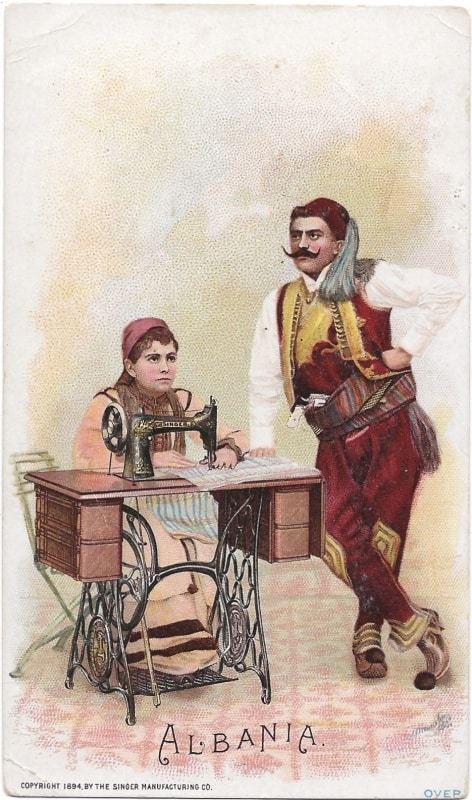
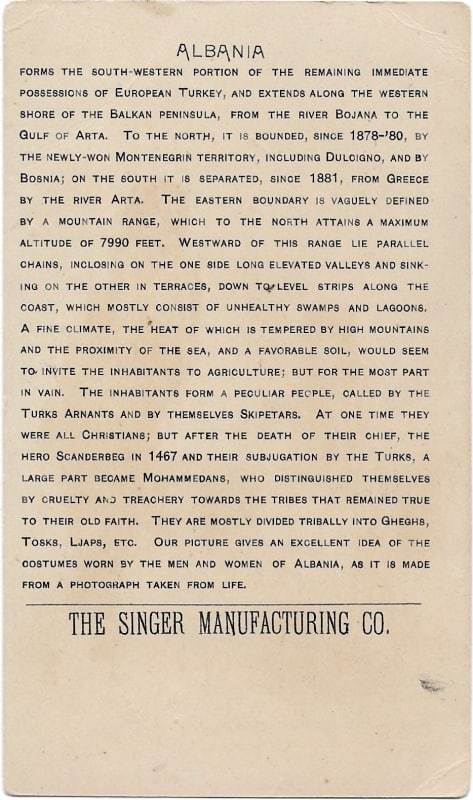
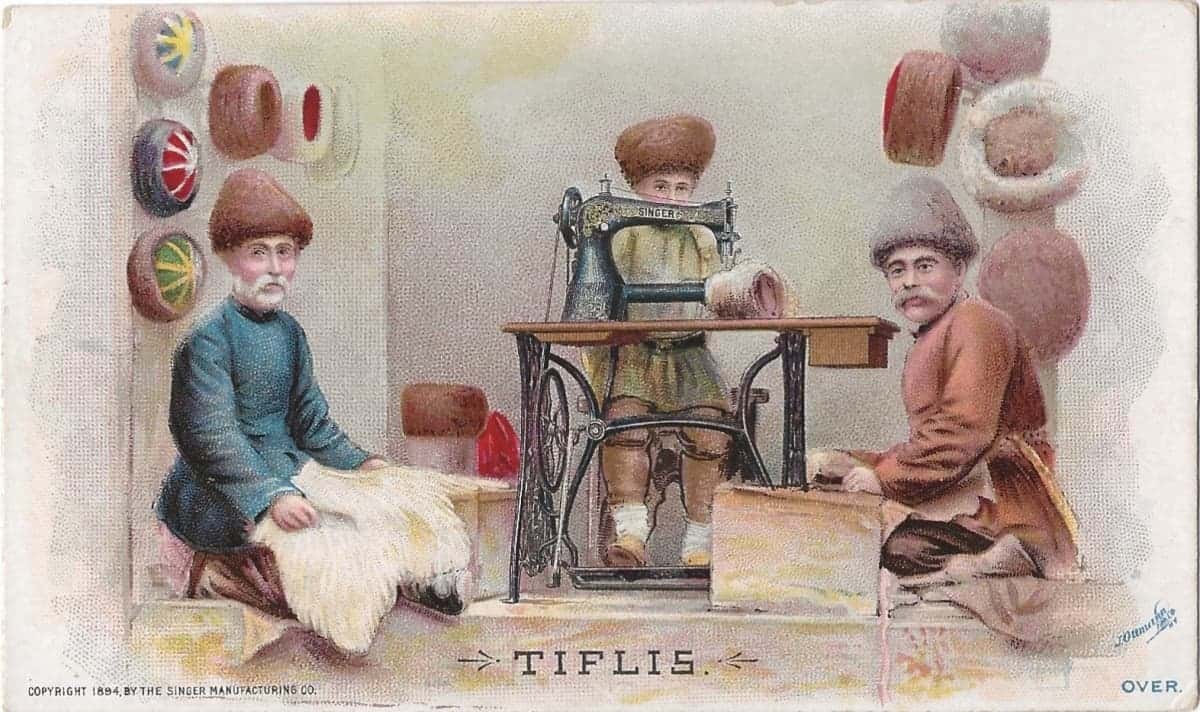
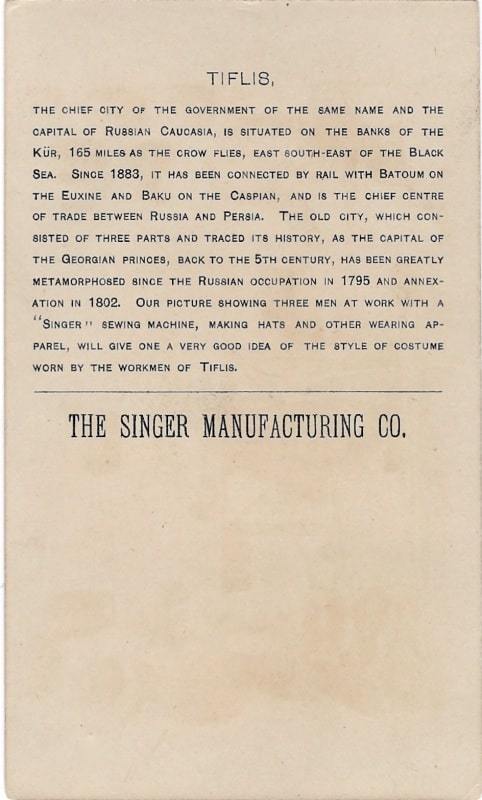
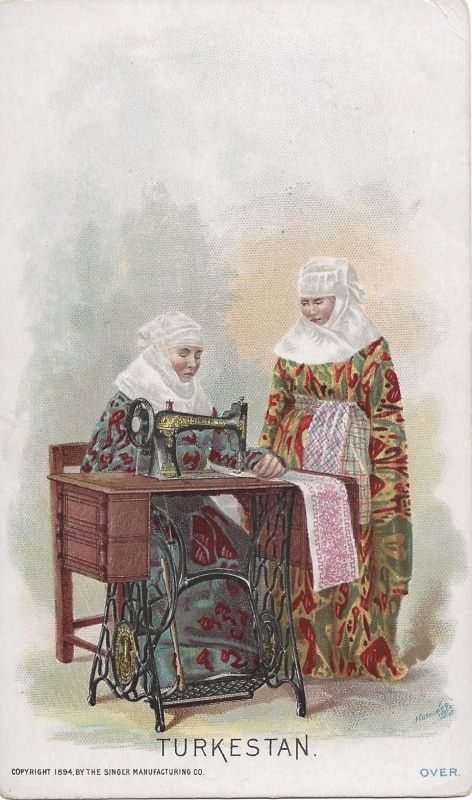
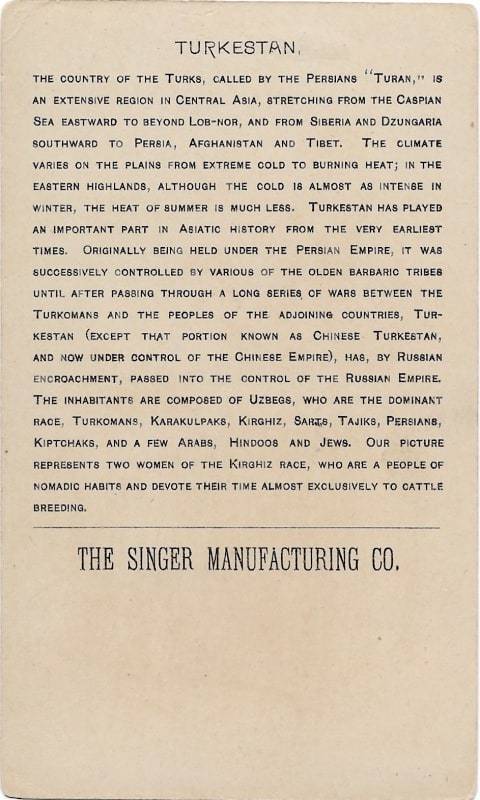
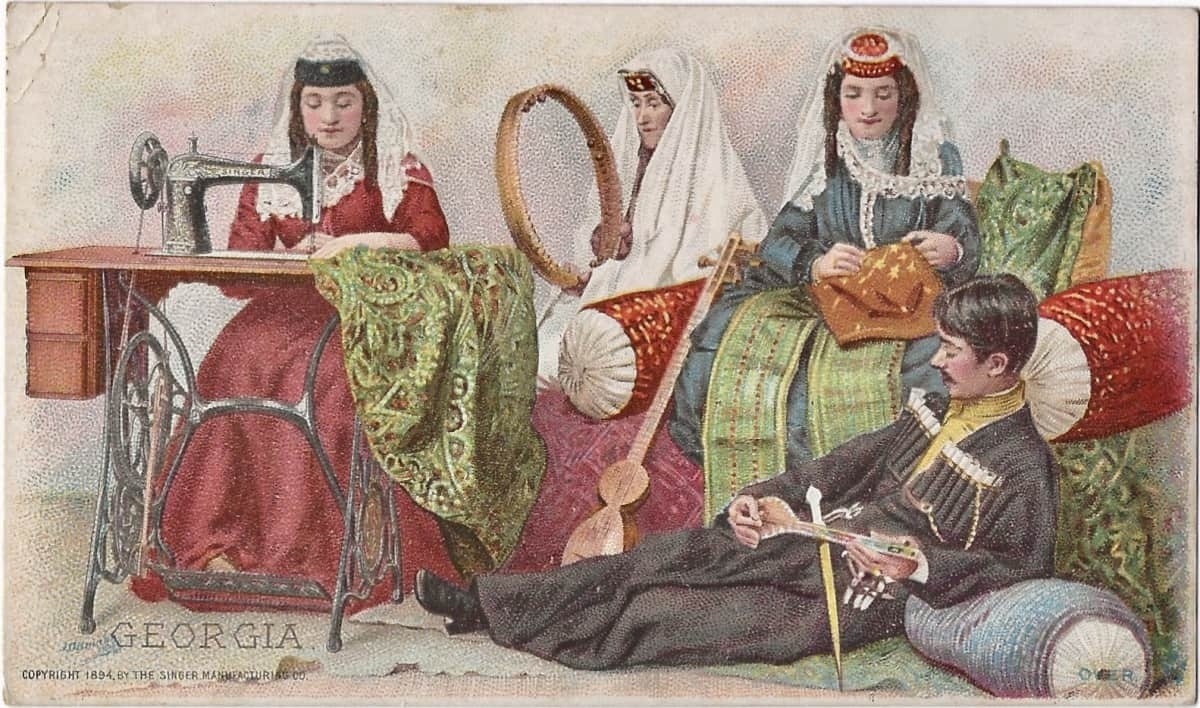
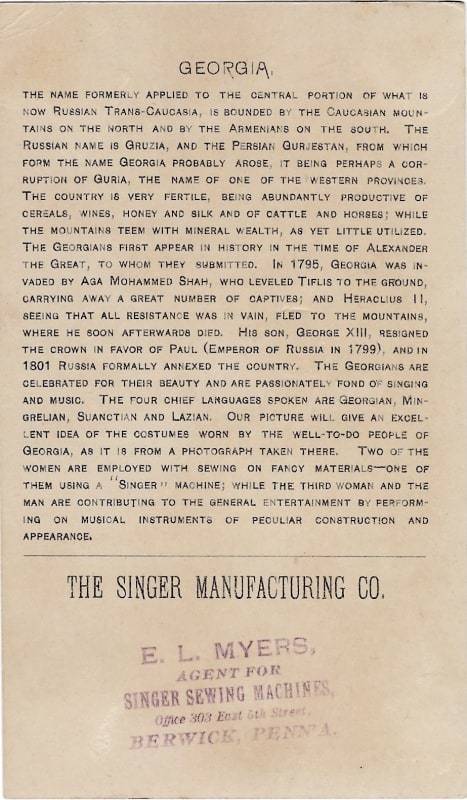
As well as a record of exotic national dress the cards featured short paragraphs which crystalise the attitudes and preoccupations of the time. The Singer Company saw itself as a beacon of civilisation, bringing education, prosperity and harmony to all corners of the globe. Alongside information about each country’s geography, climate and the occupations, ethnic origins, religions and languages of the people are sweeping statements about their physical and moral characteristics. From a 21st-century perspective these seem quite startling. The power of Singer as a transforming and benign influence on ‘native’ people is a constant refrain. The Algerian card informs us that ‘Even on this far off coast of Africa the civilising influence of our Singer is felt.’ From Italy we are shown ‘a Neapolitan woman in the provincial dress, which shows to advantage her rich Grecian type of beauty. The Singer Machine, on which she rests her hand, has done its share in preparing the costume. In Italy, as elsewhere, it is the friend of the people.’ The Swedish, we are told, are ‘hardy, industrious and intelligent. Sweden had given us Neillson and many other sweet singers, in return we give her 15,000 of our industrious ‘Singers’ annually’ (presumably a heavy-handed pun rather than an unusual barter system). In India Singer is serious again and trumpets its machines as ‘a factor in helping the people of India toward a better civilisation for nearly twenty years.’ On the Russian card Singer is moved to rhapsody – ‘The original tribes, the true Slavs, are physically the nearest to perfection of any people. Singer sewing machines are distributed throughout the vast Russian empire. Thus, this product of American genius is bringing to women of the whole world into one universal kinship and sisterhood.’
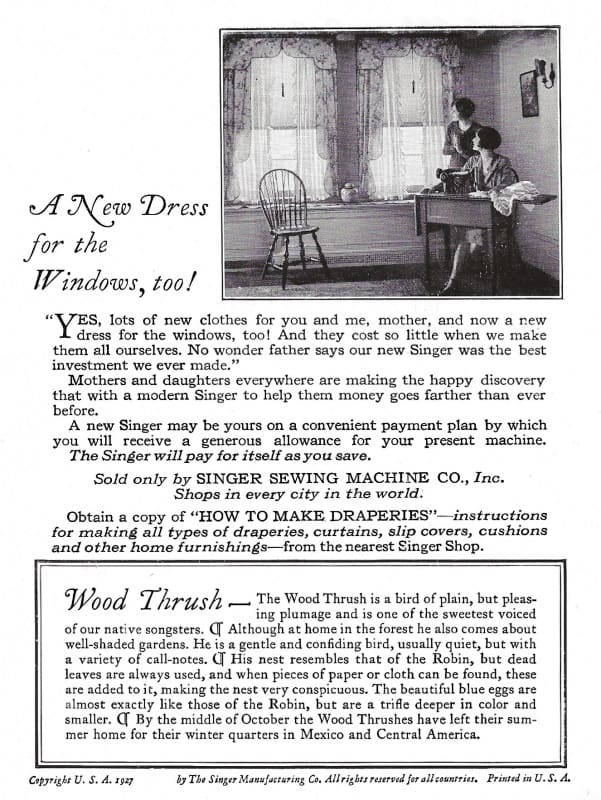
By the early 1900s the popularity of trade cards as a means of advertising waned as media such as colour magazines became more affordable. But Singer continued to produce them for a while longer. The text on a set of ‘American Song Birds’ cards produced in the late 1920s, shortly before the Great Depression set in, stresses economy, prudence and the satisfaction to be gained from home-sewing. After circumnavigating the globe, Singer returned to the domestic sphere and by that time the emphasis is on machines for ‘everywoman’ in every American home.”