Embroidery of the Cossack Elite
5 June 2022

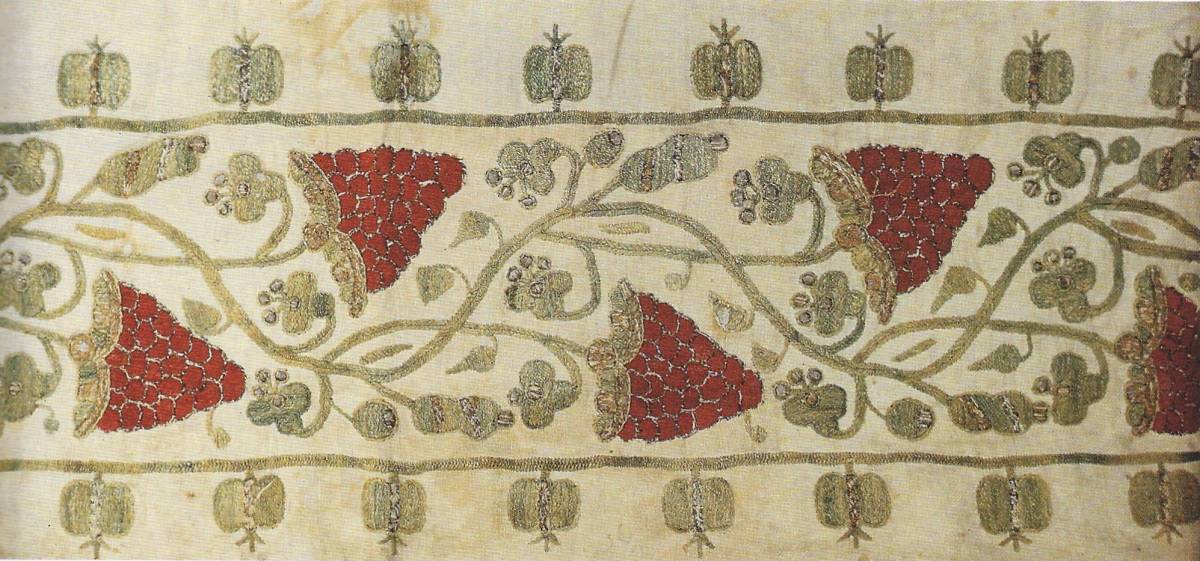
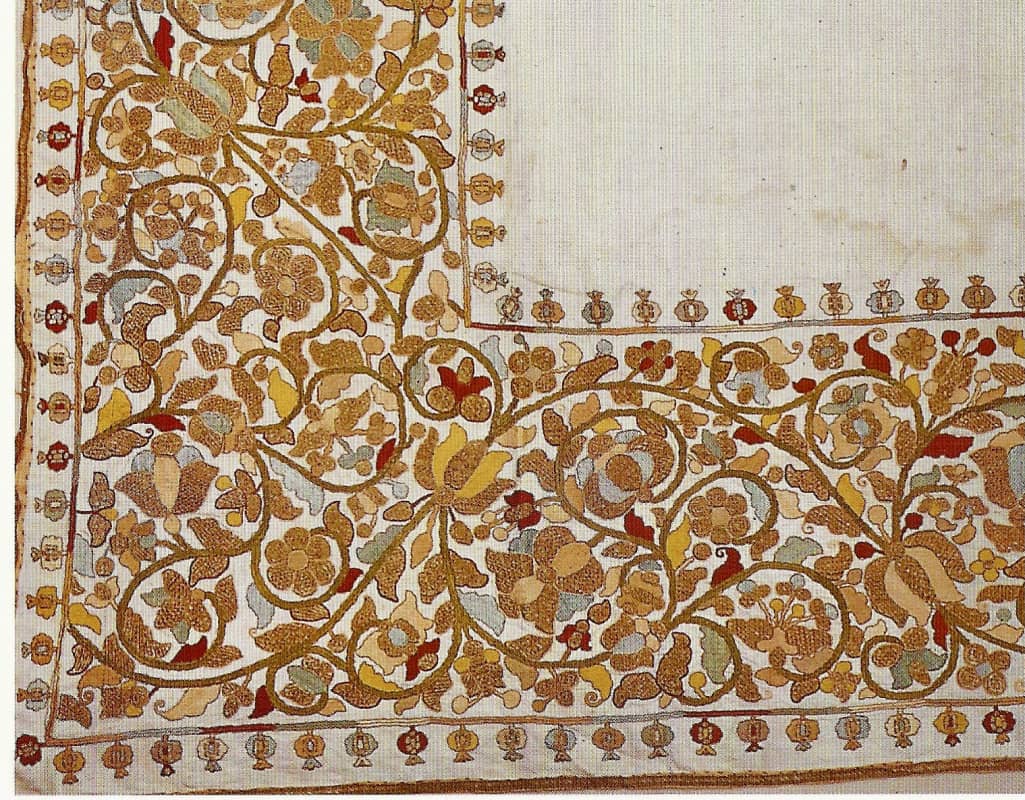
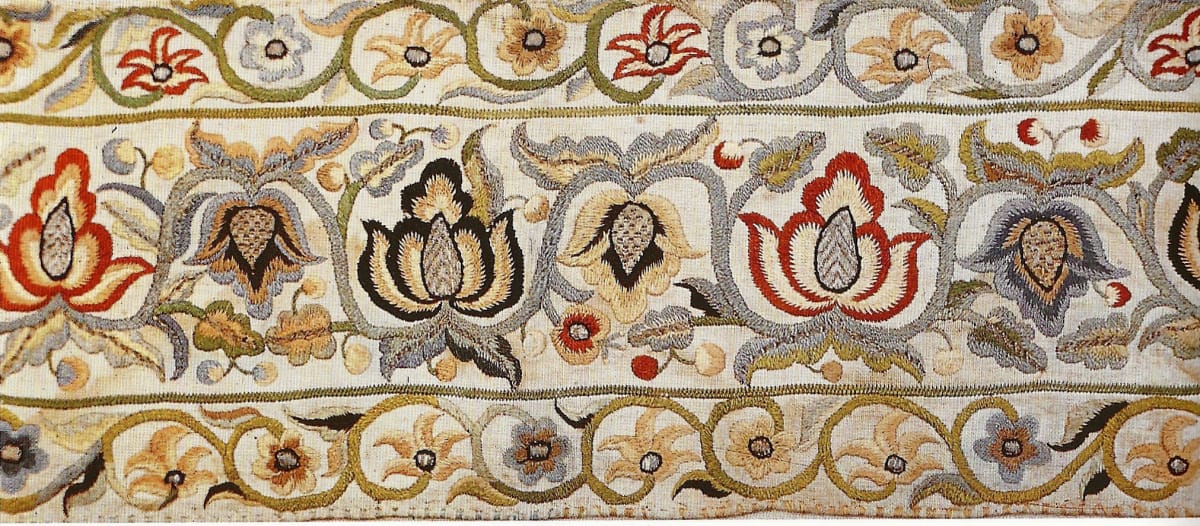
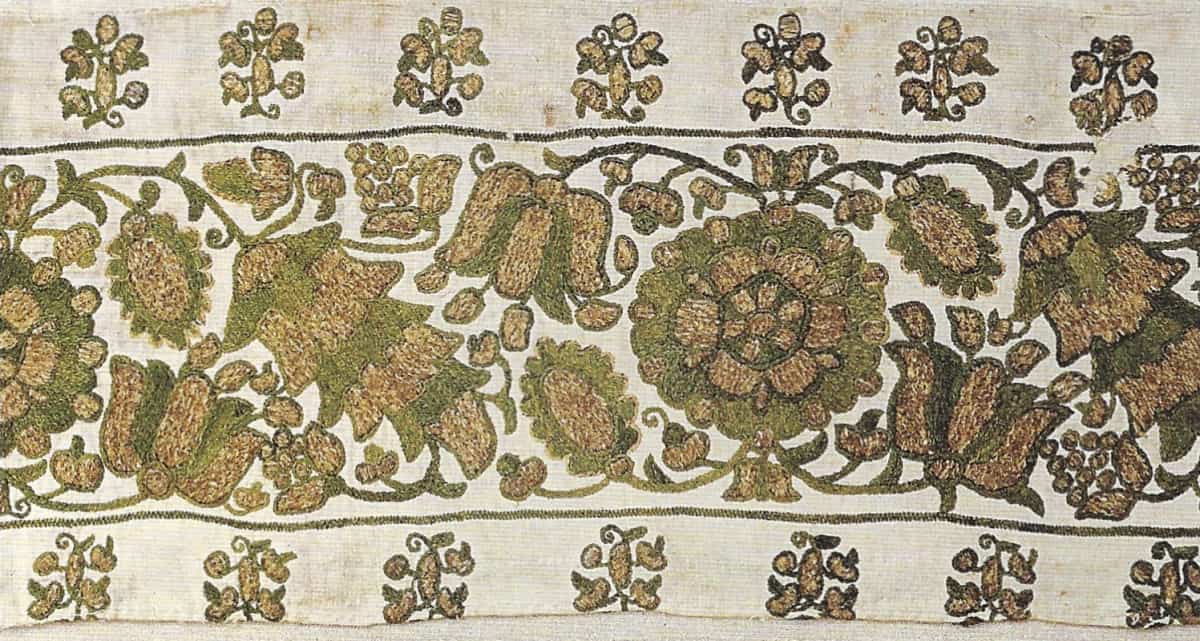
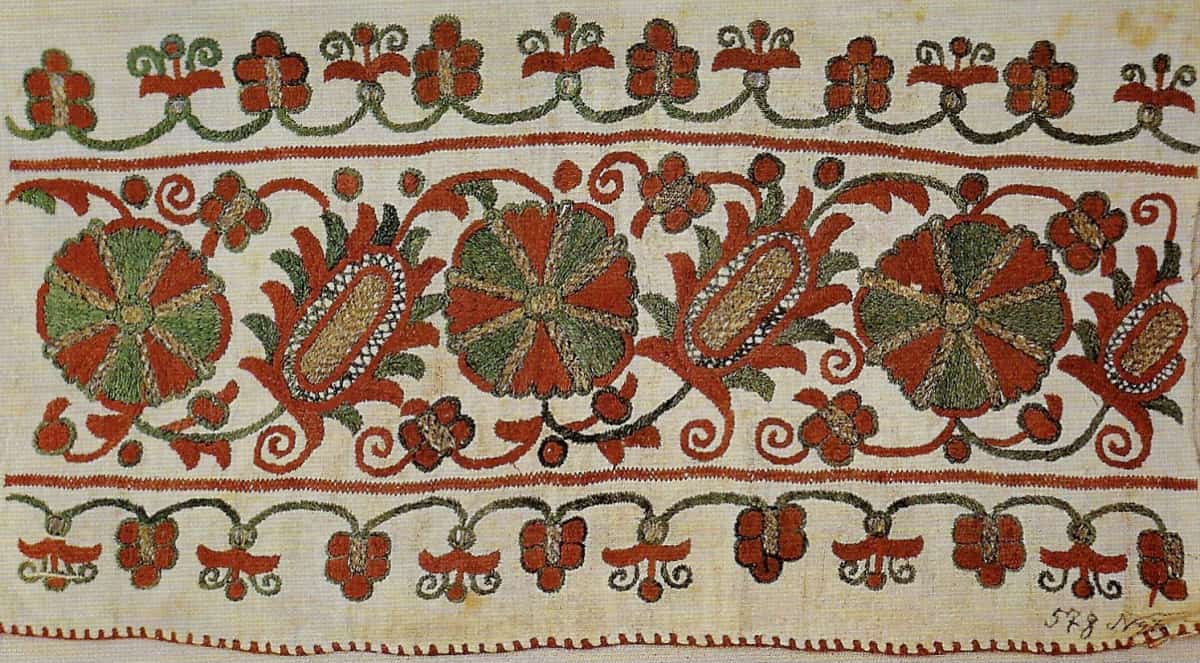
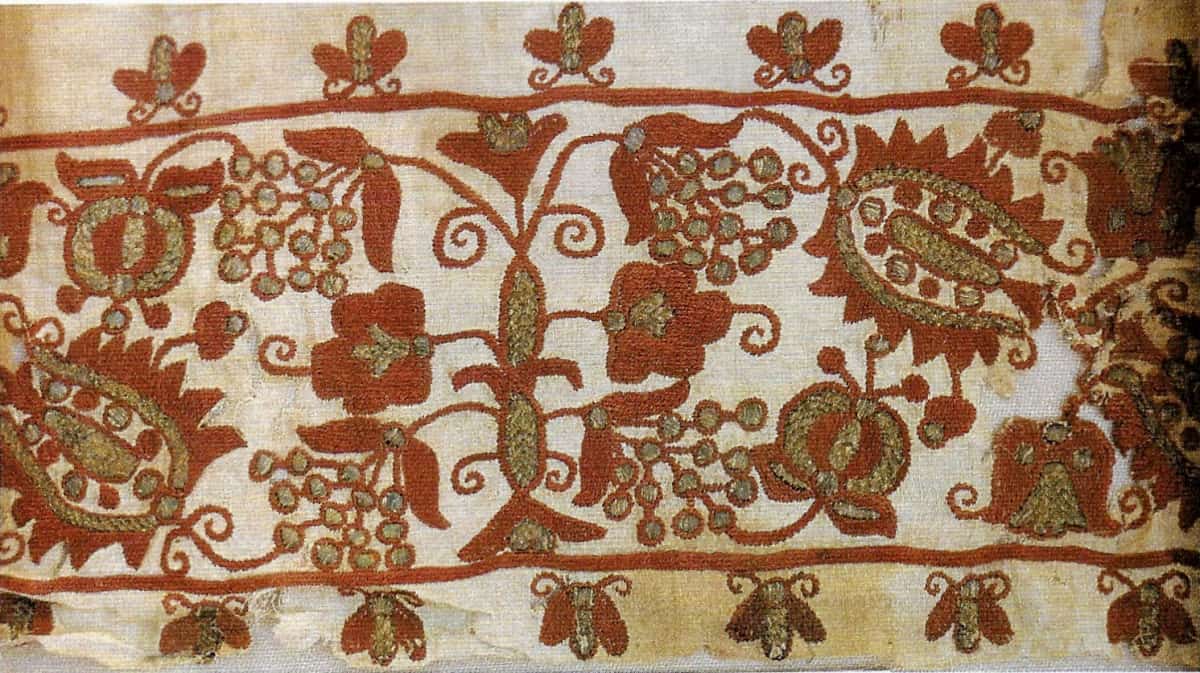
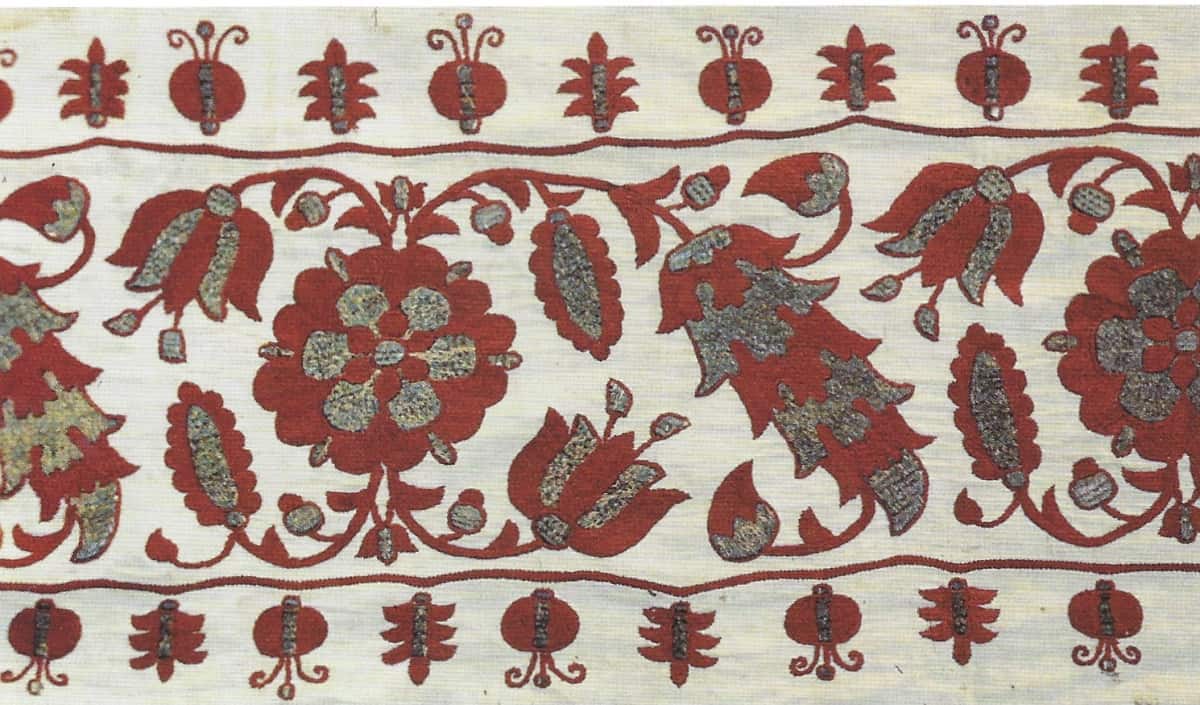
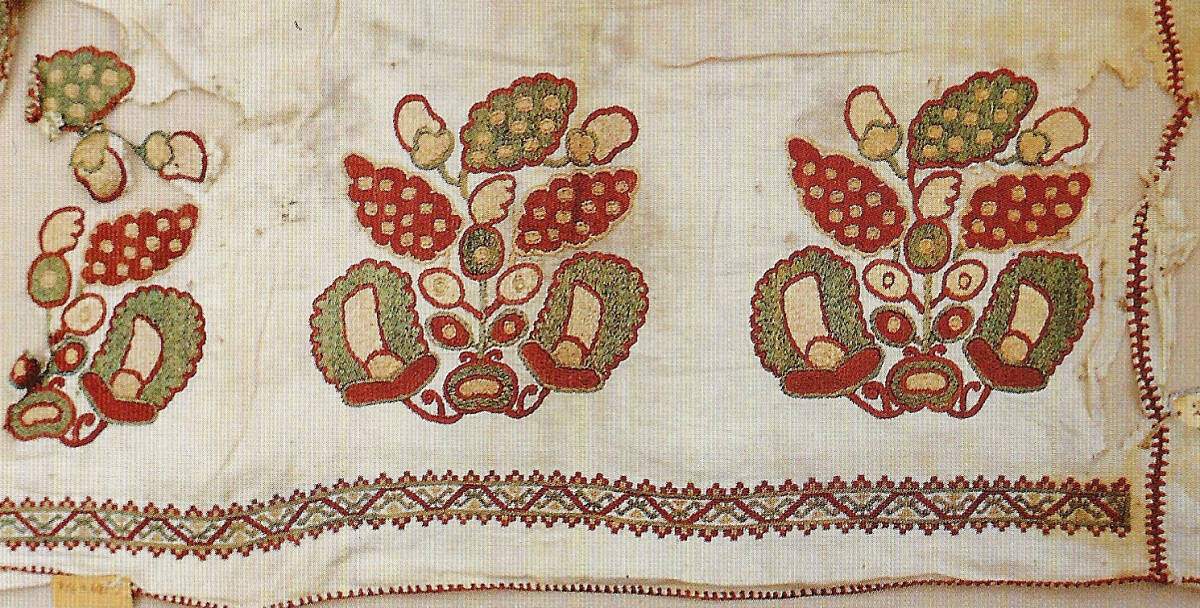
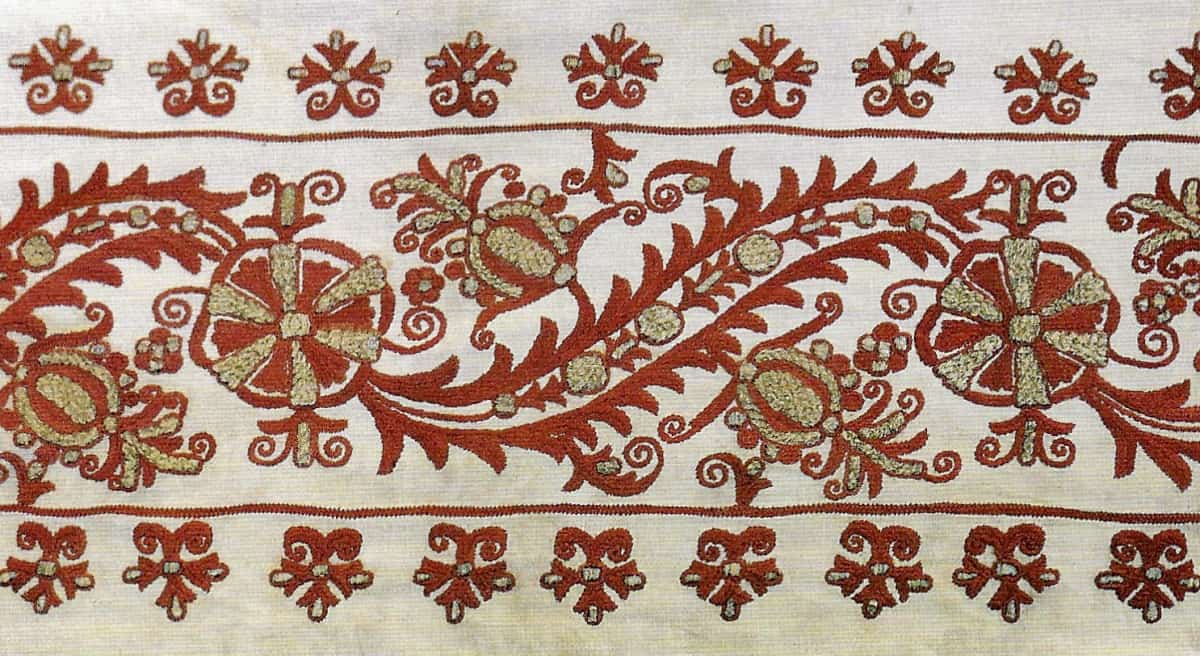
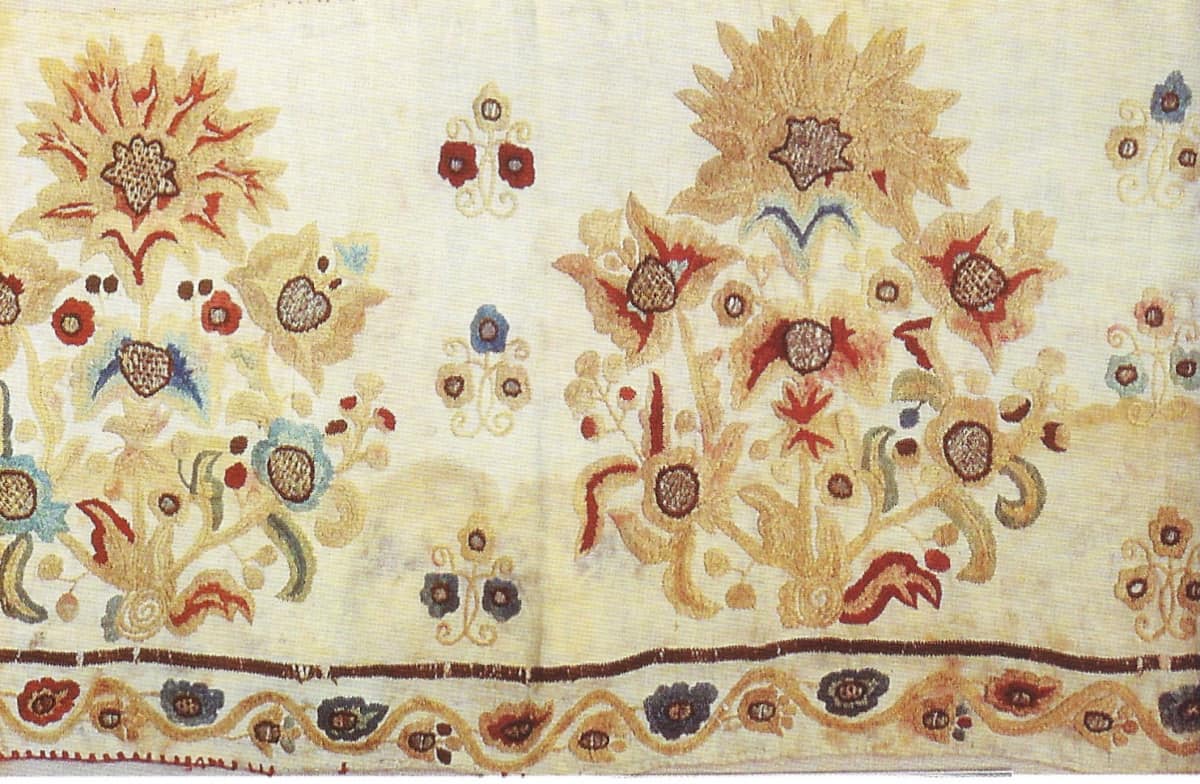
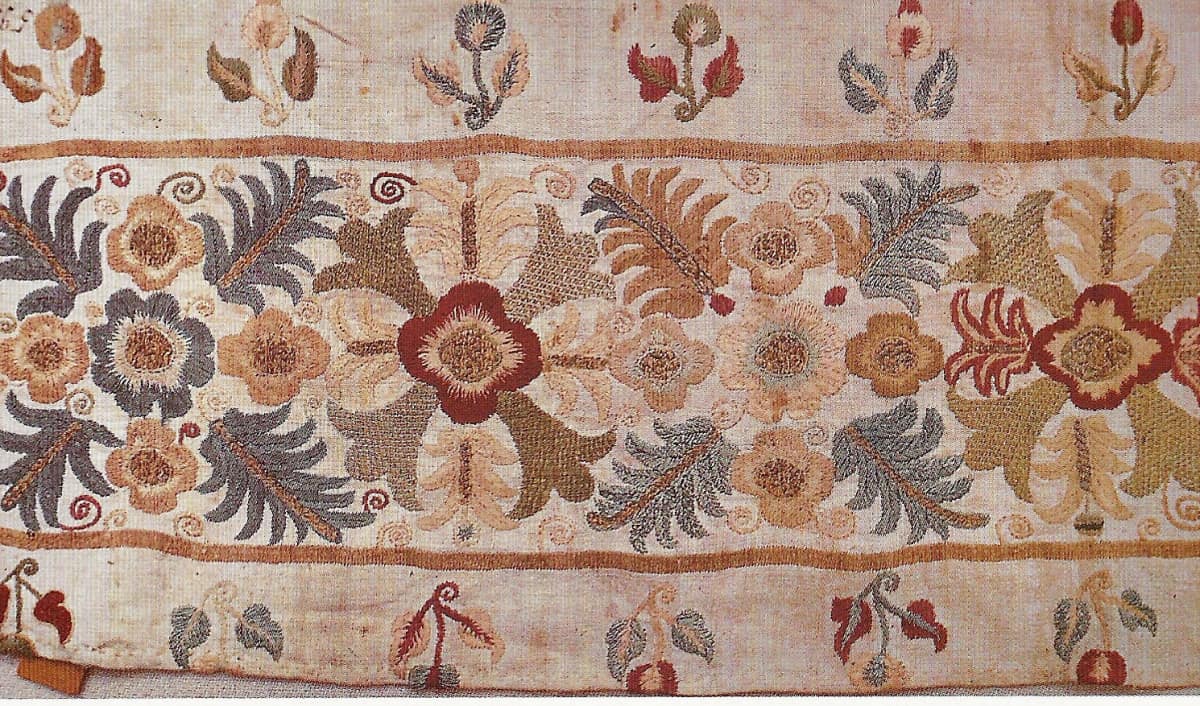
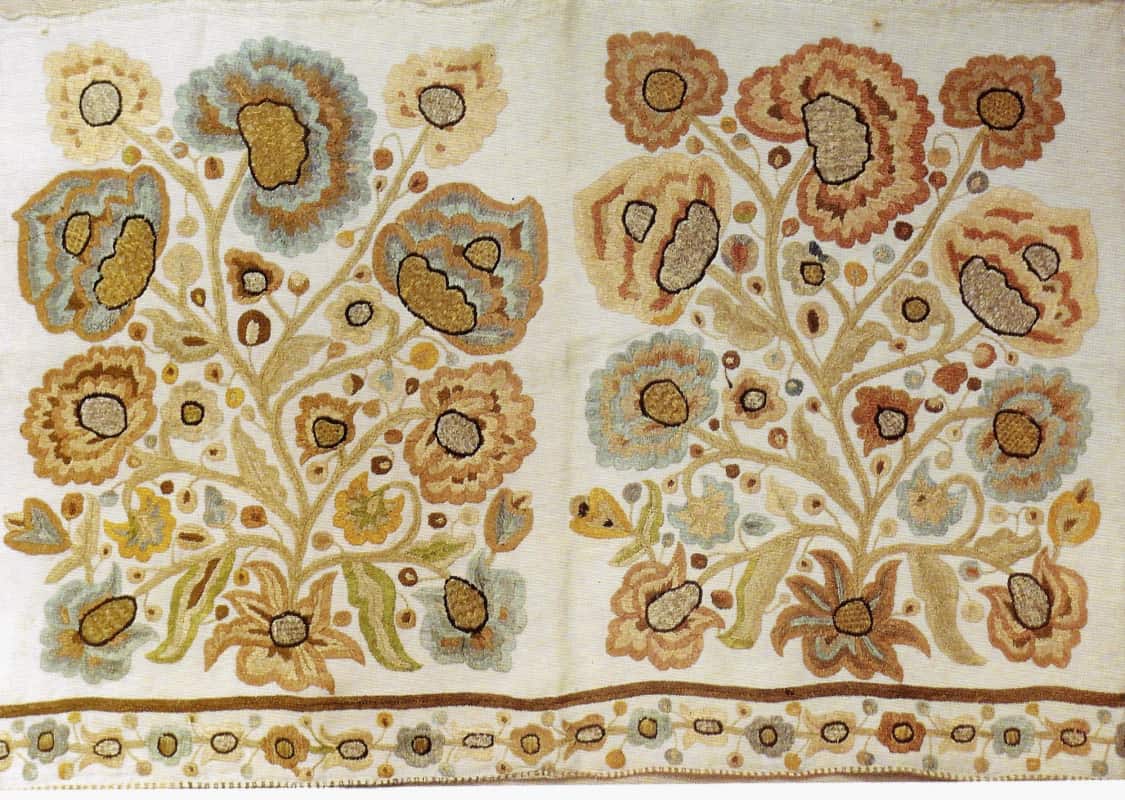
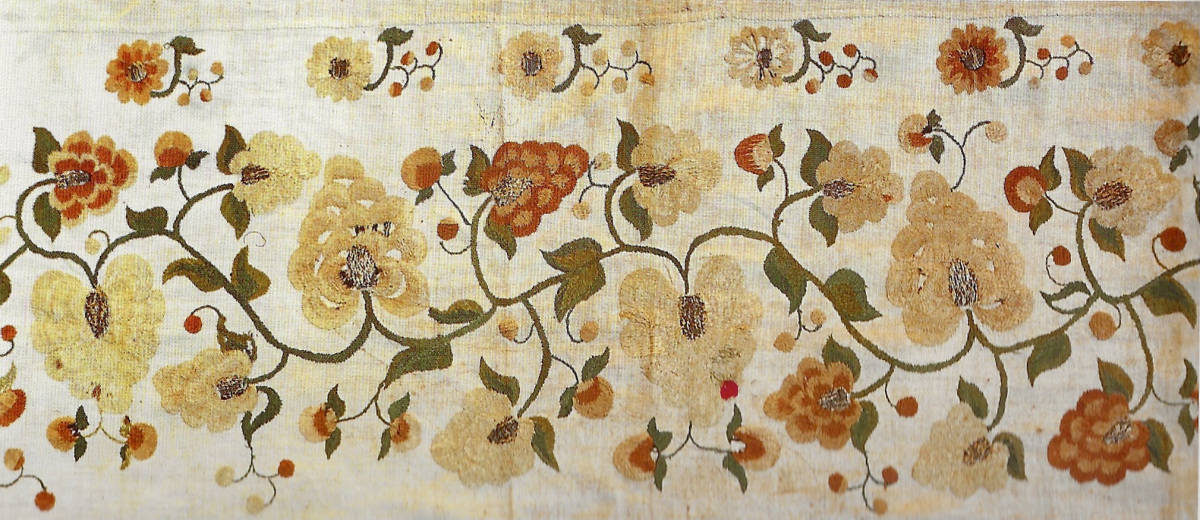
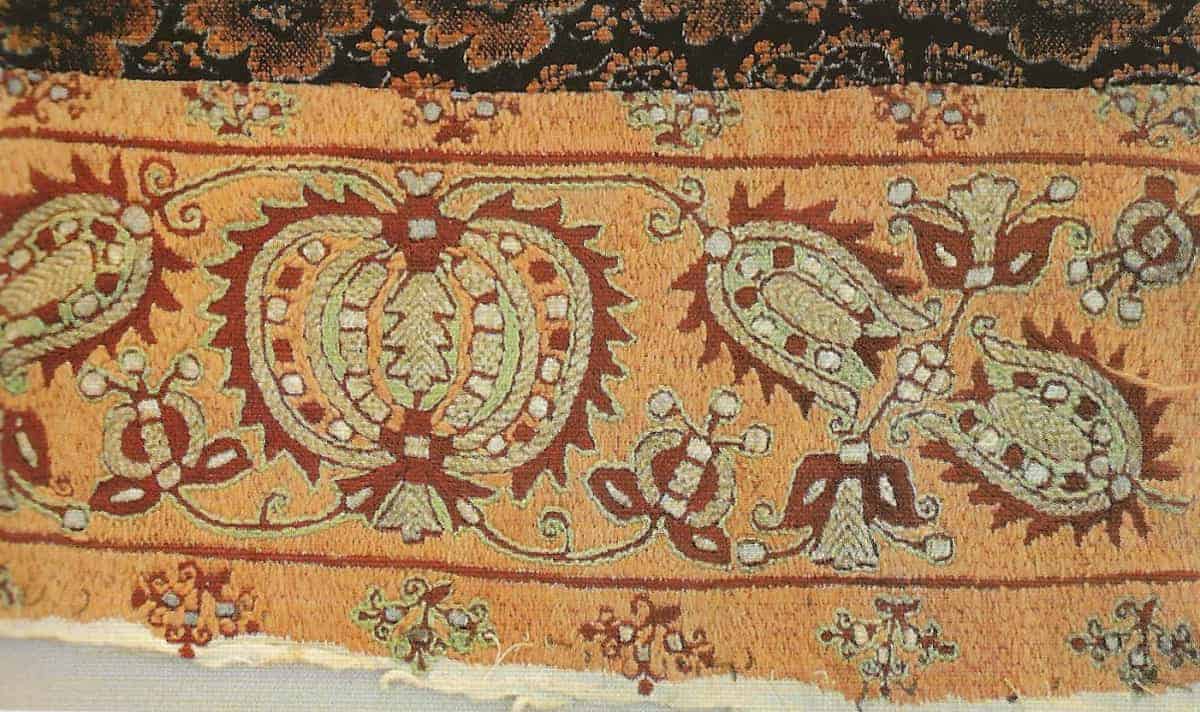
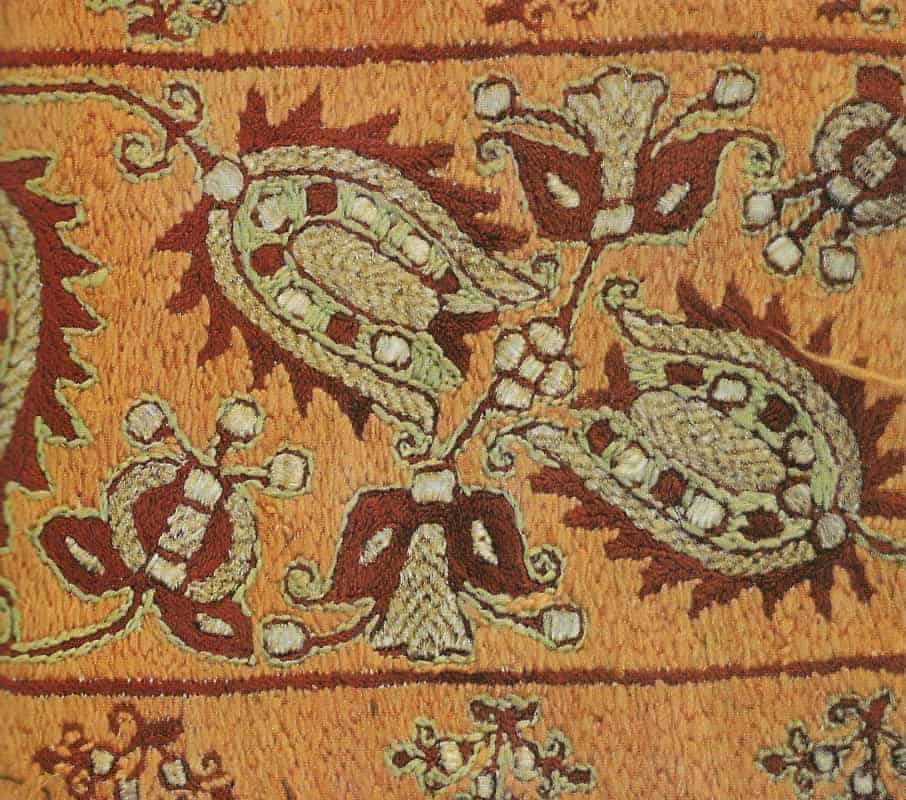
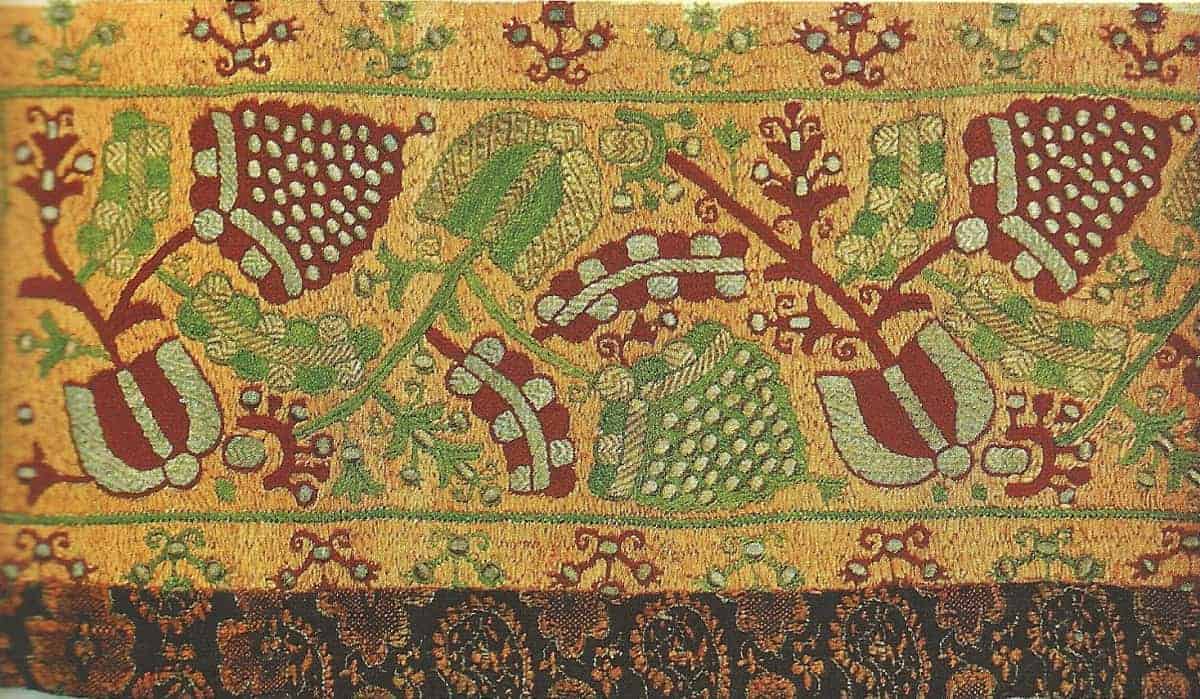
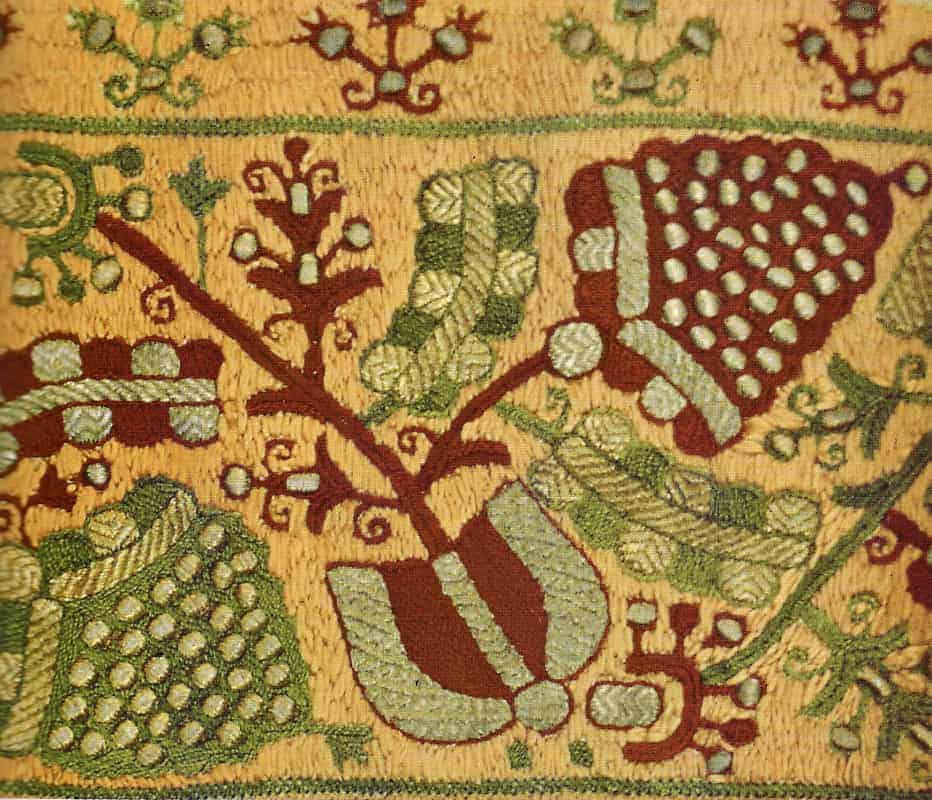
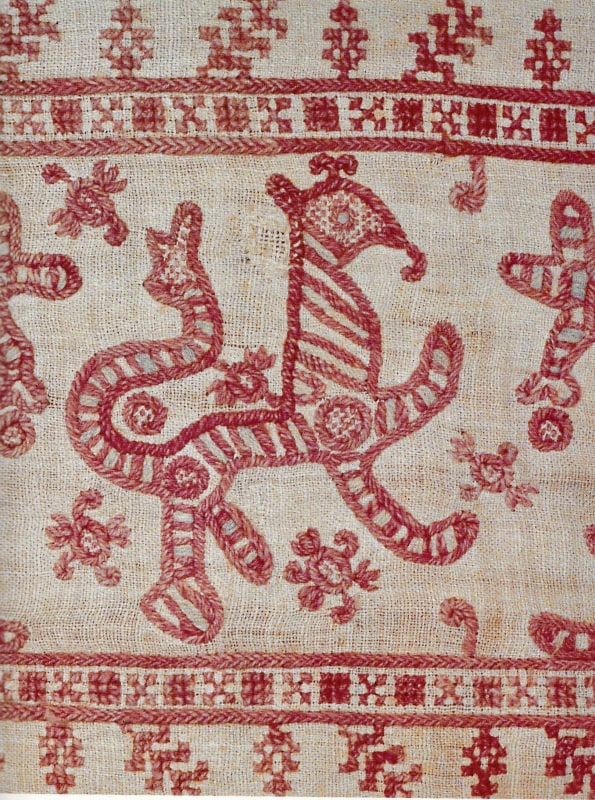
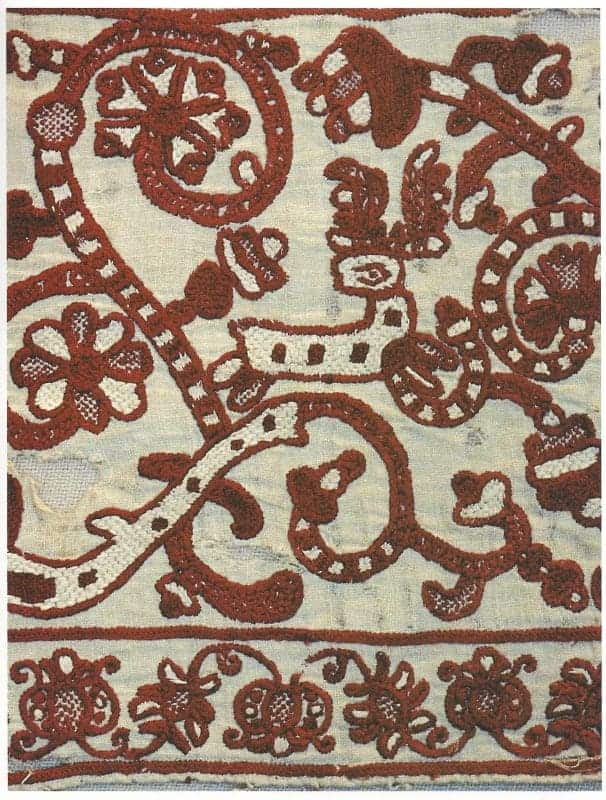
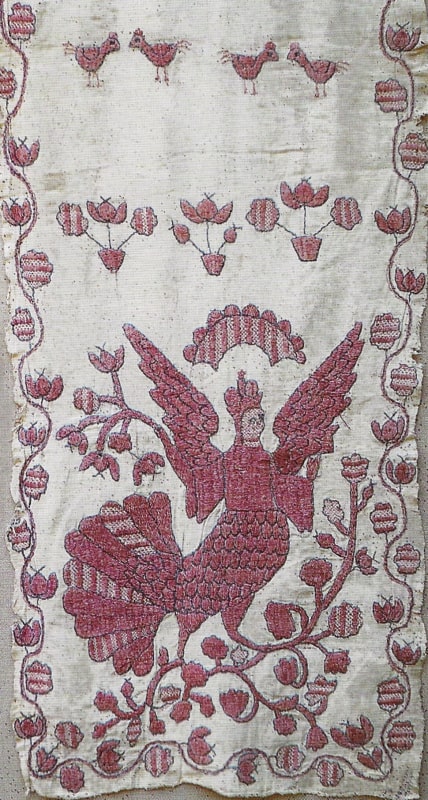
On our visit to Ukraine in October 2005 we were welcomed into the Chernihiv Historical Museum and taken by the curator to the stores, where he unfurled several long rolls of cloth of exquisite workmanship, most of them embroidered in silk, gold and silver thread. He explained that these dated from the 17th and 18th centuries, and were household textiles made for wealthy and aristocratic families of the region. Many had originally been made as decorative edgings for bed linen. When the sheets had worn out, the precious embroidered bands were cut off to be used again, often being given to the church for the decoration of vestments.
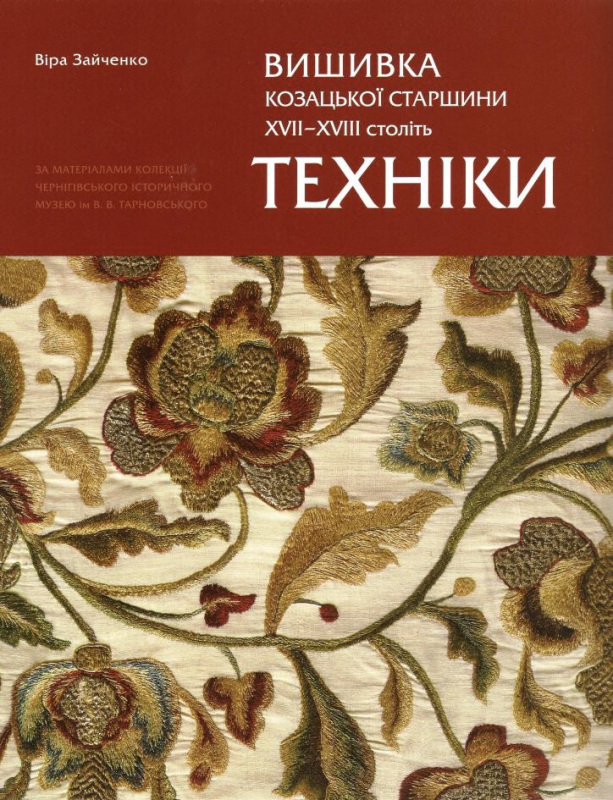
I was given the English language version of the catalogue about these embroideries, which has 140 pages of photos in full colour – and an introductory essay from which I’ve extracted the following information (slightly adapted by me from the text written by Vira Zaichenko):
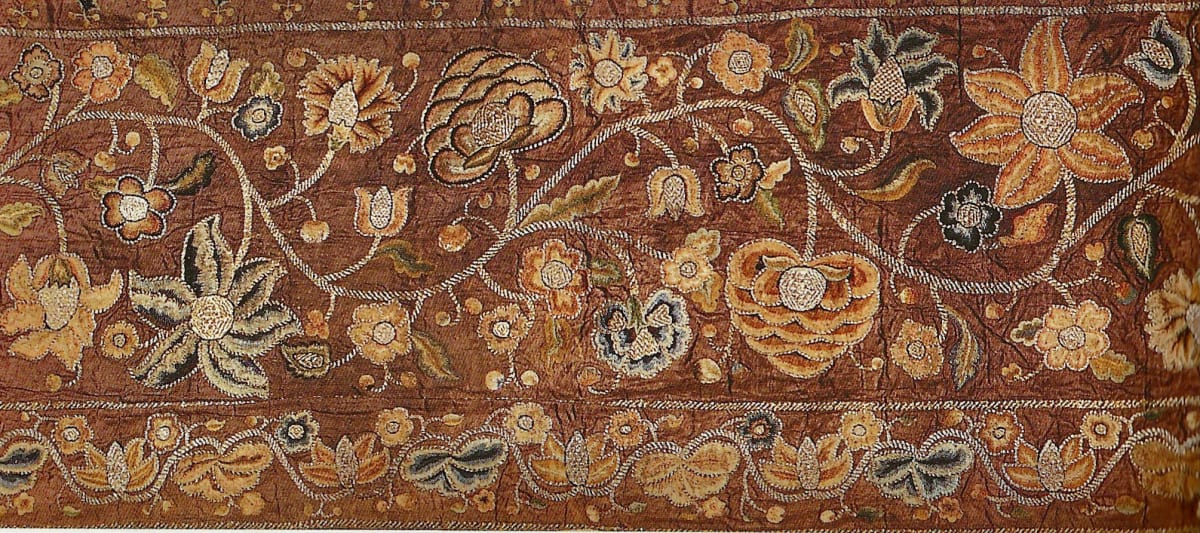
‘Embroidery has been and remains one of the most widespread forms of decorative art in Ukraine. Alongside traditional geometrical patterns that are so ancient they cannot be dated with any accuracy, embroidery with floral designs became highly popular with the upper classes of Ukrainian society in the 17th-18th centuries. This type of embroidery was done in silk, gold and silver thread as well as in zapoloch – multicoloured cotton sewing – on bedspreads, pillowcases, tablecloths, rushnyk ritual cloths, clothing, ecclesiastical vestments and other objects common to the households of the Cossack elite. (The word used in the original Ukrainian text is starshyna, which denotes senior military and administrative officers and more broadly, Ukrainian nobility – and here translated into English as ‘the elite’.) A large collection of specimens of Ukrainian embroidery from that period has been preserved in the V V Tarnovsky Chernihiv Region Museum of History.
In 1914 the historian and ethnographer Petr Savitskii published an article – ‘On Ukrainian Embroidery of the 18th century and its present-day revival’. He believed that embroidery was the occupation of the daughters and wives of Cossack officers and priests. This is possible, but more likely as an exception rather than the rule. Labour-intensive ornaments many meters long were embroidered for the upper classes by peasant women who gathered in workshops where embroiderers, weavers, carpet-makers and milliners worked side by side. This accounts for a great number of almost identical designs, into which every embroideress introduced her individual elements. The quality of embroidery attests to a high level of professionalism, even though some specimens, especially those dating from the late 18th century, indicate an amateur hand. In the late 18th century the art of embroidery declined. Embroidery began to leave starshyna households for homes of common people. But peasants could not afford expensive silk thread, so they used exclusively zapoloch (cotton thread) of crimson colour interspersed with dark blue (later black). The influence of these embroidery styles can be seen in the designs and techniques of 19th-century folk embroidery too.
Paying tribute to folk craftswomen for these remarkable designs, we should agree with Petr Savitskii in that embroidery from this period reveals the artistic taste of primarily women belonging to the Cossack elite. It was they who stimulated the creation of these ornaments by filling their homes and dowry chests with embroidered bed linen, bedspreads, tablecloths and rushnyks. To them goes the merit for designing and developing the variety of embroidery techniques that rushnyks from many regions of Ukraine are famous for even today.’
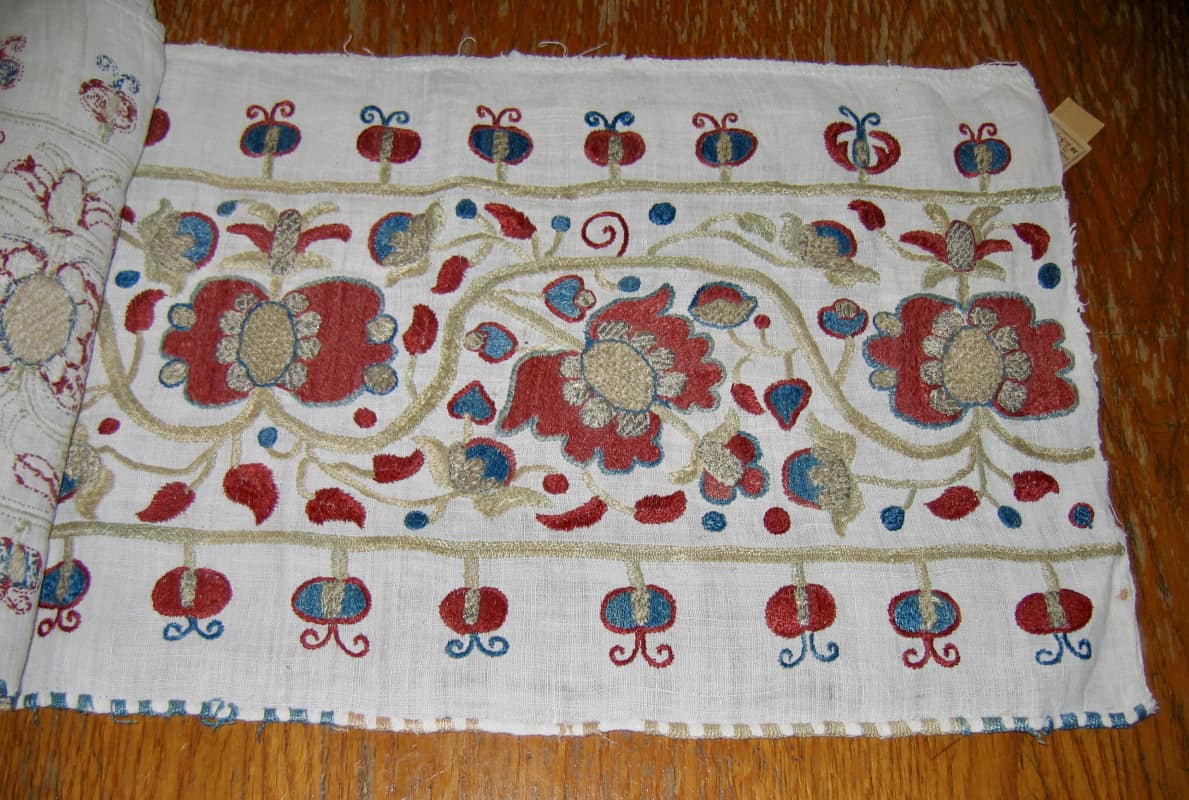
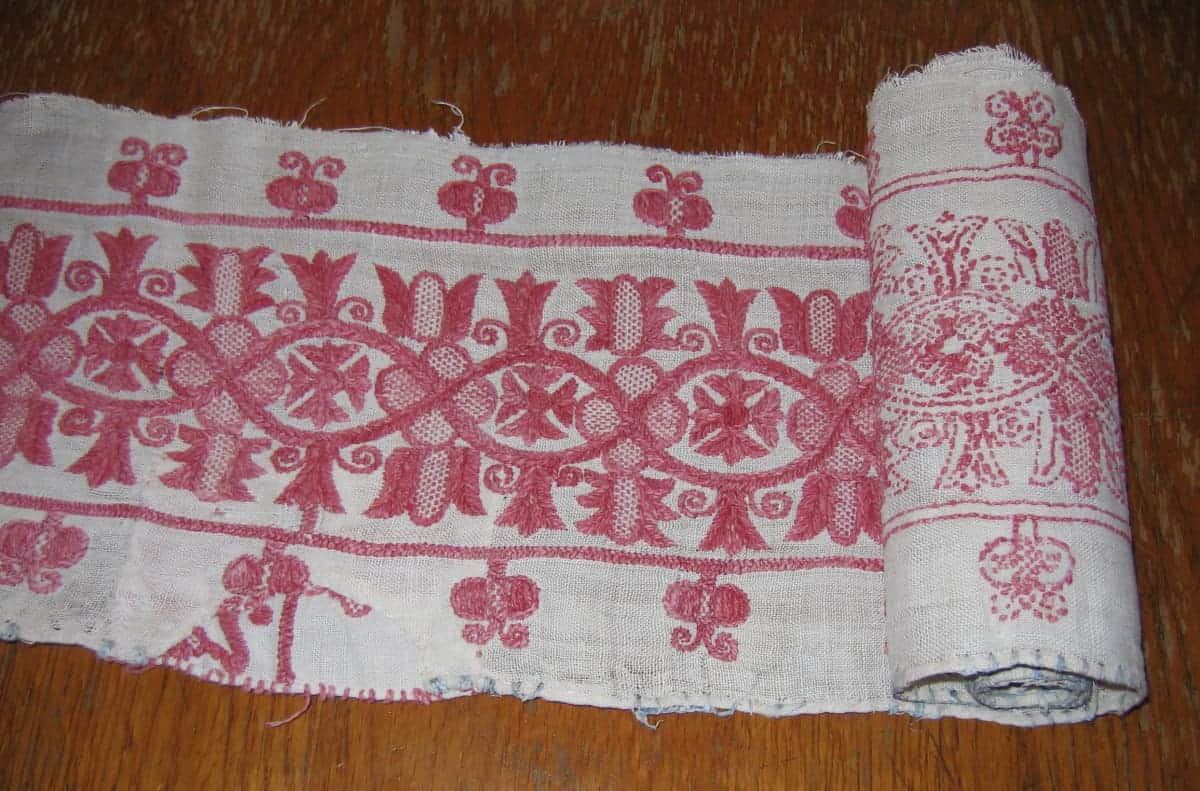
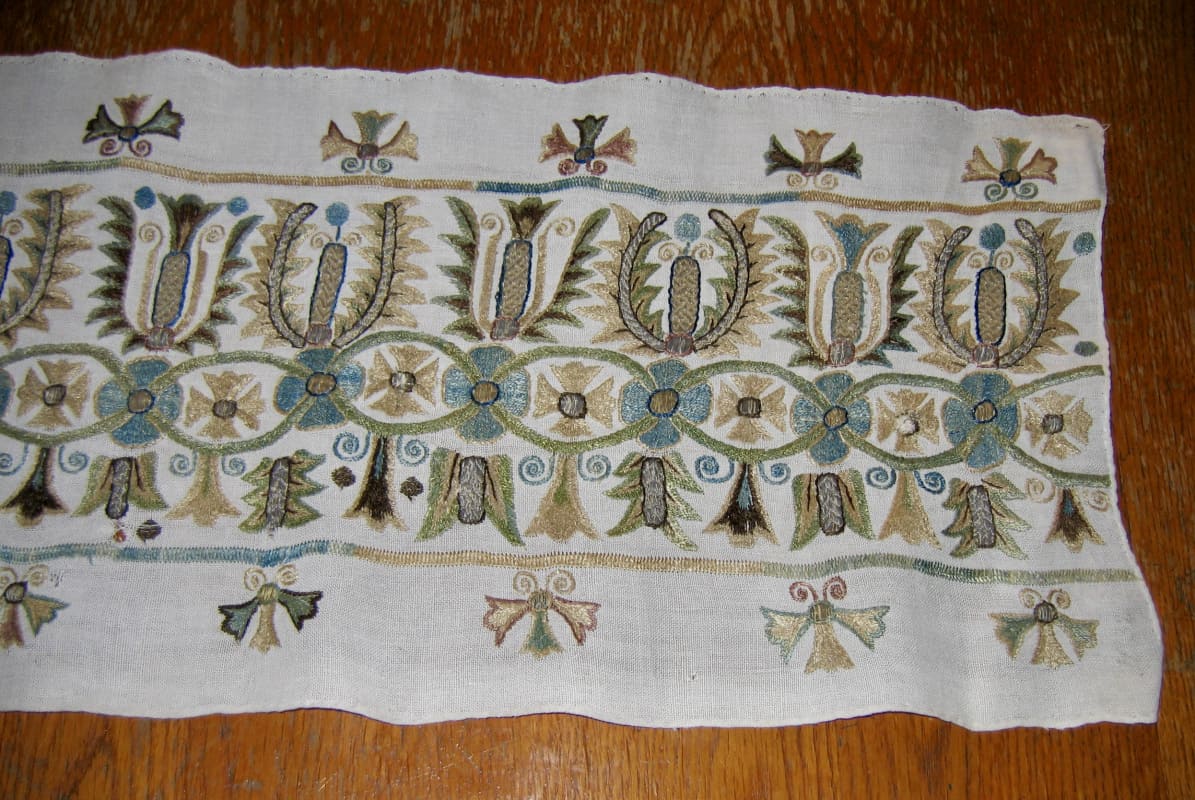
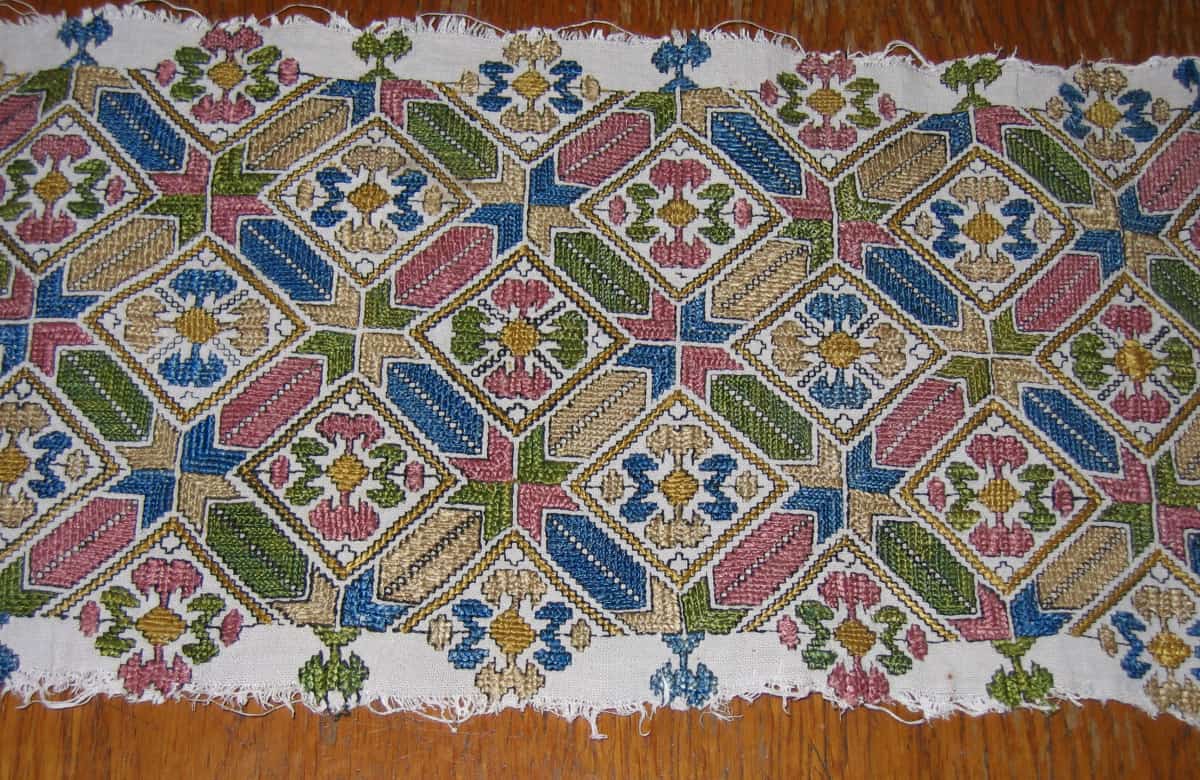
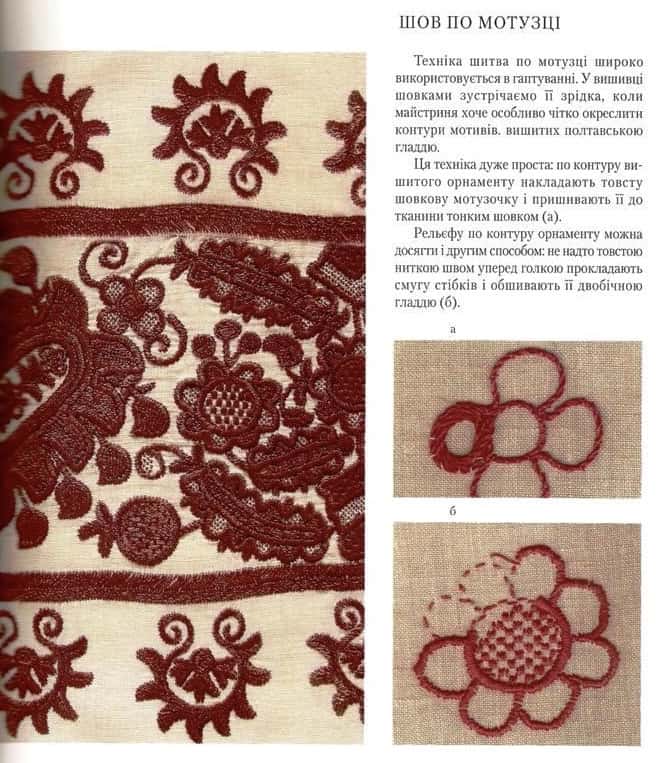
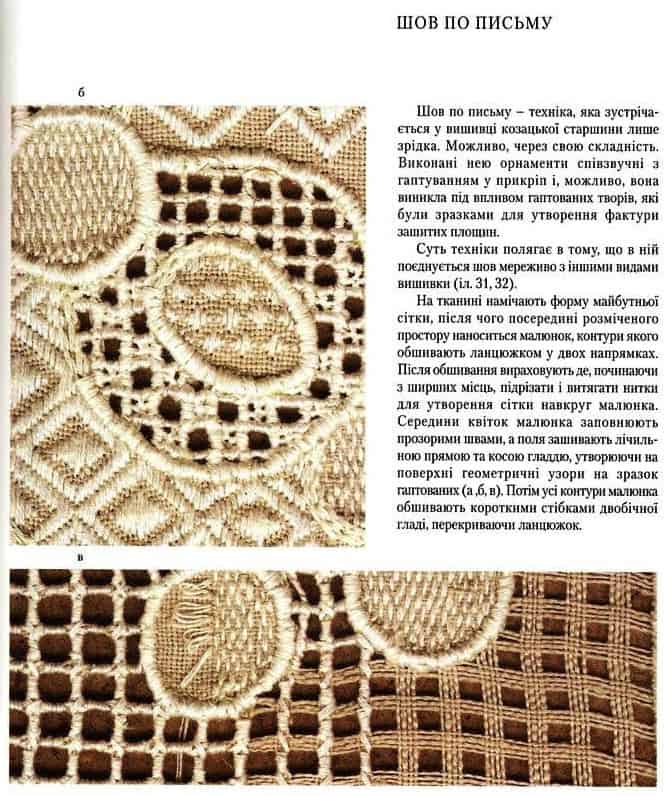
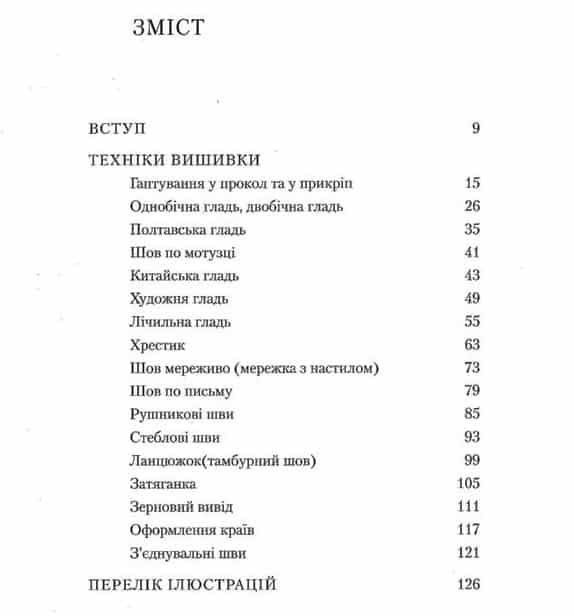
I took the above 4 photos in the museum store. The following pictures are from the catalogue.