Troubetzkoy’s Monument to Tsar Alexander III
7 July 2021
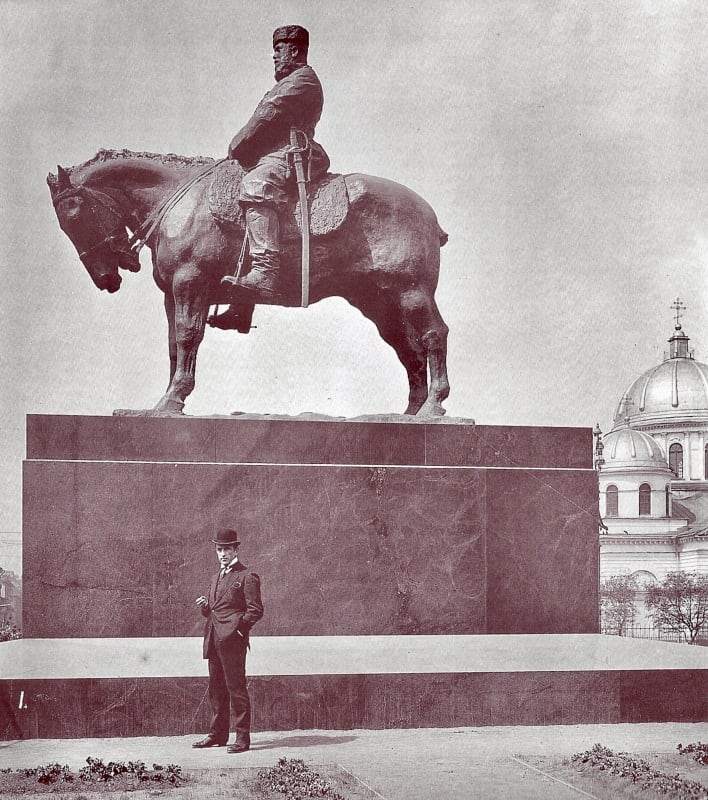
1909. Paolo Troubetzkoy beside the monument.
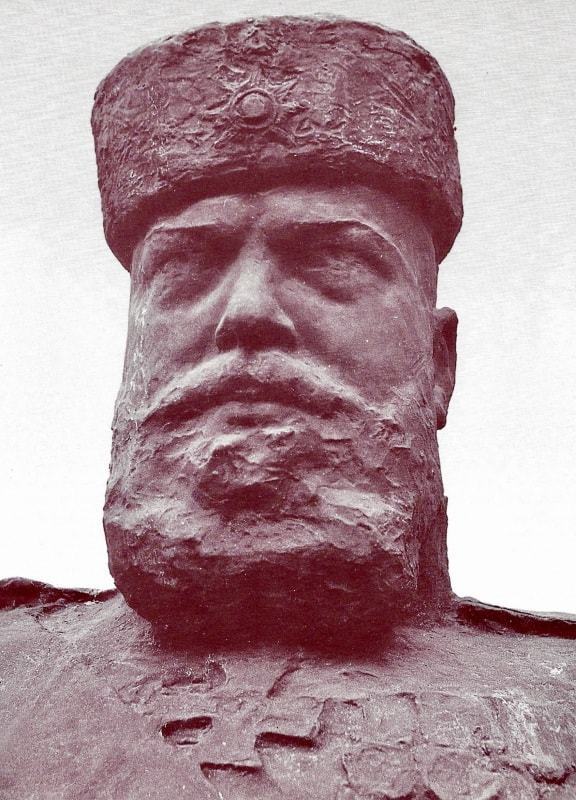
In my post about the sculptor Paolo (or Pavel) Troubetzkoy, I promised to write further about my favourite work of his – the equestrian statue of Tsar Alexander III. It’s an extraordinarily powerful work of art and I think its chequered history adds to its fascination.
The monument was commissioned by Alexander’s son, Tsar Nicholas II, and other members of the imperial family, specifically to mark and celebrate the construction of the highway between St Petersburg and Vladivostock, a project that had been initiated during Alexander’s reign. A competition to create a monument was announced by the Ministry of Finance in November 1899 (five years after the death of Alexander). It was intended that it should be installed by the end of 1902, which is when the road was scheduled for completion.
Paolo Troubetzkoy, who had been living in Russia since 1897, presented a design with the figure of Alexander seated. This first version was cast in bronze and later purchased, in 1967, by the State Russian Museum. The first models didn’t meet with official approval and the cut-off date for submissions was extended.
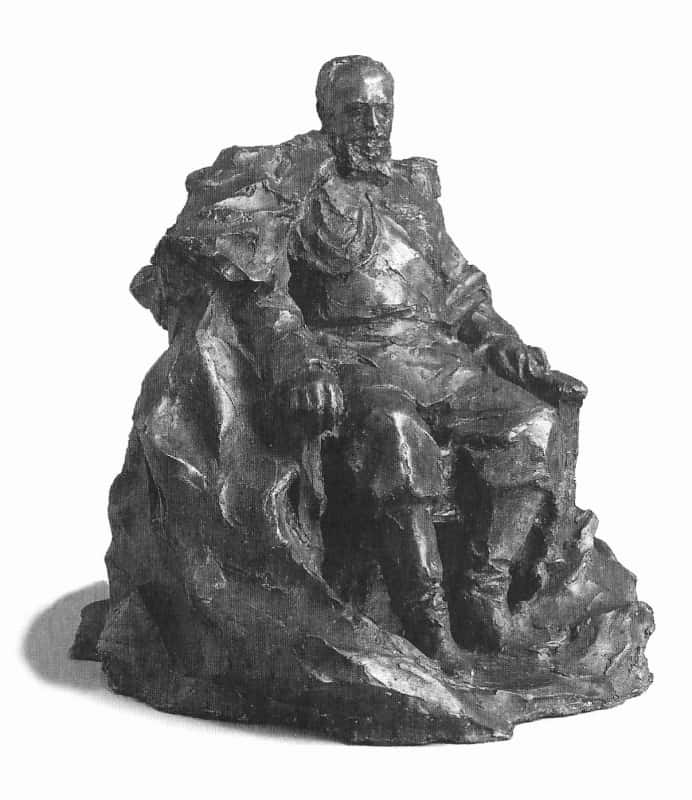
Troubetzkoy’s first submission
Troubetzkoy and the architect Fyodor Shekhtel prepared new drawings, portraying the emperor on horseback. Shekhtel’s original design for the pedestal was decorated with bas reliefs on two sides. The inscription was to be ‘To Emperor Alexander III – sovereign founder of the Siberian way’.
Troubetzkoy won the competition for the statue and agreed to create two models, a life-size version by 1 January 1901 and another monument-sized version by 1 May 1901. These were created on Staro-Nevsky Prospekt in St Petersburg in a purpose-built workshop of iron and glass. In total, the sculptor created fourteen models, in various sizes.

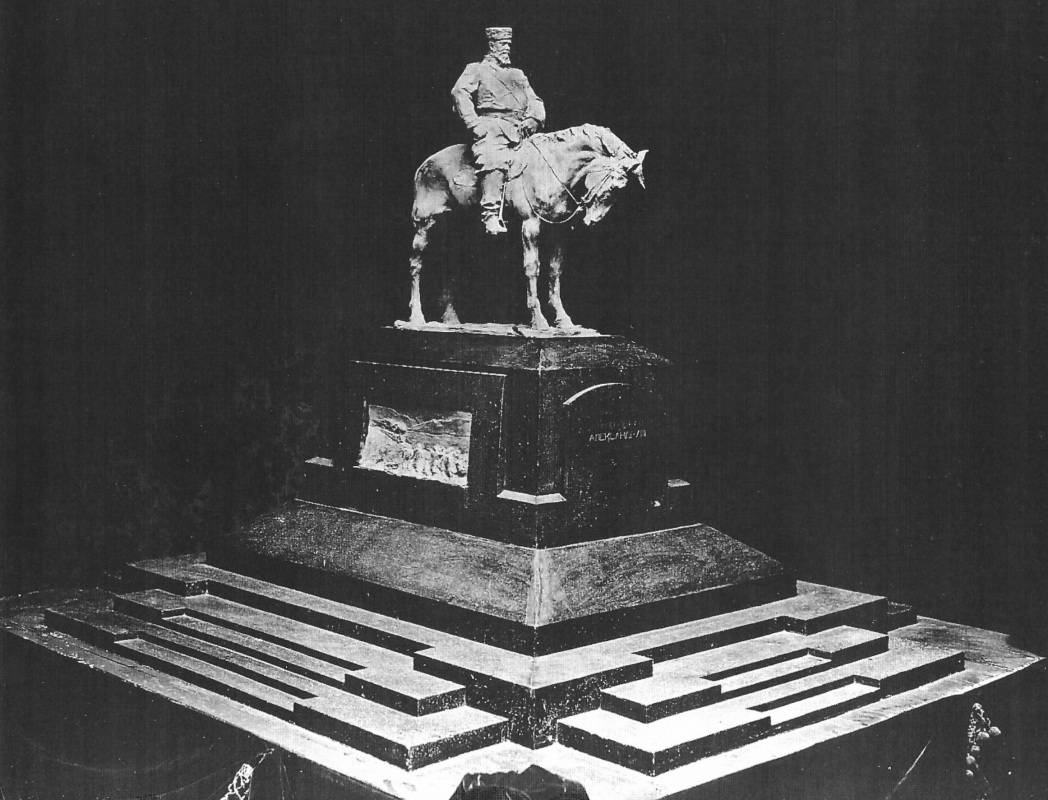


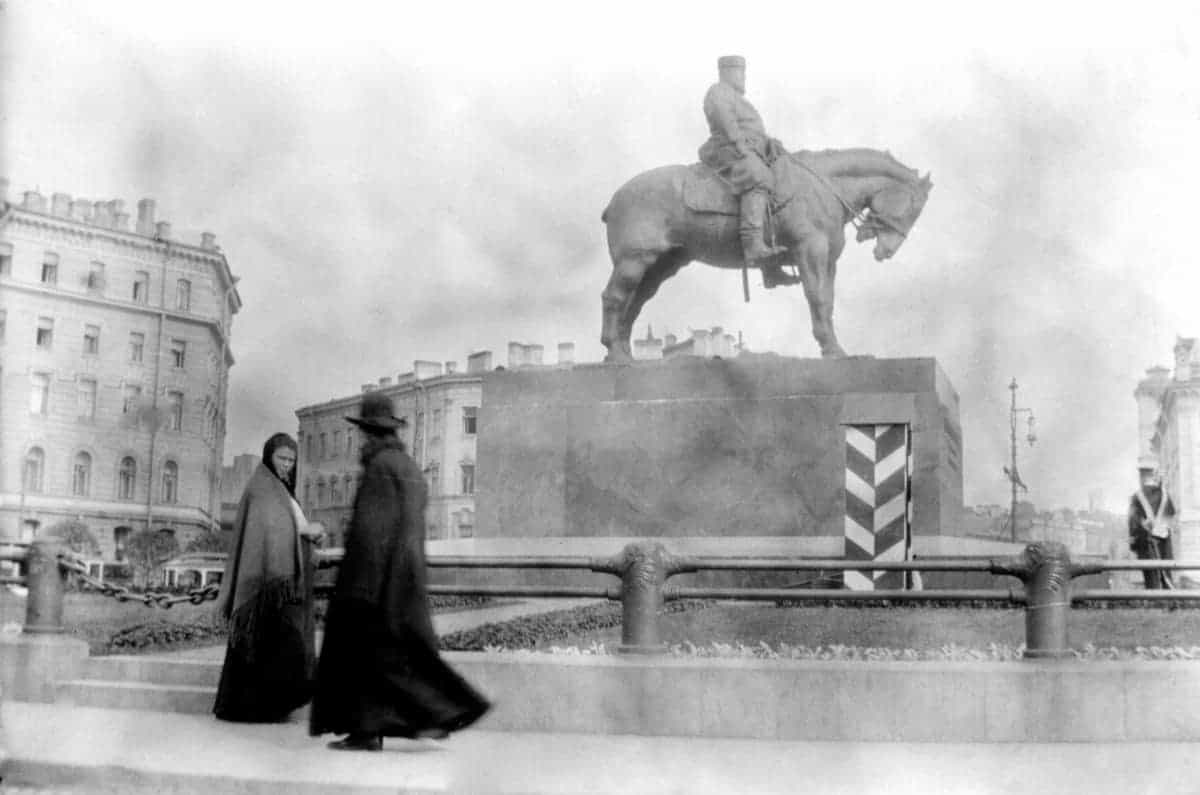
After a few delays from the sculptor and some discontent from the members of the commissioning committee, who had started to doubt his ability to manage such a colossal piece of work, Troubetzkoy presented a new model in 1904 that was astonishing for its distinctive power and strength of form. It was not yet perfect: the committee asked him to review the proportions of the horse and to raise its head.
From the beginning the Grand Duke Vladimir Alexandrovich was very dissatisfied with Troubetzkoy’s depiction of his brother. But the emperor’s widow defended the sculptor, as she saw in the work a clear resemblance to her late husband. It was she who contributed financially for the completion of the monument.
All the work for the casting and preparation of the site was completed in 1908. The monument was finally unveiled at a formal and solemn ceremony on 23 May 1909, in the centre of Znamenskii Square, (renamed Vosstaniya – Uprising – Square in 1918).
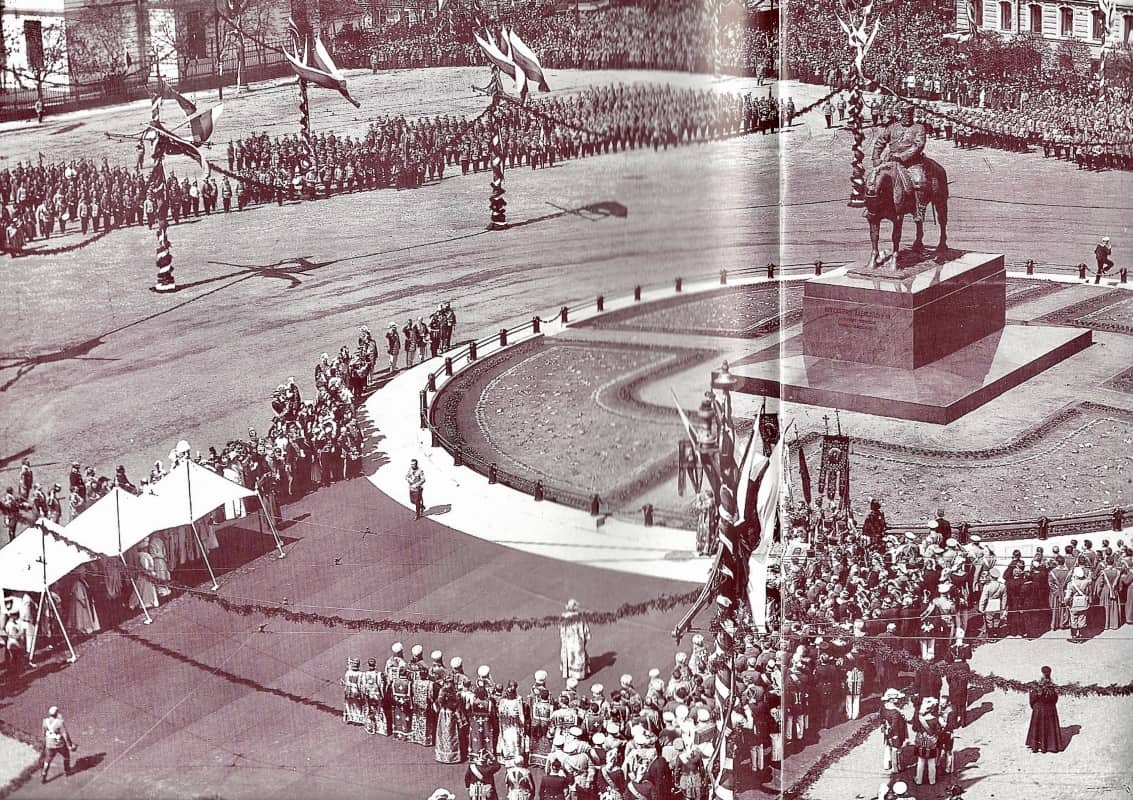
1909. The opening of the monument in Znamenskii Square
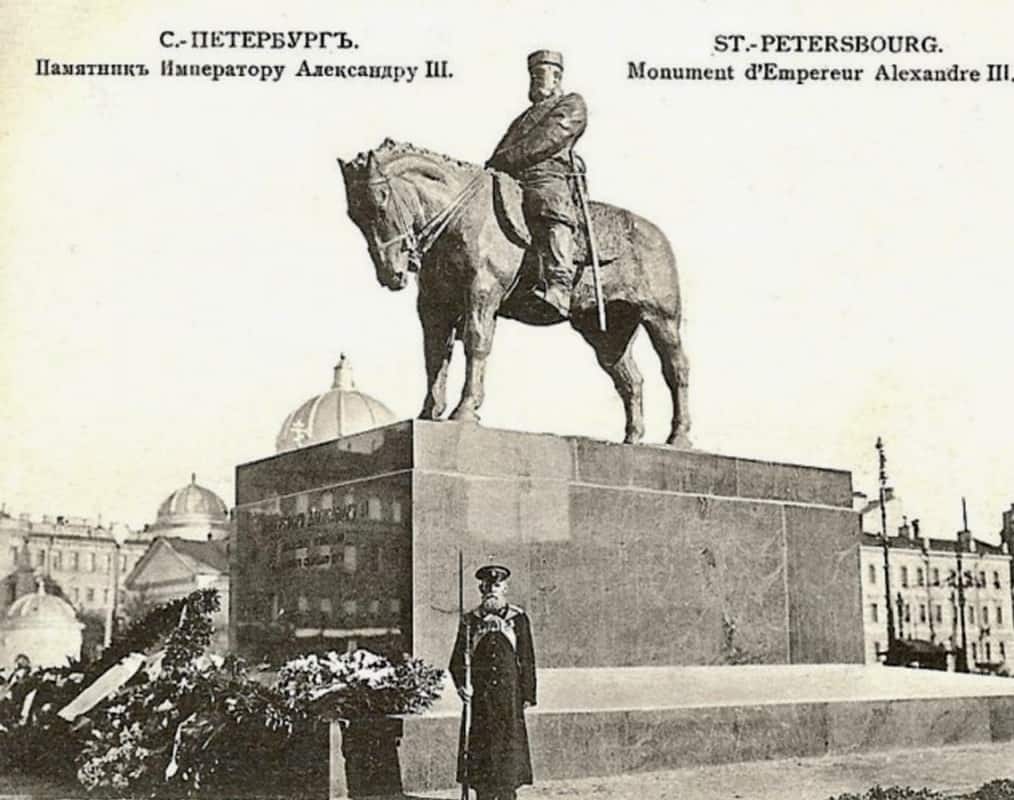
From the moment it was presented to the public, the statue caused controversy. It depicted the corpulent figure of the counter-reformist and unpopular Tsar combined with a similarly heavy horse. Opinions were divided. The more reactionary part of Petersburg society was indignant, saying that it was a brutal caricature of the Tsar. More progressive commentators welcomed the powerful and revealing monumental sculpture. The debate even reached the city Duma, which seriously considered whether the statue should be allowed to remain in place. Troubetzkoy himself was unmoved by any criticism. He said ‘I don’t care about politics. I simply depicted one animal on another.’
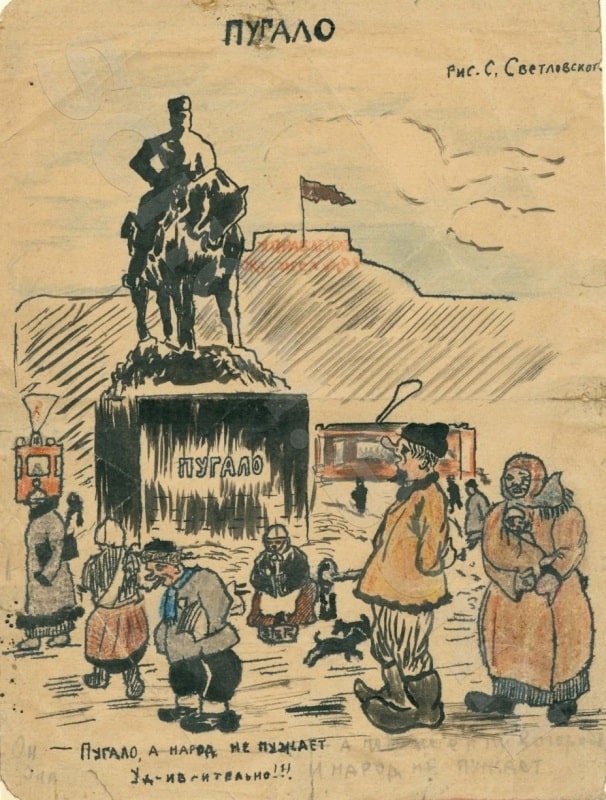
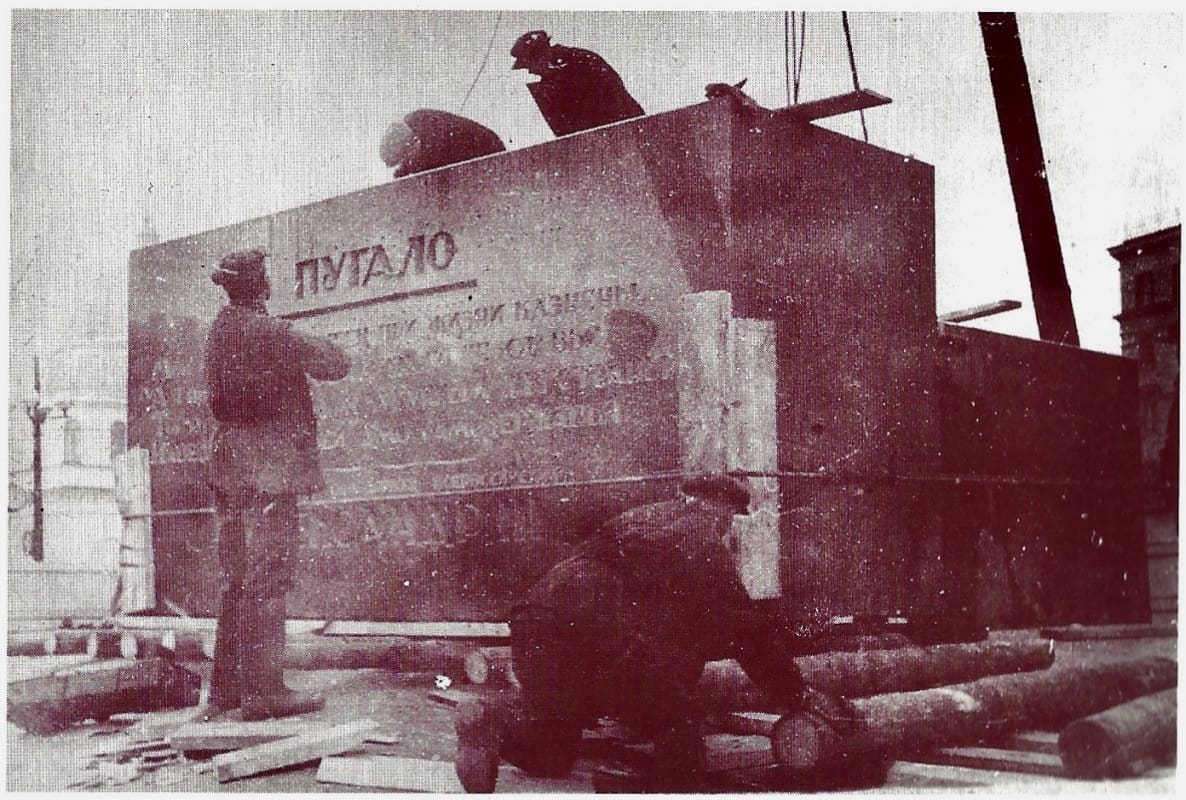
The monument was condemned by the masses in 1917. It was given various insulting names. In 1919, after the victory of the Bolsheviks, a verse called ‘The Scarecrow’ (ПУГАЛО) was carved on the pedestal. Paraphrasing, it said ‘My son and my father were both executed. And my fate was posthumous disgrace. I am stuck here as a cast-iron scarecrow in a country that has forever thrown off the yoke of autocracy.’ Eight years later, when the tenth anniversary of the Revolution was celebrated, the monument was enclosed in a metal cage, decorated with ‘USSR’ and the hammer and sickle device.
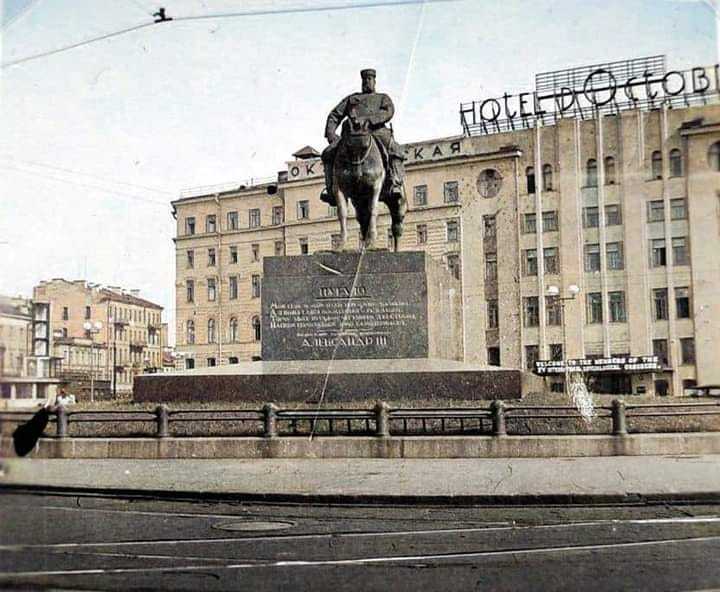
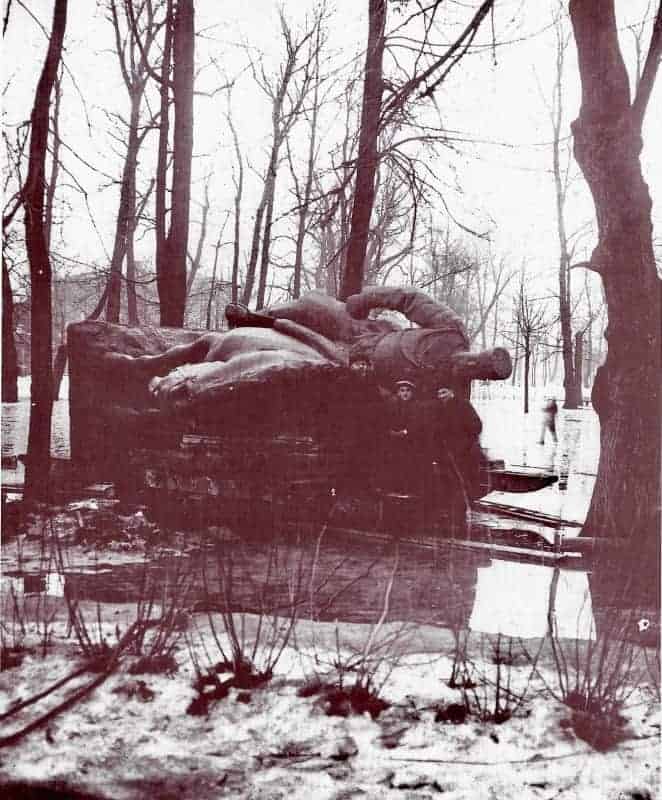
In 1937 the monument was completely dismantled. According to a popular comment of the day, it became ‘the prisoner of the Russian Museum.’ At that time in Leningrad there was a superstition that the well-being and honour of the city were guarded by three horsemen: the Peter the Great monument on Senatskaya Square, the Nicholas I monument on Isaakievskaya Square and the Alexander III monument on Vosstaniya Square. The fact that one of these guardians of the city had been removed from its historical home was seen as a sign of imminent misfortune. The official reason for the monument being removed was that it was said to obstruct the trams going along Nevsky Prospekt, even though the trams had been travelling that route without incident for more than 30 years previously.
It was kept in the storerooms of the Russian Museum until 1953, when it was placed in an interior courtyard.
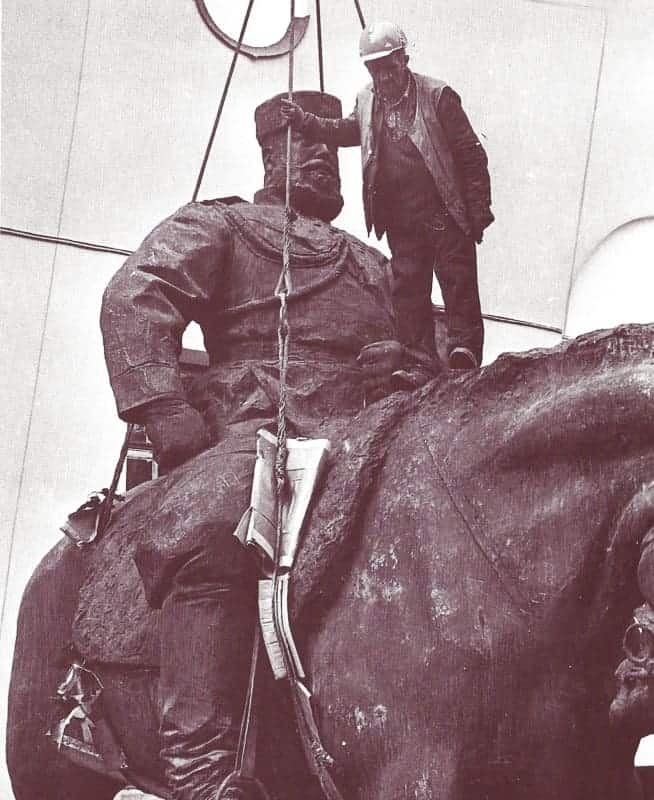
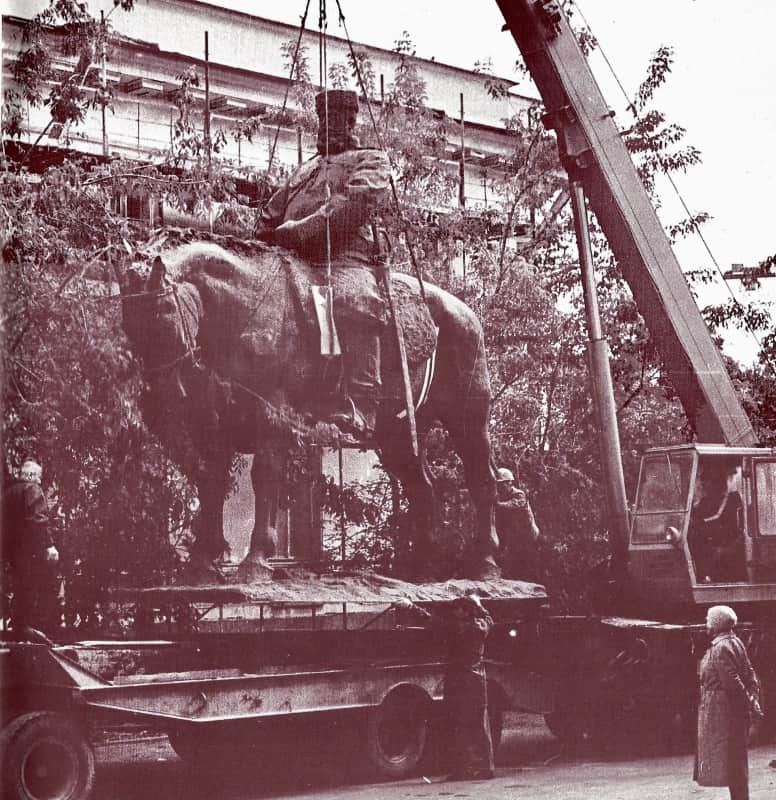
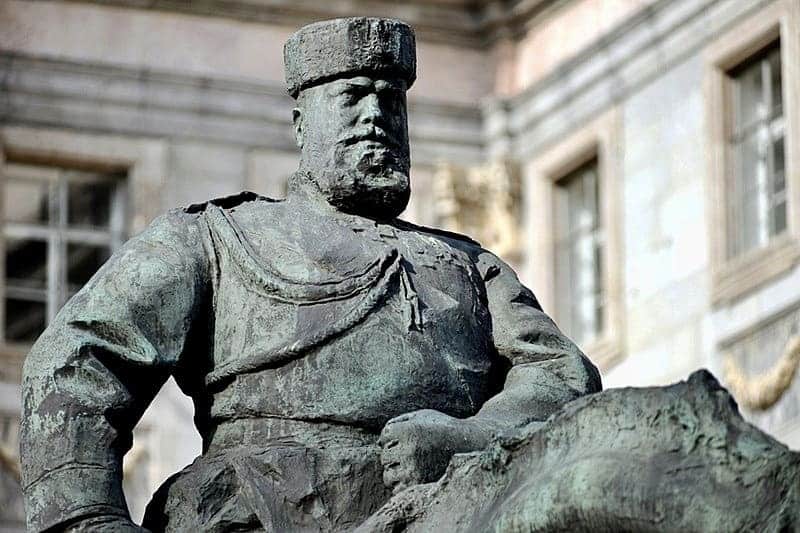
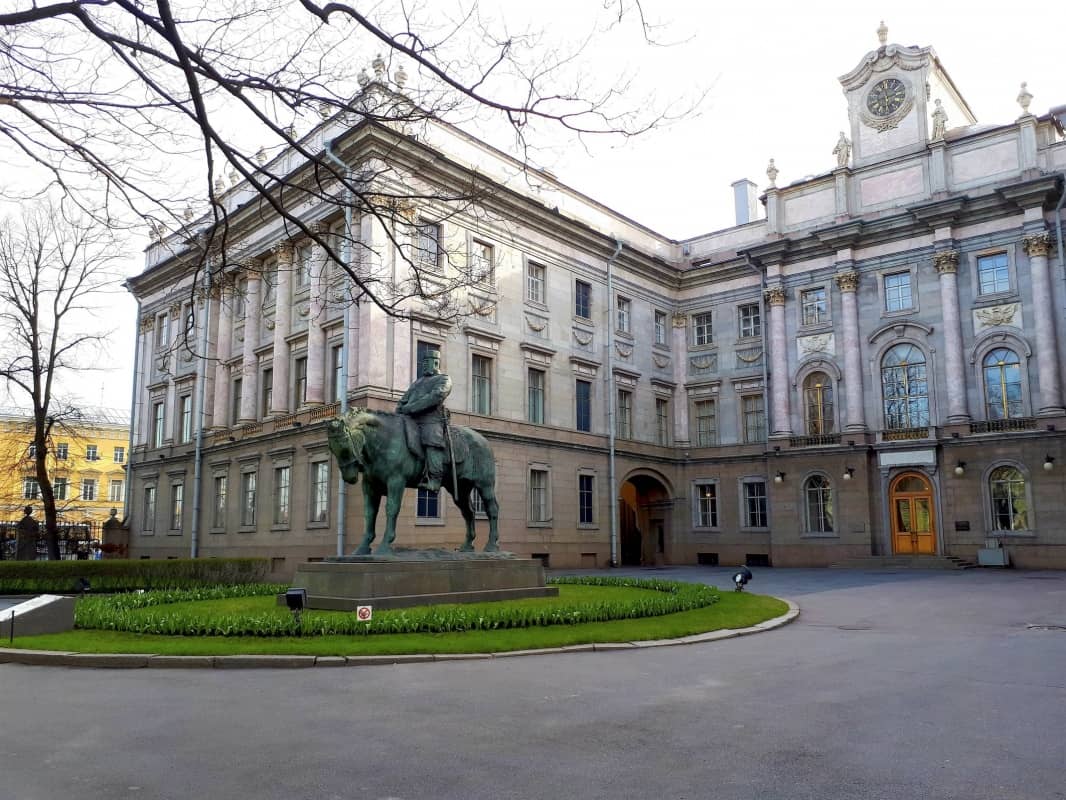
The statue now stands in the courtyard of the Marble Palace

Booklet about the monument produced by the Russian Museum